Kotor
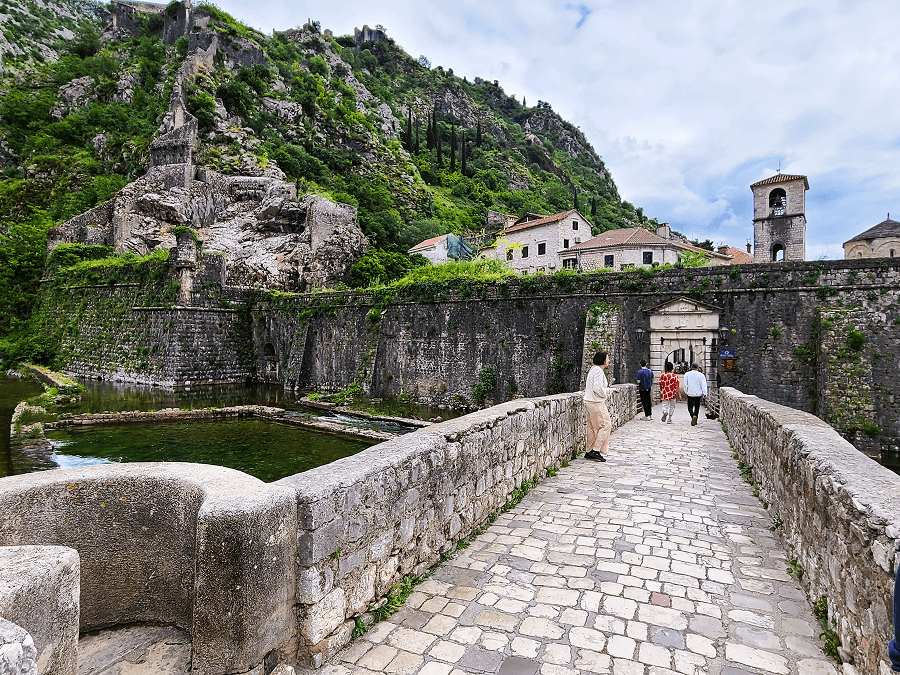
We were met at the ancient gates of Kotor by a staff member of the Hotel Astoria.
Navigating the narrow, cobbled web of lanes for the first time is a challenge with a guide and impossible without one. Keeping up with him around the twists and turns while dragging luggage was no easy feat.
I chose the Hotel Astoria so we could be right in the heart of this ancient, well-preserved town, chock full of charm.
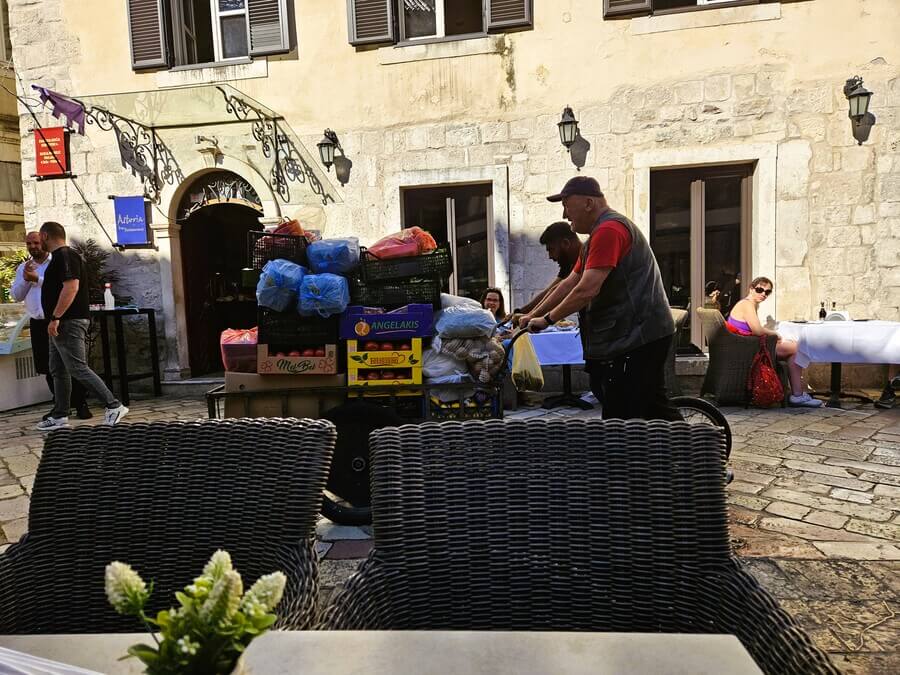
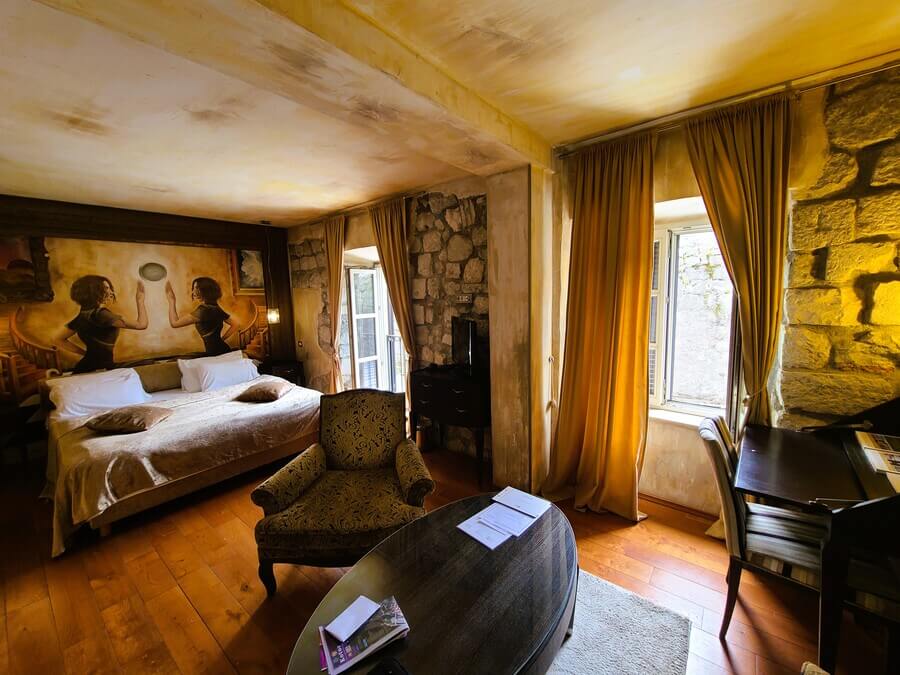
The hotel is housed in the historic Bucá Palace, once the residence of a prominent aristocratic family from the 13th–18th centuries. It overlooks Trg od Brasňa Square / Flour Square, where the hotel’s restaurant serves breakfast, lunch, and dinner. The setting is magical. In the quiet of the early morning before the cruise ships offload a flow of tourists, we watched the old town prepare for the day. Shopkeepers chatted as they swept the entrances to their stores, cleaned their windows, and arranged their wares. Workers passed by wheeling delivery crates, while visitors lingered over a scrumptious breakfast in these enchanting surroundings.
Our elegant, spacious suite in the Astoria Hotel has retained all of its old-world charm.
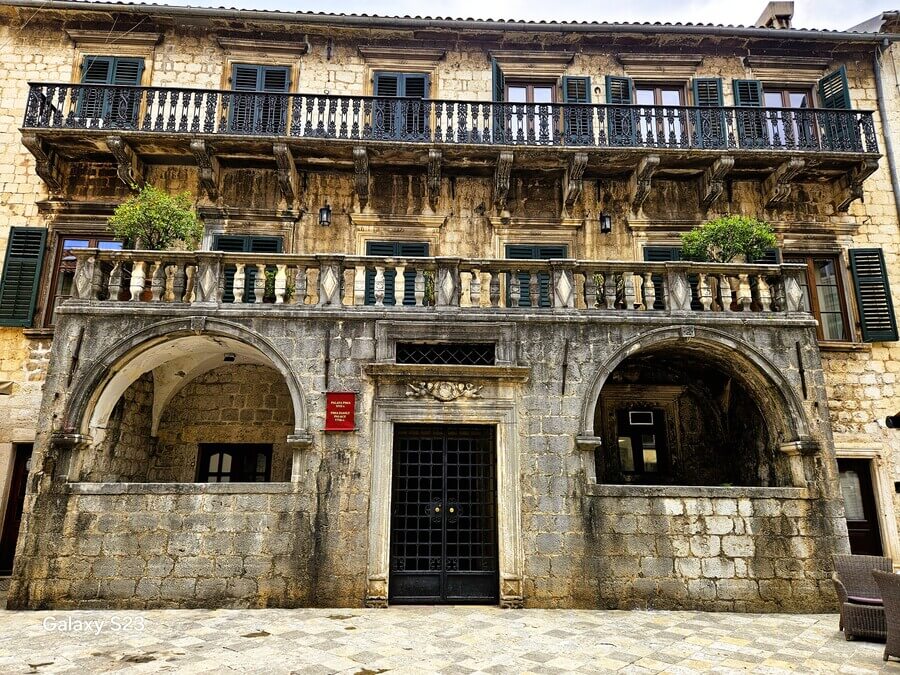
Facing the square on the opposite side is the Pima Family 17th-century palace. Today, the palace houses an art museum displaying the work of regional and international artists, while its upper floors host cultural events.
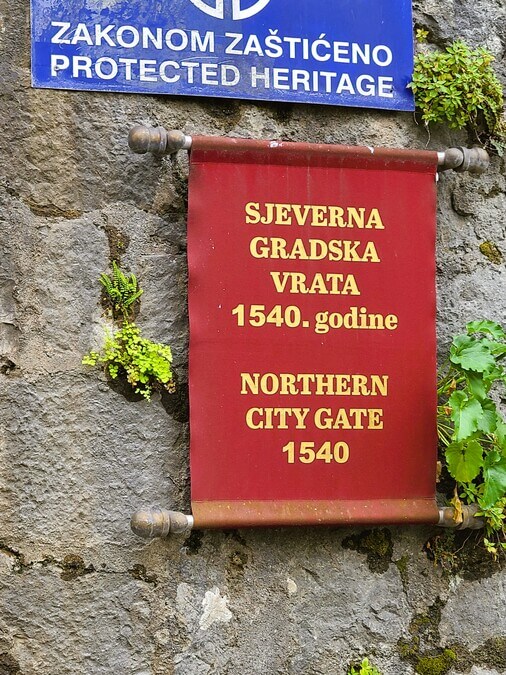
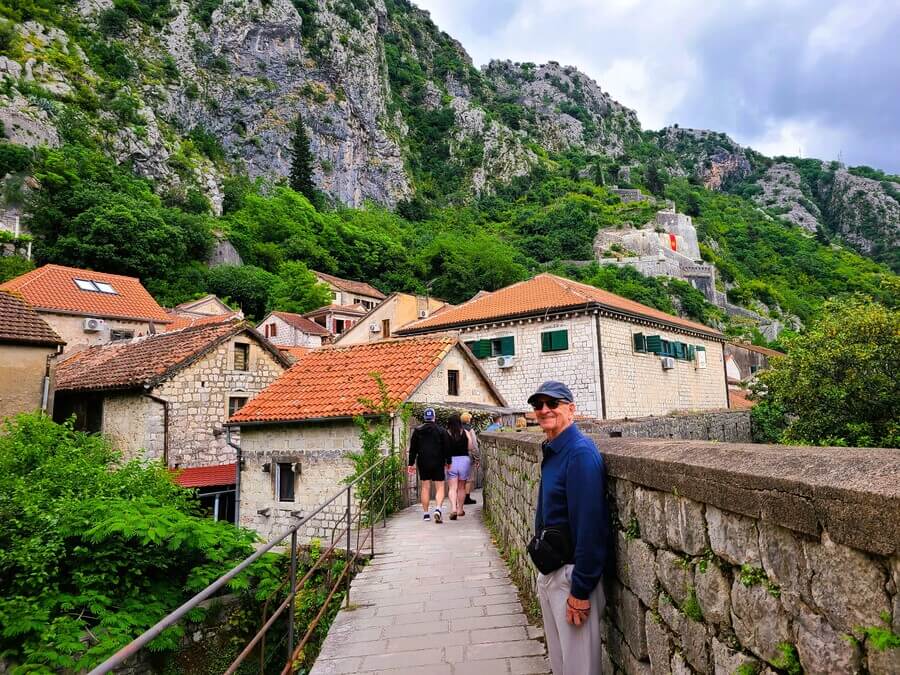
Two full days and three nights in Kotor give one time to explore the maze of winding lanes, walk the ancient walls, and hike into the mountains that form a majestic backdrop to the town. The ‘Ladder of Kotor’ mountain trail zigzags up the mountainside. If the entire trail is too challenging, you can stop at viewpoints to take in the stunning views. [Use the North River Gate to find the beginning of the trail.]
To reach the trailhead:
1] Exit the Old Town through the North River Gate.
2] Cross the old stone bridge over the Skurda River.
3] Turn right onto Tabacina Road.
4] Continue past the buildings and bakery.
5] The Ladder of Kotor trailhead is near the hydroelectric power plant.
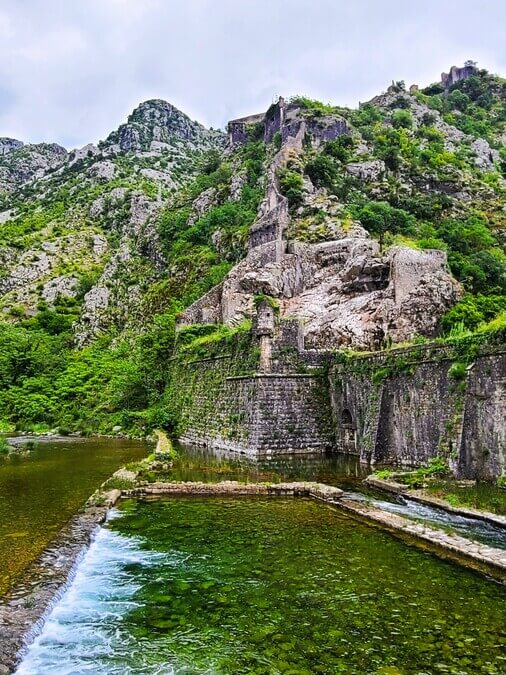
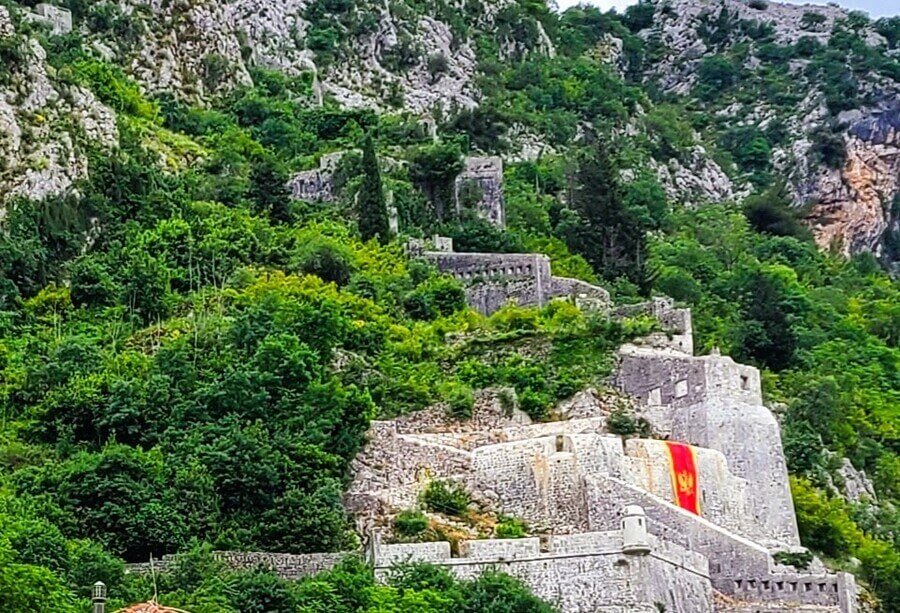
There’s also a pleasant, scenic walking path along the ancient fortified walls, which I highly recommend. For a more challenging walk, one can walk the walls to San Giovanni Fortress. (A steep climb with lots of uneven stone steps.)
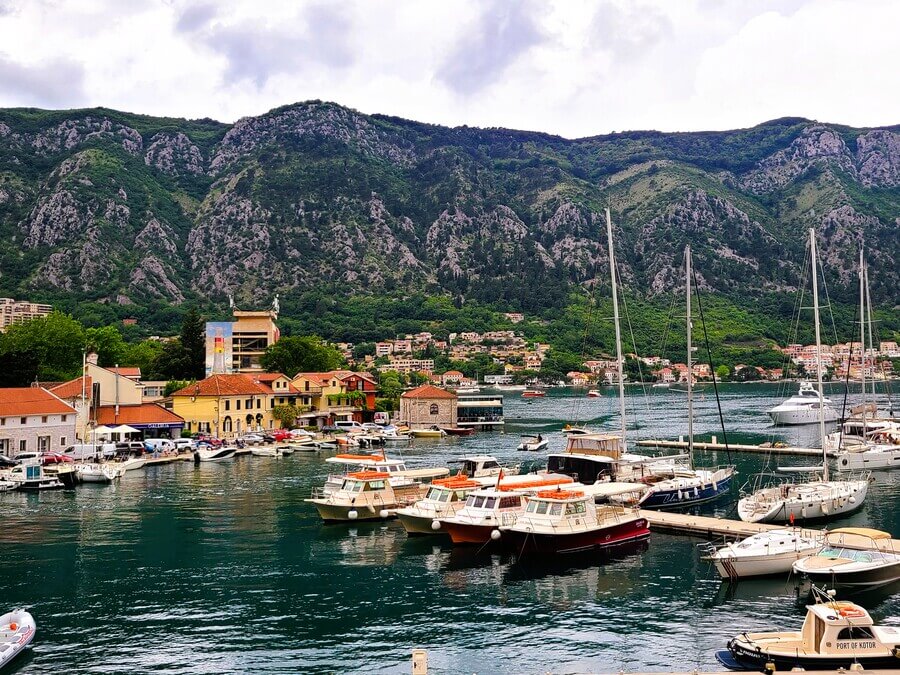
One of Kotor’s highlights is the boat tour to the Blue Cave and the Yugoslavian military submarine tunnel. Outside the Old Town, where the cruise ships dock and the daily market is held, turn left, and you’ll come across boat tour companies. We chose ‘Sea Stars’ and paid a little more to keep the boat to a maximum of eight people.*Tip: No matter how warm it is, take a sweater or jacket. When the boat ‘flies’ across the waters, engines roaring and wind blowing, it can be icy cold.
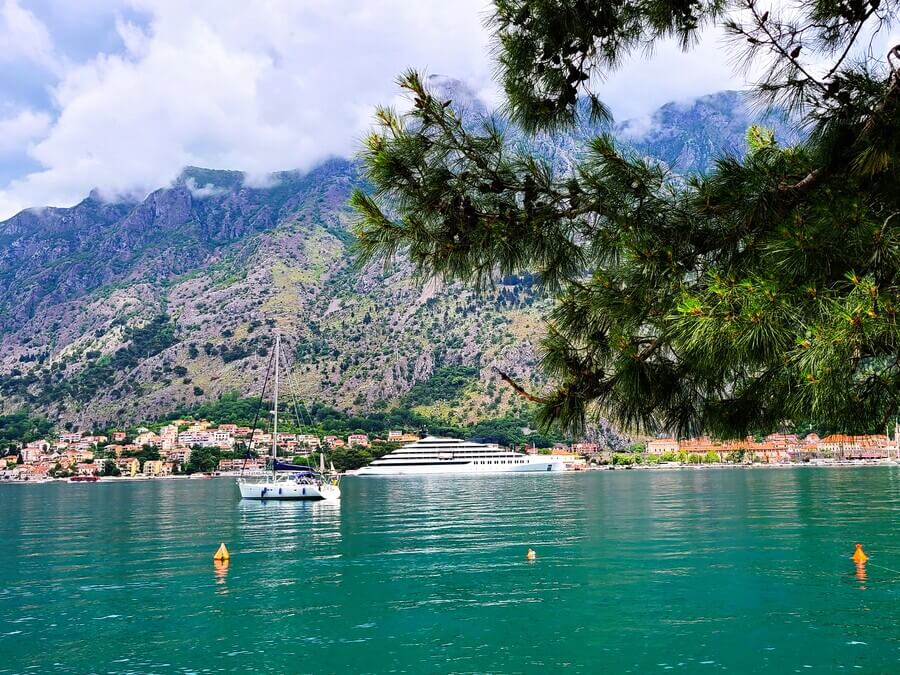
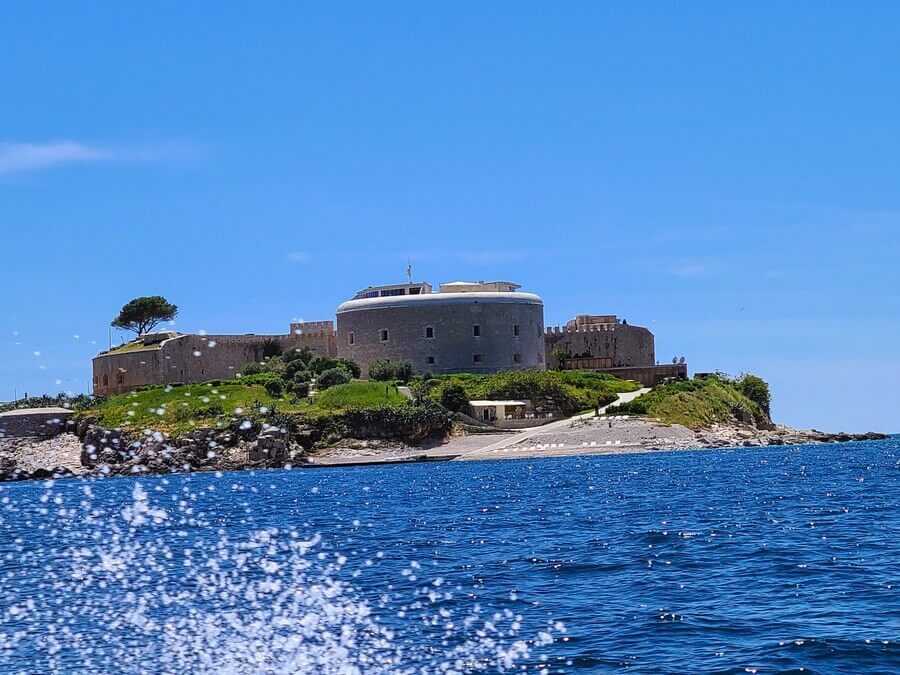
Mamula Island is a small, round island at the entrance to the Bay of Kotor, where the bay meets the Adriatic Sea. A circular stone fortress rises from the Island. Built in the 19th century to guard and defend the bay’s entrance, its interior has several levels that housed soldiers, ammunition, and water cisterns.
The fortress has an interesting history. During the First World War, it defended the Bay of Kotor against Allied attacks. It was also used as a prison. In 1942, during the Second World War, the Italian Fascists under Mussolini turned the fortress into a prison and concentration camp, where prisoners were held in shocking conditions. After World War II, it stood abandoned for many years.
In 2023, Mamula Island went from horrors and hell to beauty, comfort, and paradise when it became a luxury five-star resort.
The boat passes the island but does not make a stop.
The only way to experience the resort is to spend a night or two on the island.
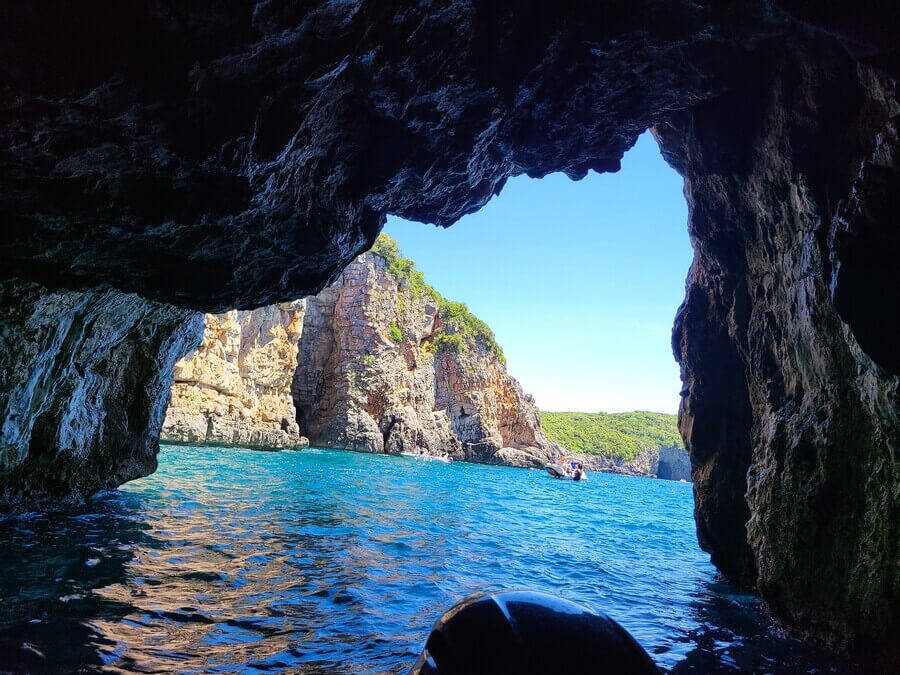
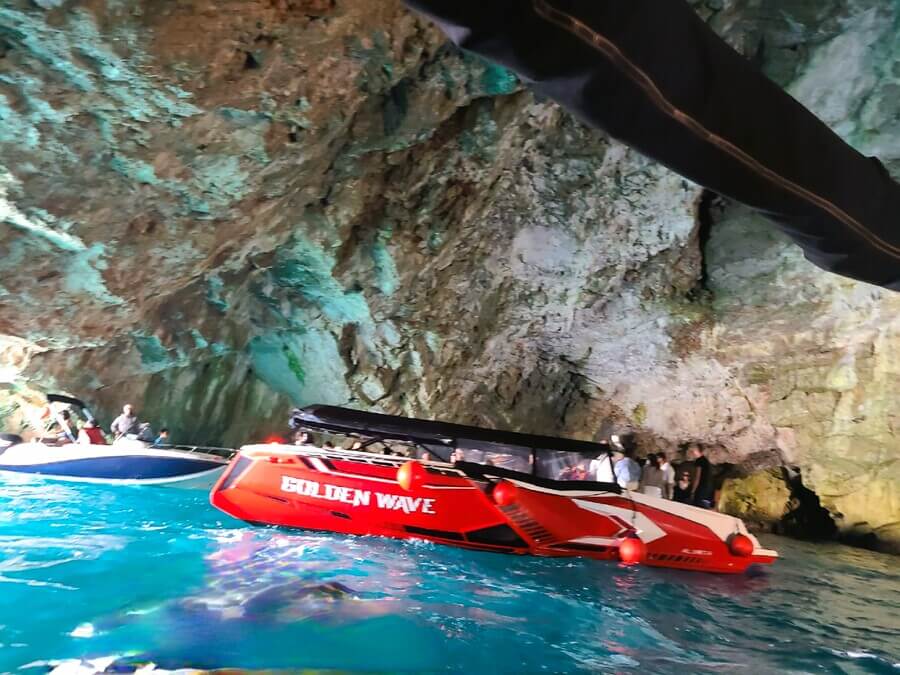
The first stop comes when the roar of the engine subsides, and the boat glides into the Blue Cave near the Lustica Peninsula. The glowing blue light is created entirely by Mother Nature. Sunlight enters the cave through an opening beneath the sea and reflects off the white seabed, flooding the cave with a mesmerizing turquoise glow.
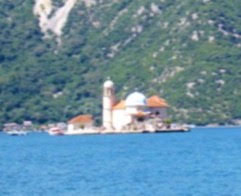
The Island of Our Lady of the Rocks
Surprisingly, this tiny Island has a fascinating history. According to legend, in 1452, two sailors discovered an icon of the Virgin Mary on a small reef. Believing it to be a divine sign meant to protect them at sea, they vowed to build a sanctuary on the Island. Over the centuries, a tradition emerged: after each successful voyage, sailors would place rocks and stones on the islet as a sign of gratitude for their safe return. Little by little, the small reef became an island. At its center stands the Church of Our Lady of the Rocks, dating back to the 17th century.
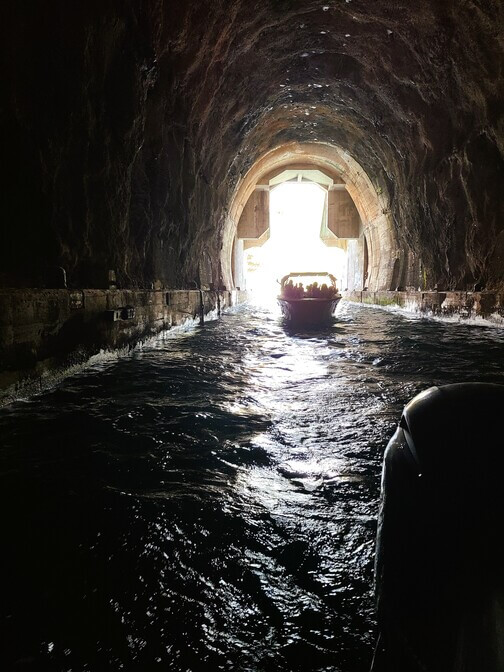
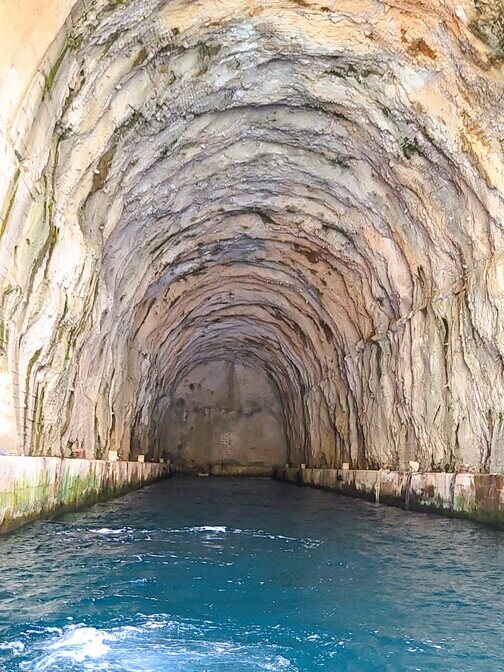
The Yugoslavian Military Submarine Tunnel in the Bay of Kotor
The secret, reinforced-concrete submarine tunnels carved into the cliffs of Montenegro’s Bay of Kotor were built by the Yugoslavian People’s Navy during the Cold War, from the 1950’s through the 1970’s. Designed to hide submarines and small warships from aerial detection and attacks, the tunnels were remarkably camouflaged.
The Navy used ingenious techniques, including molded and painted Styrofoam designed to resemble the surrounding rocks and stones, together with real grasses and weeds to blend the entrances into the natural landscape.
Huge mechanical gates swung open and closed, allowing submarines and naval vessels to arrive and depart. Behind this elaborate camouflage, thick layers of reinforced concrete and natural stone protected the vessels.
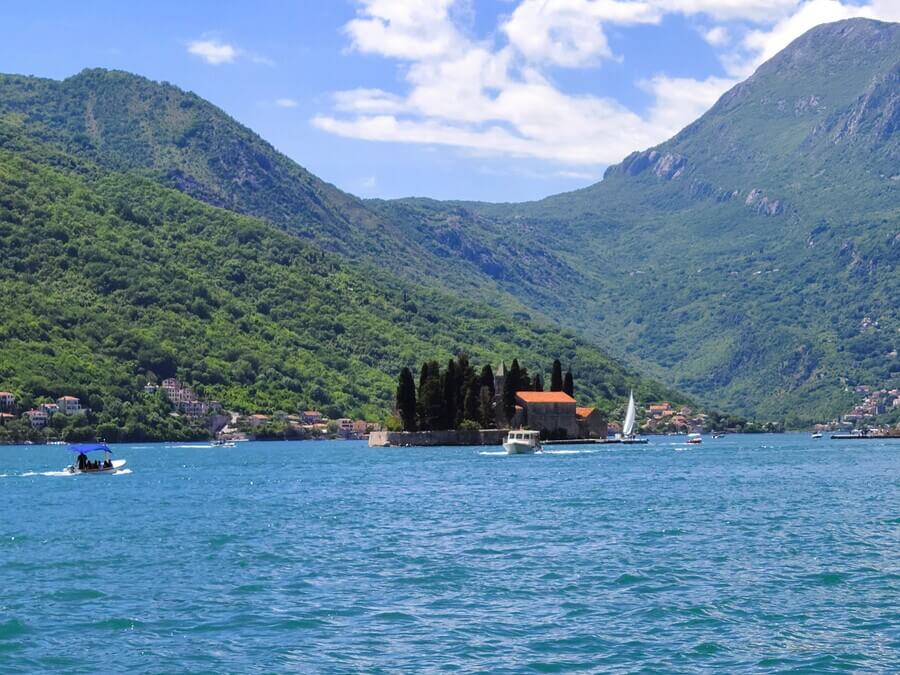
The Island of Saint George.
Nature created this small Island just off the coast of Perast. At its center stands a 12th-century
Benedictine monastery surrounded by tall, green cypress trees that remind one of a group of protective sentinels.
Perast – Old Town
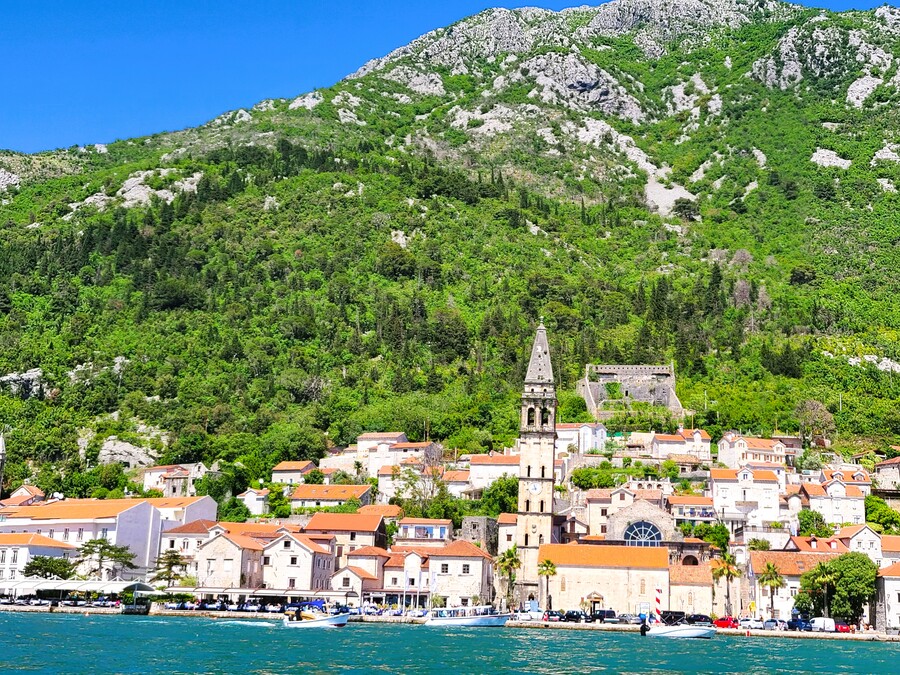
Perast has a long, interesting history. This tiny town reached its golden age under Venetian rule from the 15th–18th centuries, when it prospered as a center of shipbuilding and trade.
Despite its small size, it has a substantial collection of elegant, grand stone buildings, built by wealthy maritime families along the waterfront. The little town is also famous for its pride and strength. In 1654, it was attacked by Ottoman forces. The islanders fought back and successfully defended their little town. In later years, as sailing trade declined, it grew quieter, which helped the town retain its old-world charm. [The boat stops for thirty minutes.
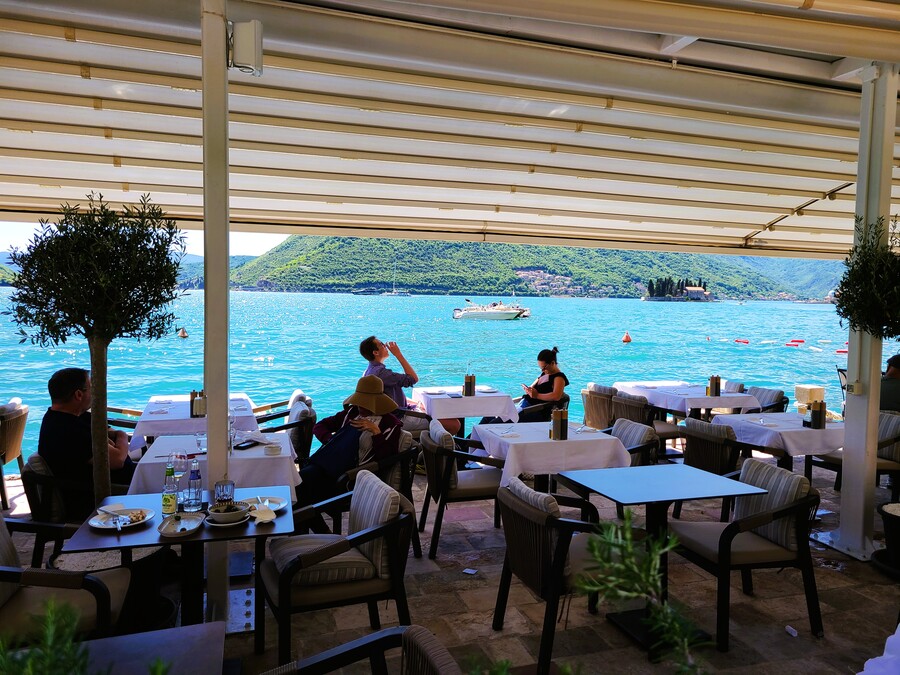
If you’d like more time to walk the little lanes and have a delicious seafront meal, you can drive or take a taxi from Kotor to Perast’s outer walls. Take a little boat to Our Lady of the Rocks, then return to Perast and enjoy lunch in a restaurant facing the bay before returning to Kotor. [Arrange for the driver to wait for you, as they are not easy to find outside Perast.]
• Before choosing a boat tour from Kotor to the above-mentioned sites, ask the tour company where they stop and how long the stops are.