Georgia – Tbilisi
An introduction to Georgia!
Not the State of Georgia in the USA, but the country of Georgia, a treasure in its infancy of being discovered by tourists from across the globe. Pack comfortable walking shoes and prepare to explore this seductive city.
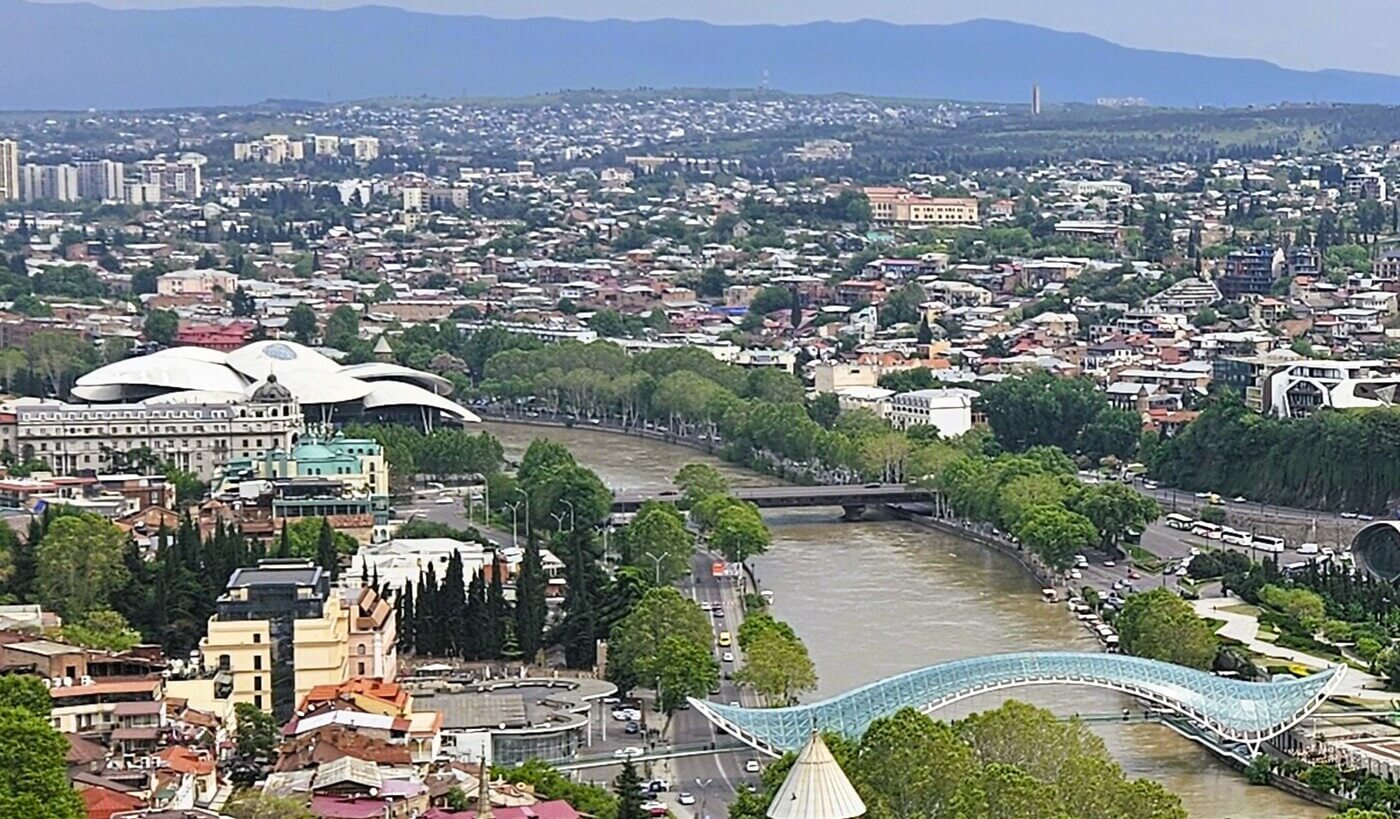
I recommend starting with a walk along the banks of the Kura (Mtkvari) River, which runs through the heart of the city. The views are mesmerizing. Look up, and you will see churches sitting on the mountaintops, mountains covered in lush greenery, statues, and the unique blend of ancient and modern architecture.
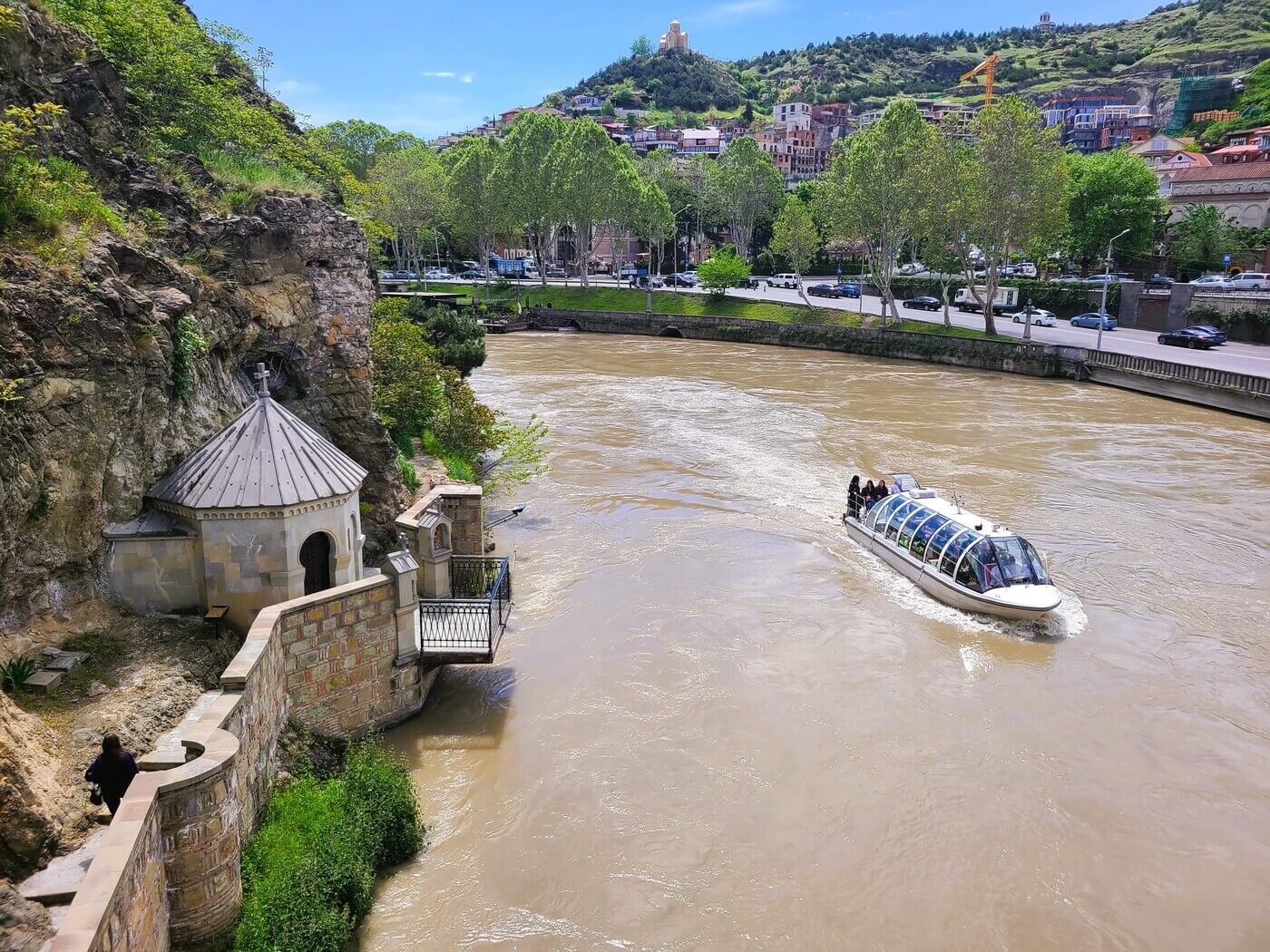
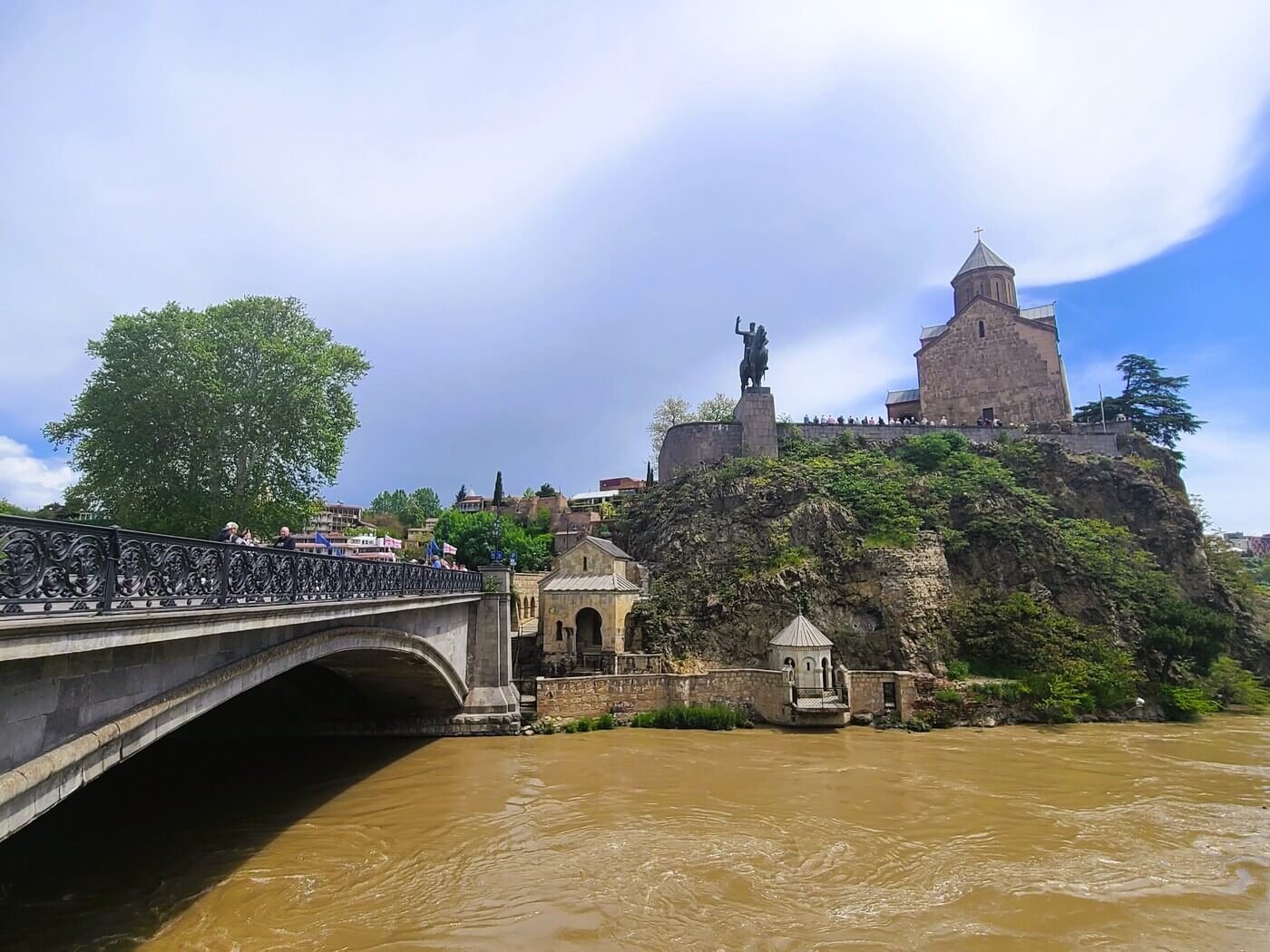
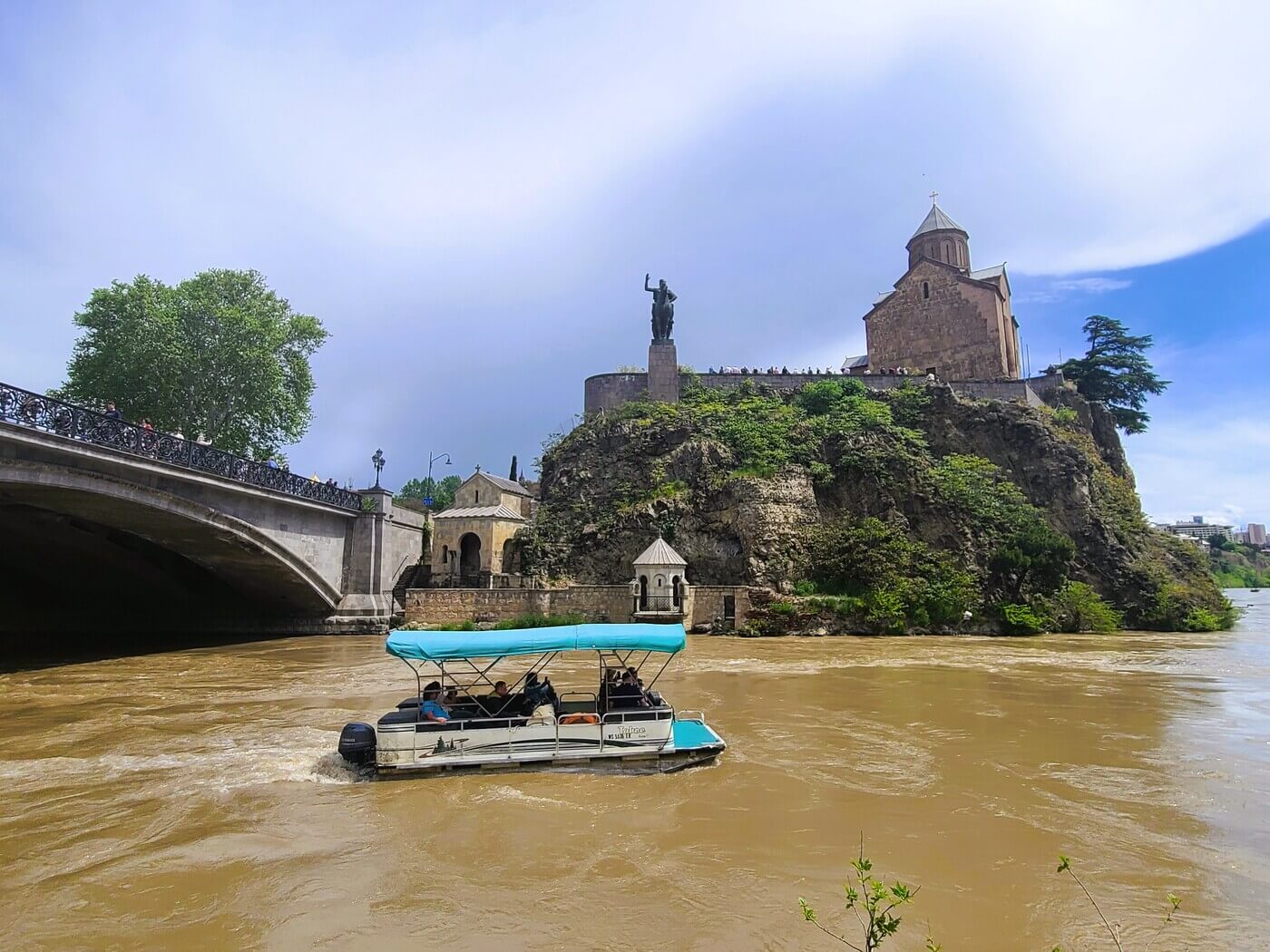
Boats glide down the river, past the Metekhi Church, where a statue of King Vakhyang Gorgasali sits on his horse, his arm raised in greeting.
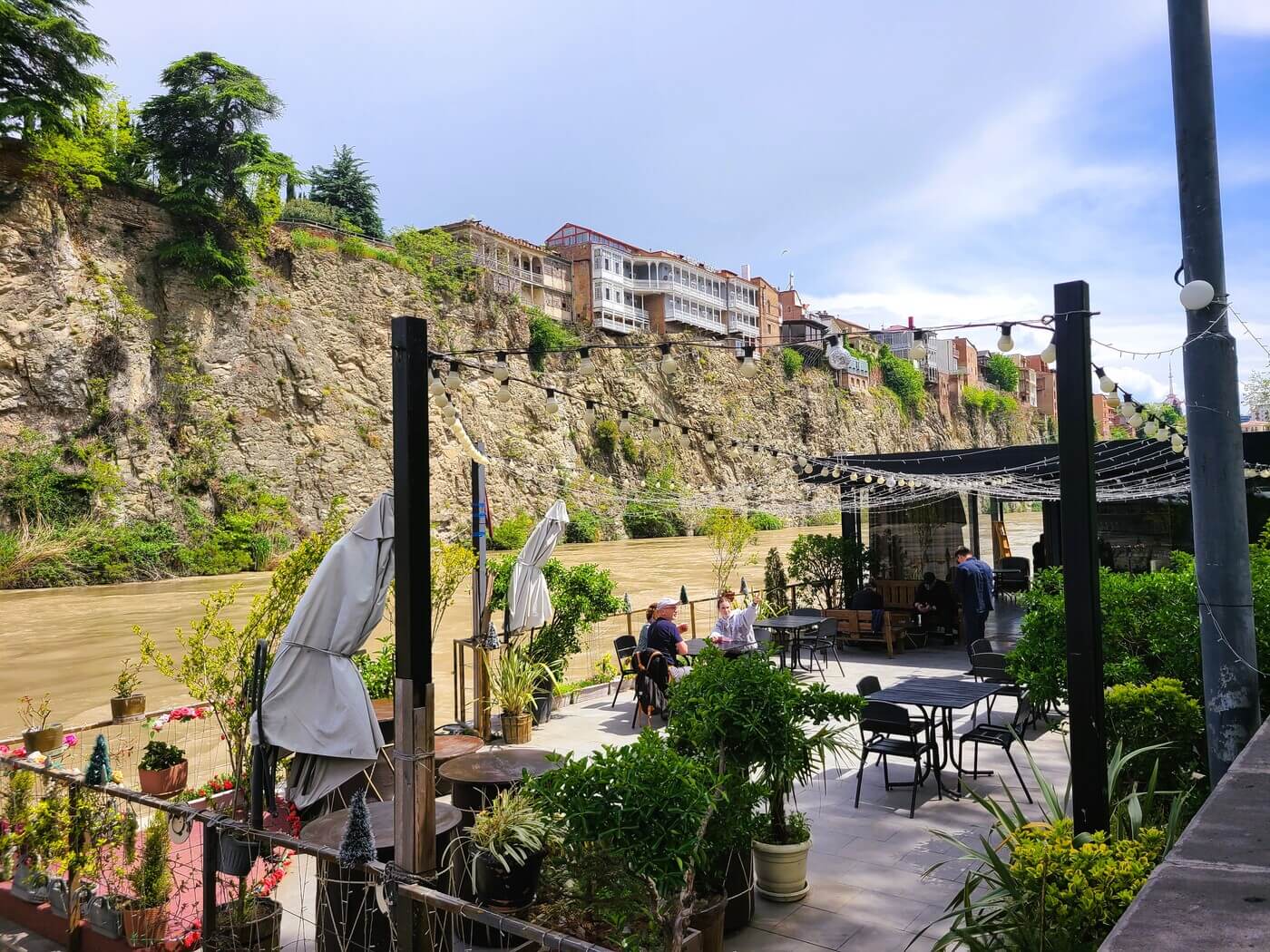
Apartments and hotels, some modern and others boasting old-world balconies, pillars, and windows, rest atop rugged stone cliffs.
Stop at a café along the river for a cappuccino, a beer, or a soda to rest awhile as you absorb the peace and beauty of your surroundings.
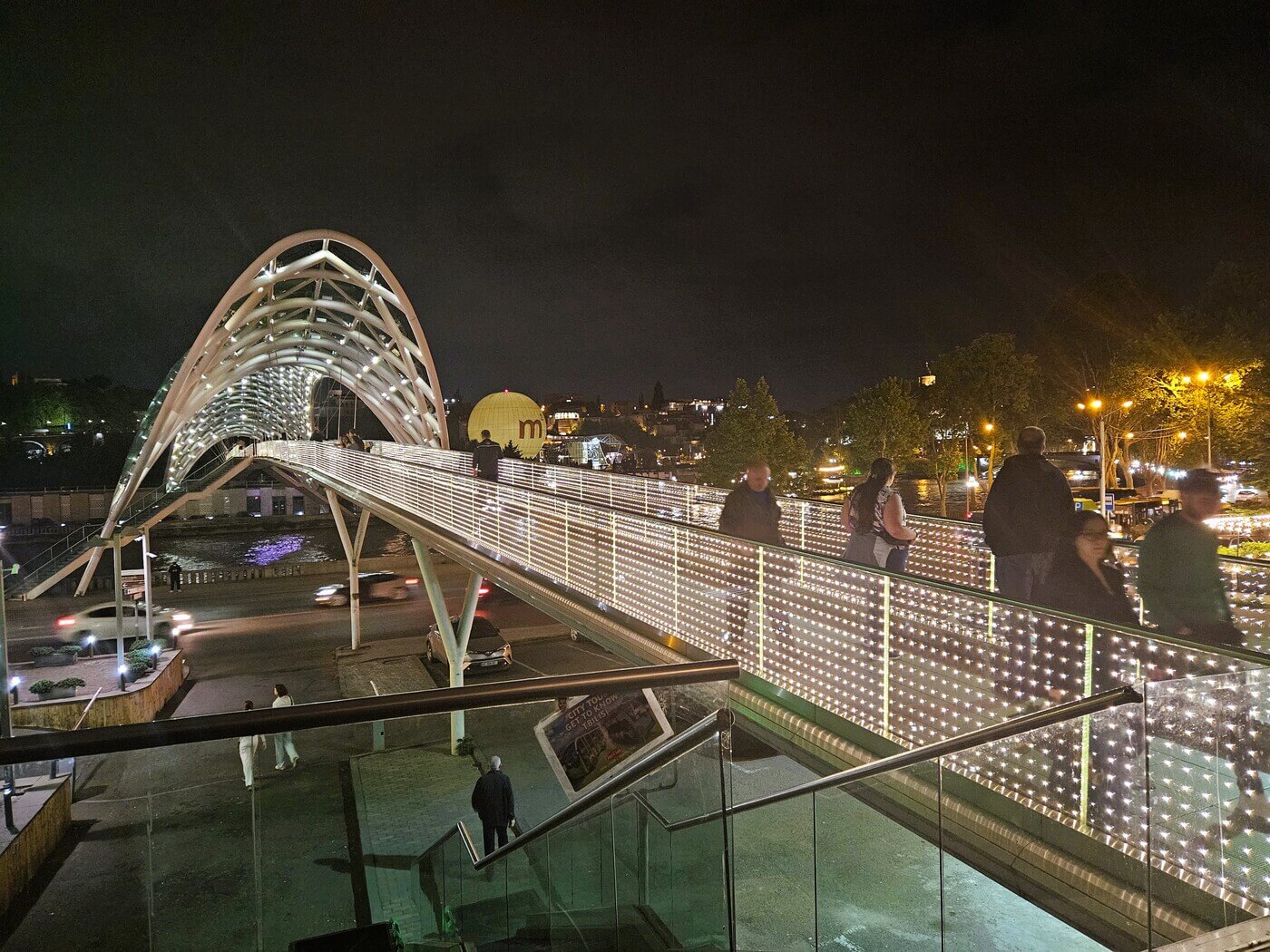
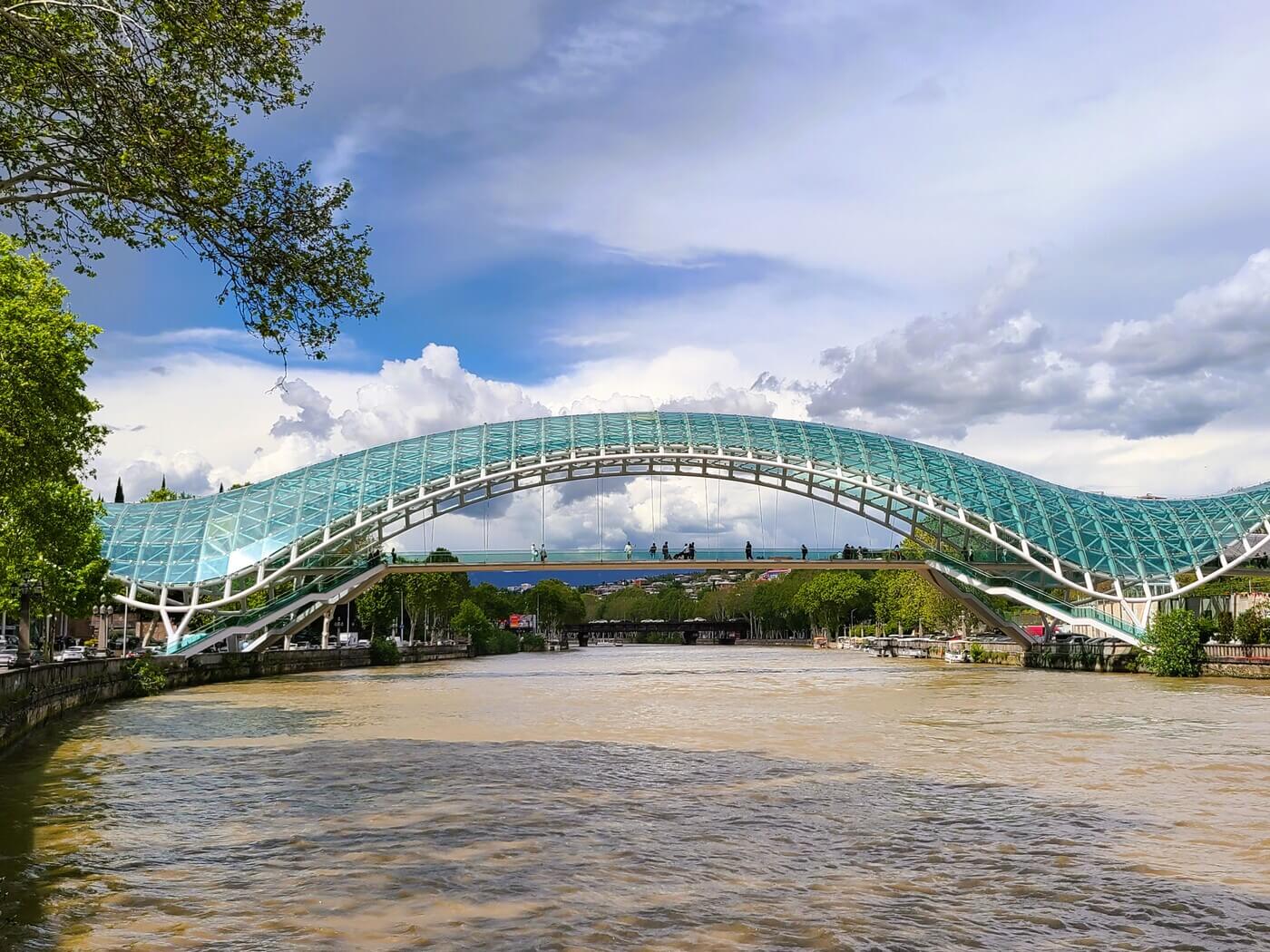
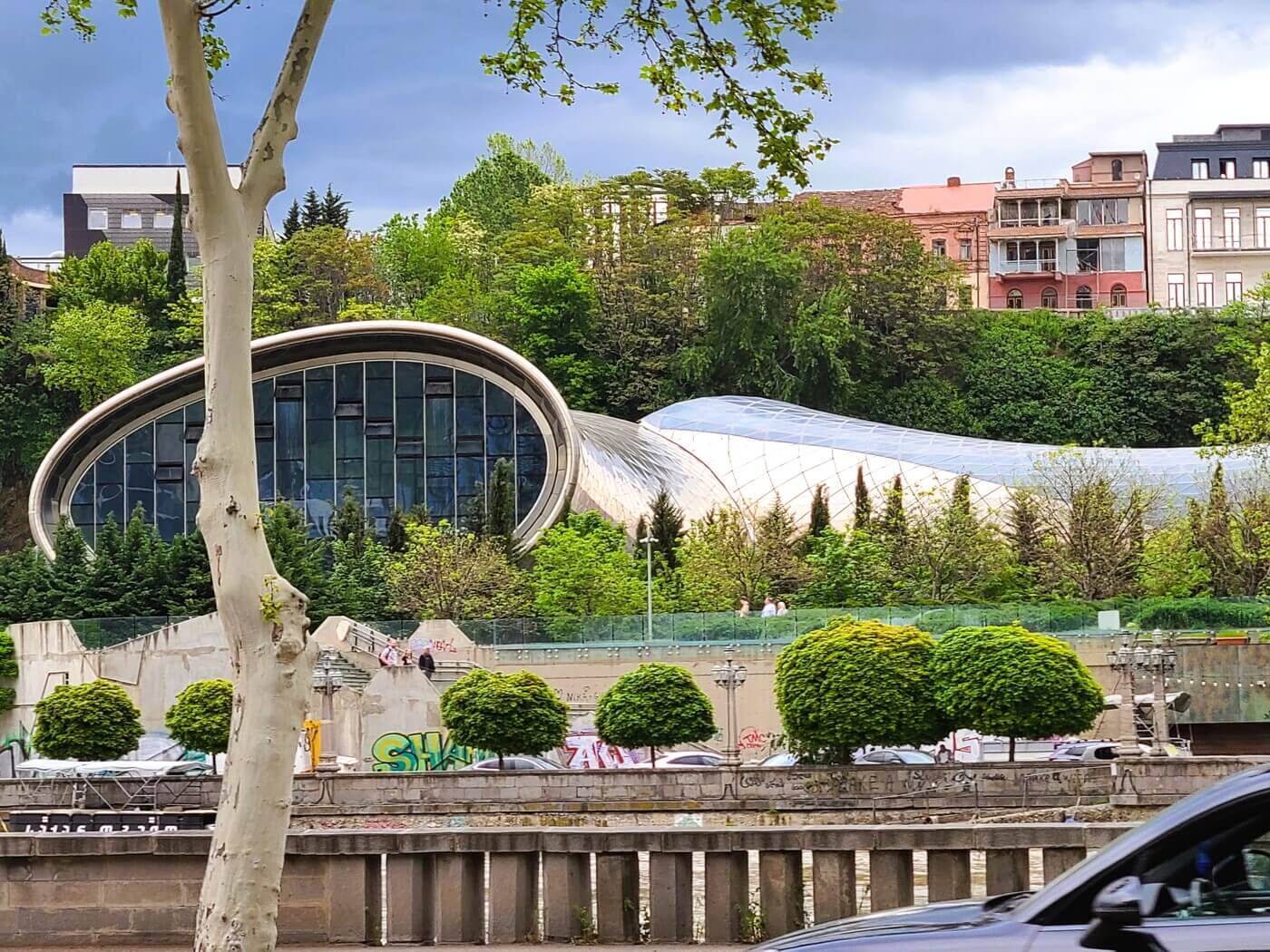
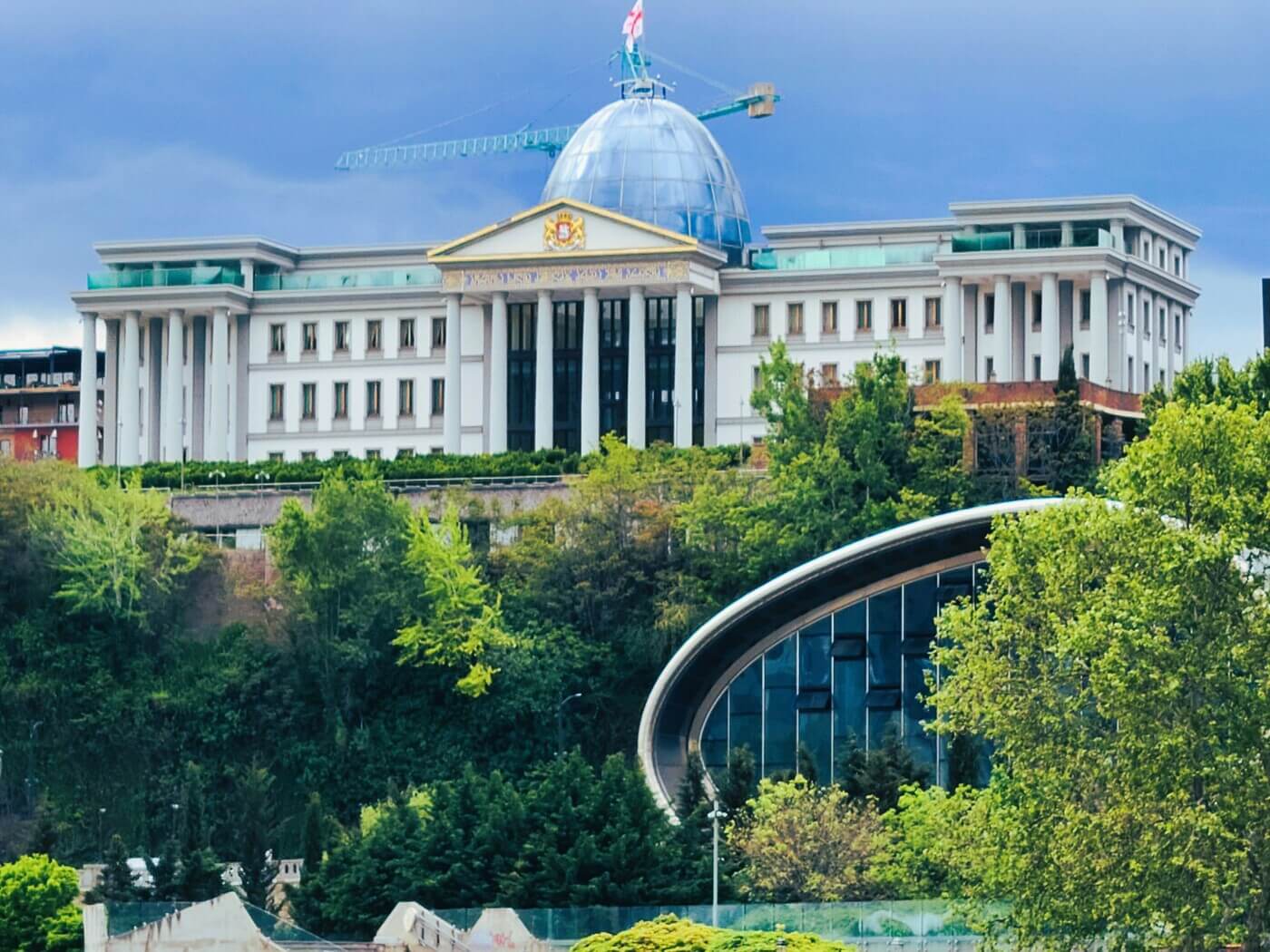
Walk in the opposite direction, where four architectural beauties are a must-see. The elegant turquoise Blue Bridge of Peace that connects the two sides of the city. The Rike Concert Hall and Exhibition Center, made up of two tube-shaped structures of steel and glass. The distinguished Ceremonial Palace, originally constructed to be the residence of the President of Georgia. Today it is used for state and government ceremonies and houses the Georgia Ministry of Foreign Affairs. The House of Justice, also known as the Public Service Hall. Locals have given it the nickname: Mushroom Building, an appropriate name that describes its creative architectural roof.
Tbilisi Sulfur Bathhouses
Across the road from the river on Gorgasali Street, one can’t miss the distinctive red-brick domes of Tbilisi’s famous sulfur baths. Fed by natural hot springs that are said to date back to the 5th century, the baths are closely tied to the city’s founding legend. As the story goes, King Vakhtang Gorgasali was hunting when his falcon chased a pheasant into a thermal spring. When the birds came up cooked, the king recognized the value of the hot springs and chose to found his city here.
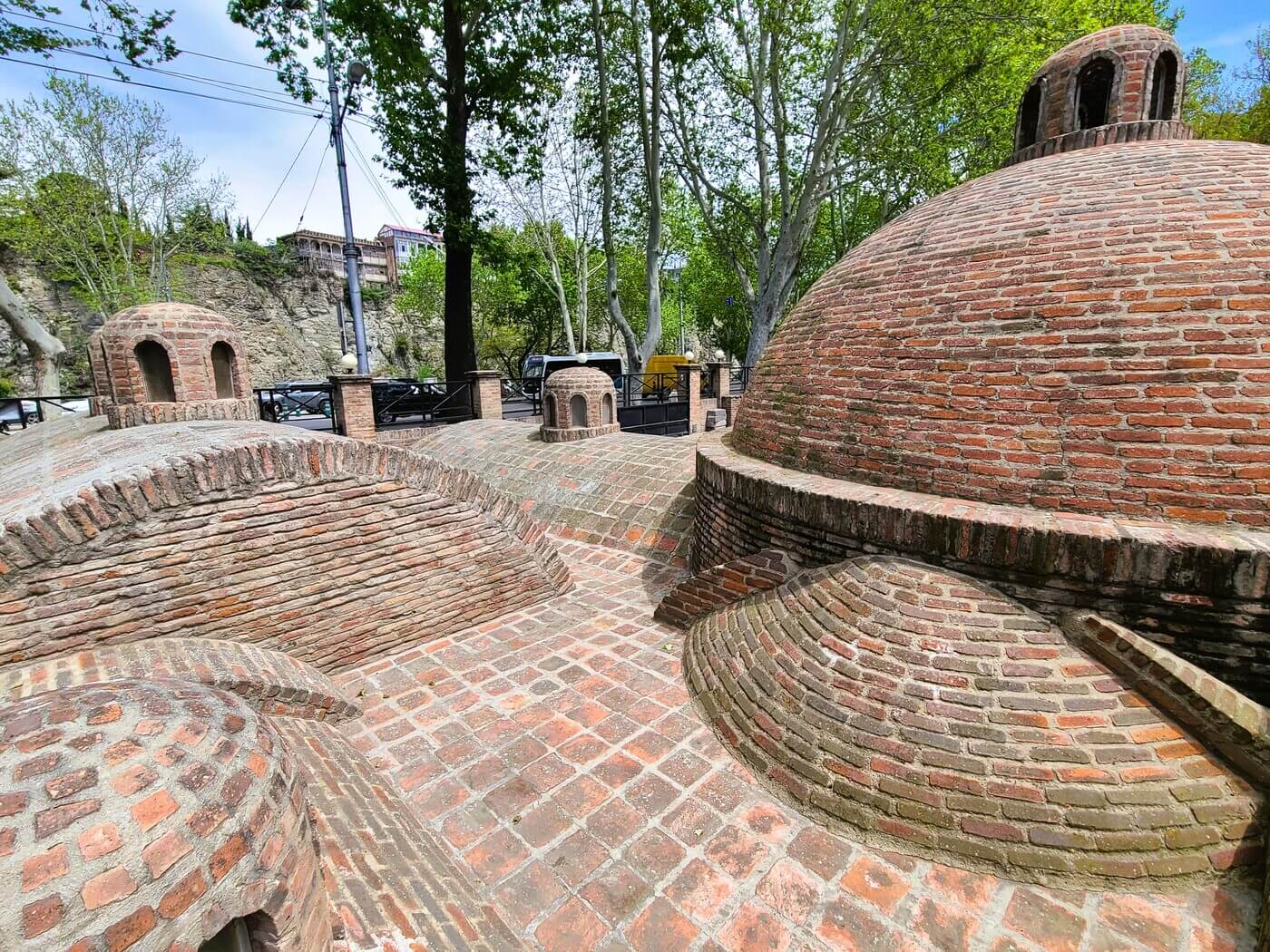
The red, round, pudding-bowl-shaped roofs date back to the 17th–19th centuries. The bathhouses are located underground to maintain the natural heat generated by the hot springs. Soaking in the sulfur baths is therapeutic. Aches and pains heave a sigh of relief as one sinks into the hot pools. The experience is rejuvenating and addictive. To add a romantic touch, most bathhouses offer a glass of wine or a cup of tea with miniature cookies after your bath.
**There are several sulfur bathhouses in Tbilisi. (Check Tbilisi sulfur baths online and make your reservation well in advance, especially if you plan to visit in high season- June until the end of September. Private rooms are limited and sell out quickly.)
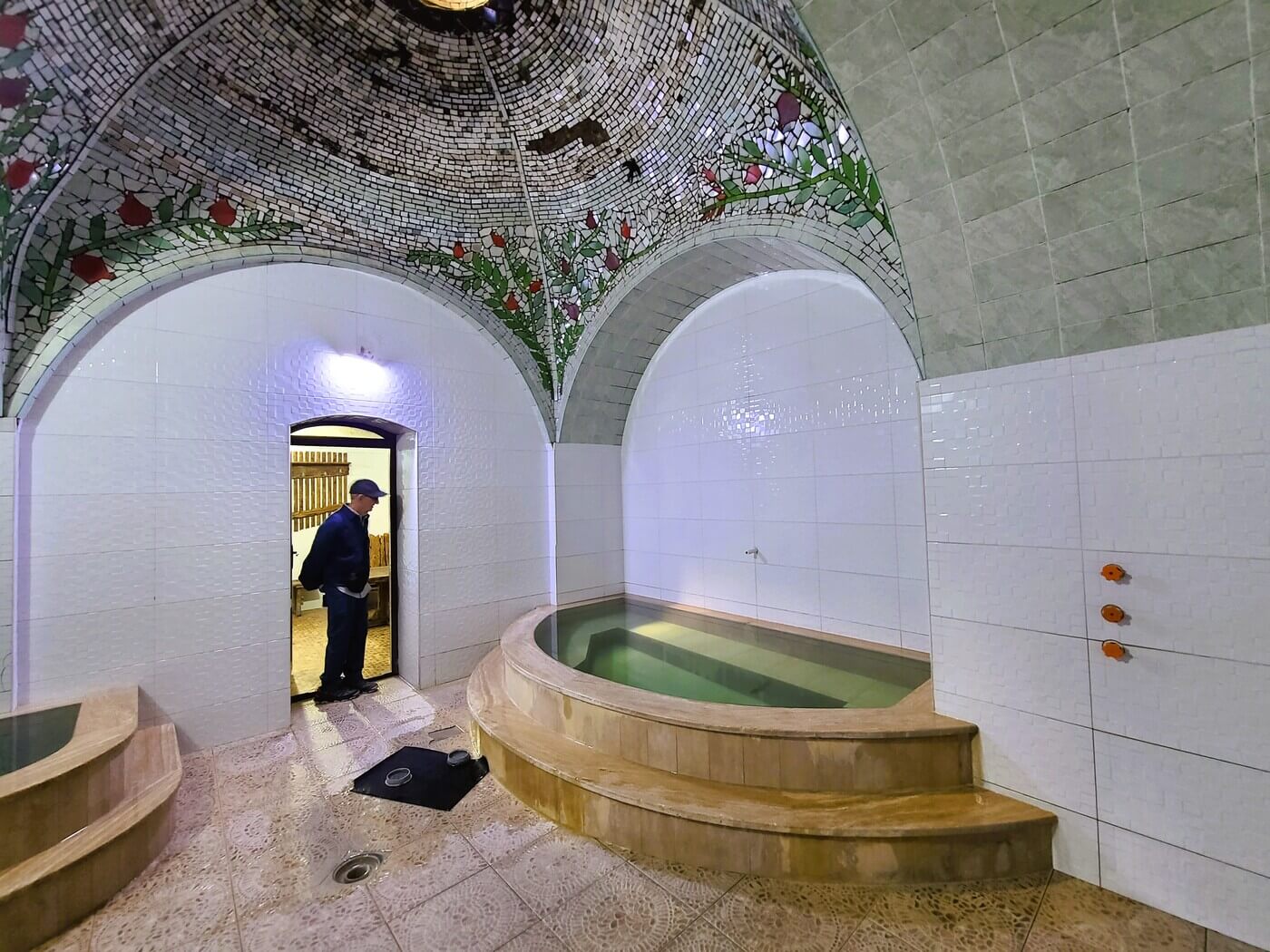
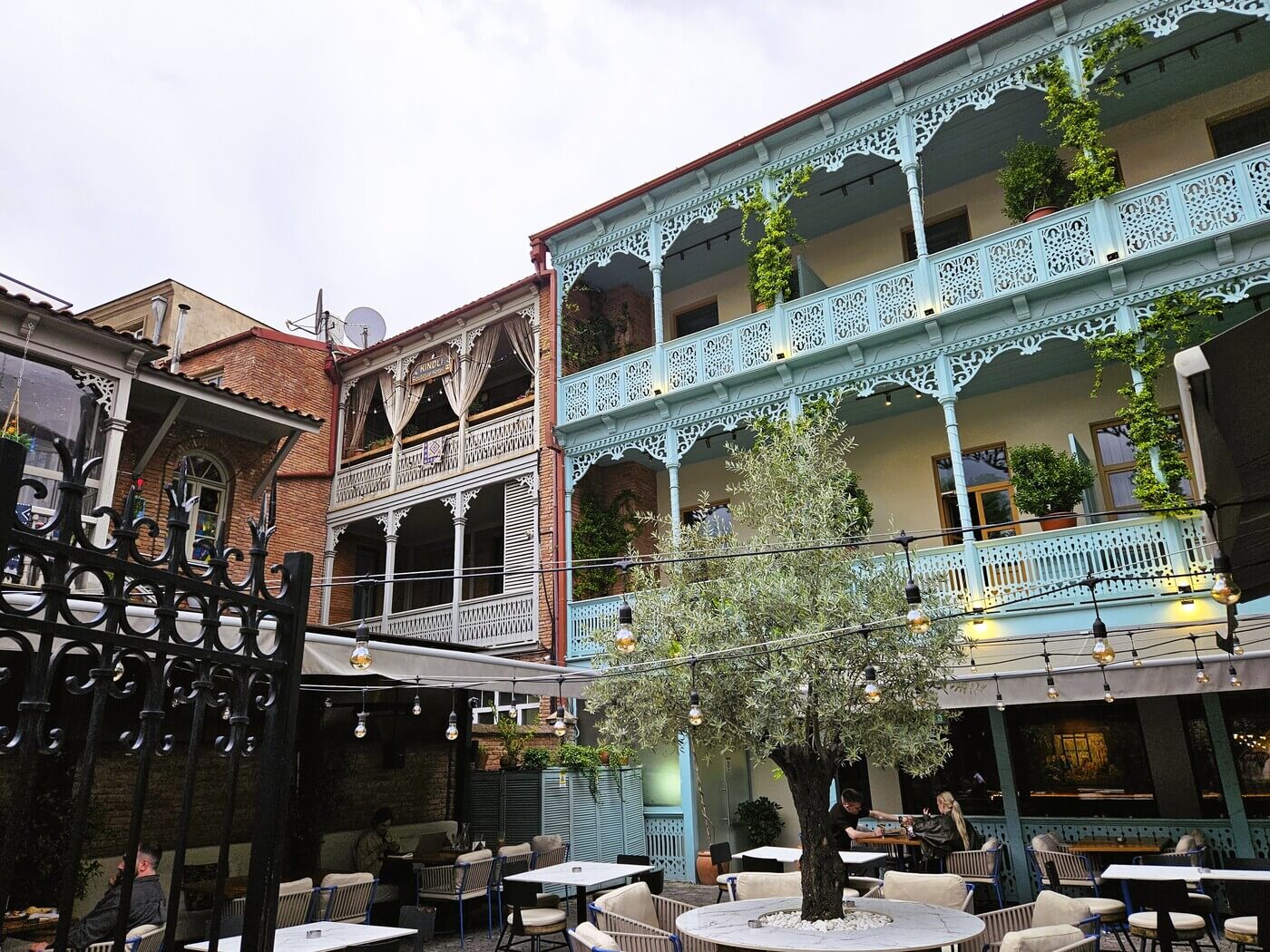
It’s only a six- to ten-minute walk from the brick bathhouse to the Museum of Azerbaijani Culture at 17 Vakhtang Gorgasali Street. You can’t miss this building with its arched windows and delicate balcony rails that remind one of British lace paper doilies.
Built in the 19th century by Mirza Fatali Akhundov, a revered philosopher, author, playwright and founder of modern Azerbaijani literature, it became a museum in 1982. In 1996, it was renovated, and in 2007, after major reconstruction, it was named the Museum of Azerbaijani Culture.
Mirza Fatali lived and worked in the house, which became a gathering place for the ‘intellectual elite’ who met frequently to discuss philosophy, literature, and social welfare. Today it’s an interesting museum displaying a diverse collection of art, musical instruments, handmade rugs, and a library.
Plan on spending forty-five minutes to an hour.
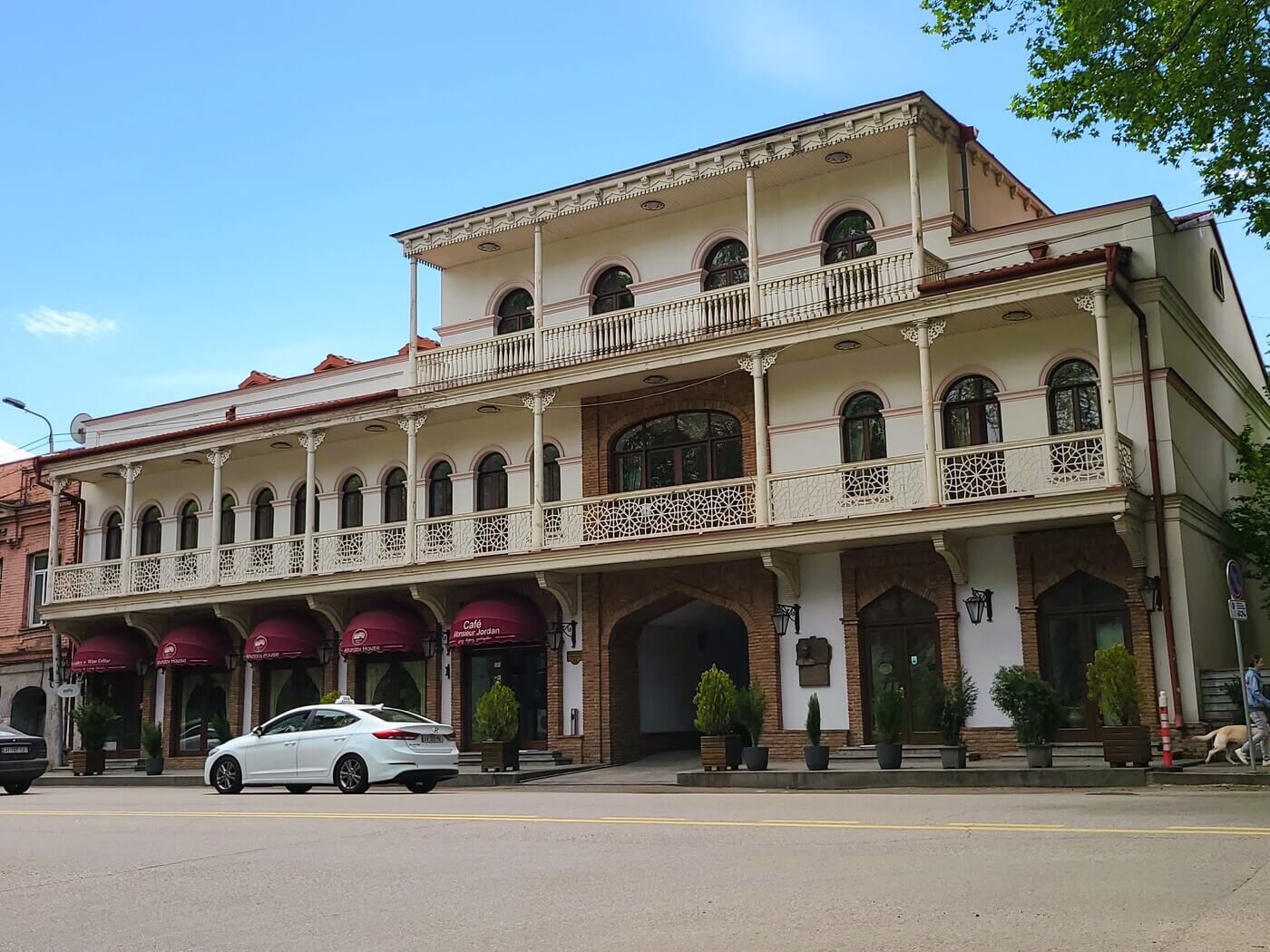
Meidan Square – a five-minute walk from the riverfront. It’s surrounded by cafés, restaurants, stunning views of Narikala Fortress perched on the mountain, and the traffic of cars, motorbikes, bicycles, pedestrians, and narrow lanes that lead into the heart of the Old Town.
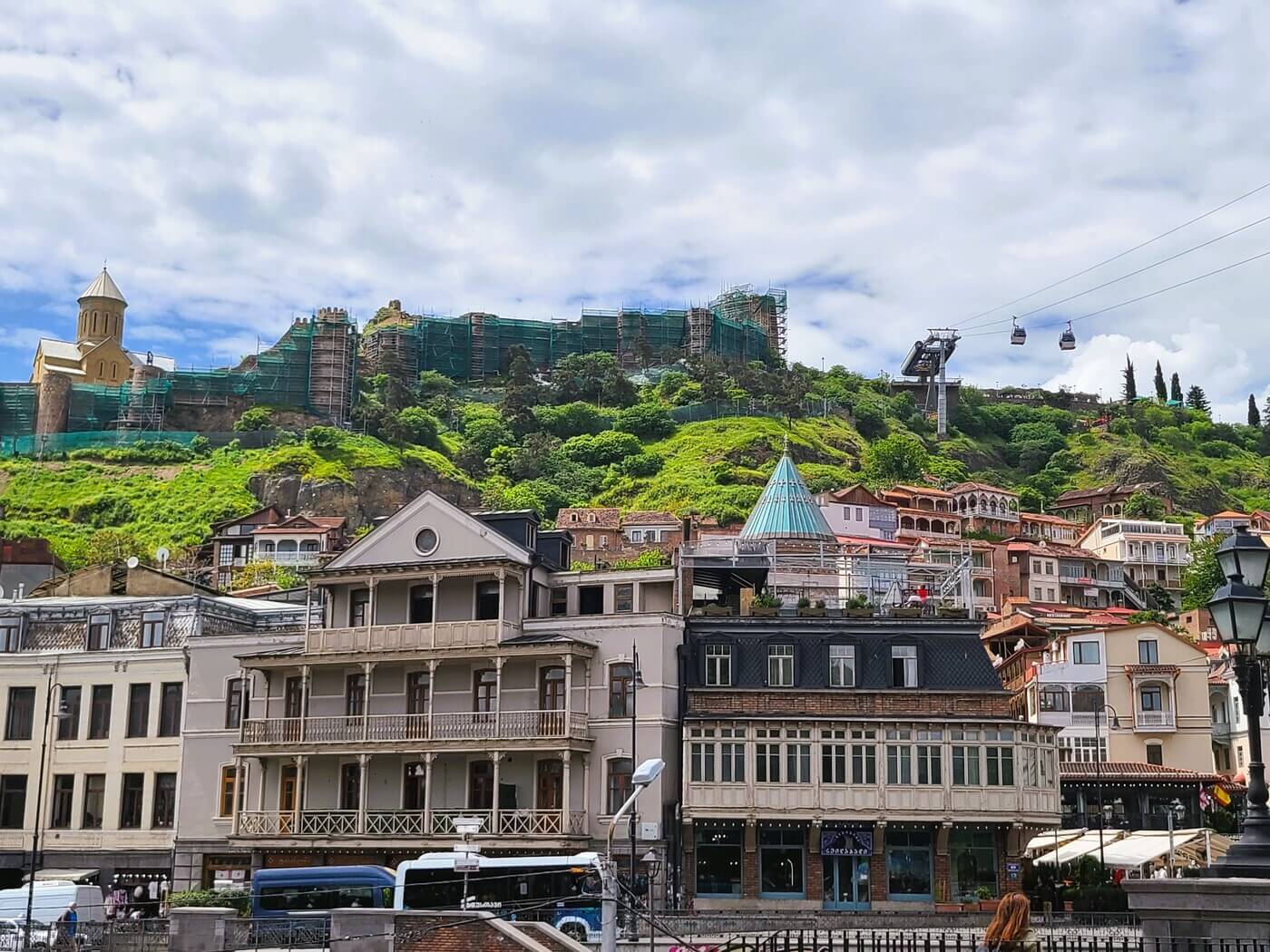
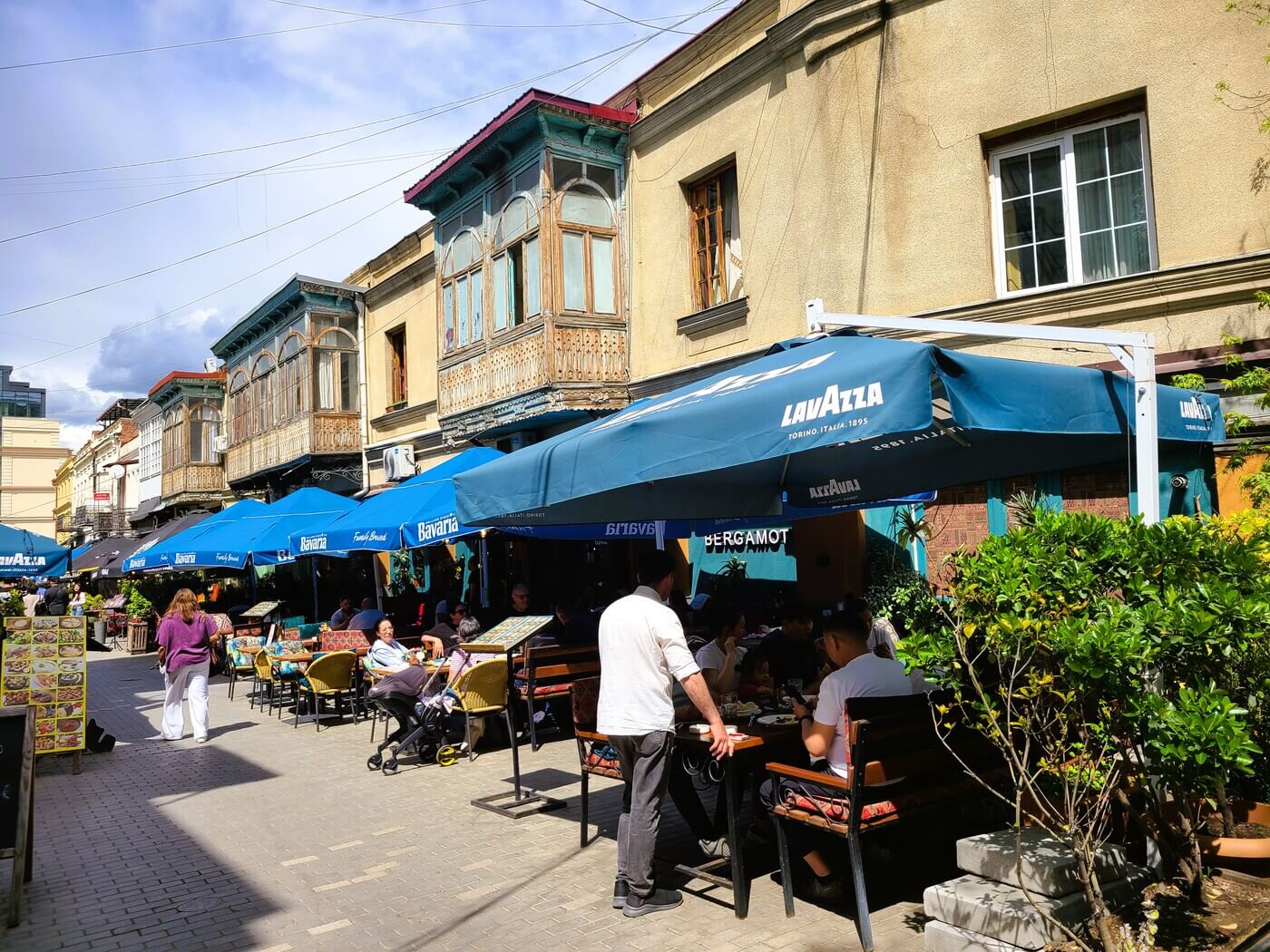
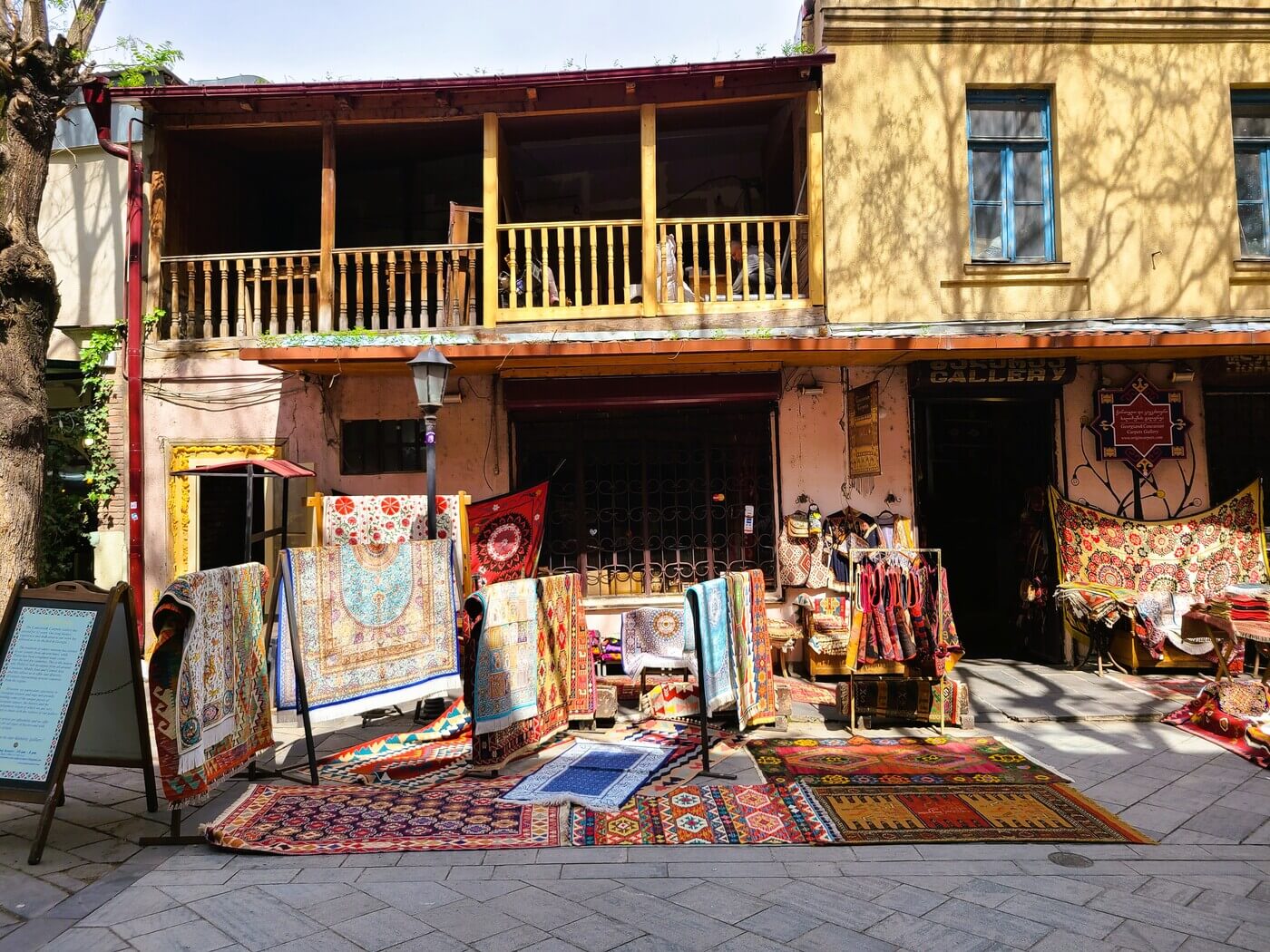
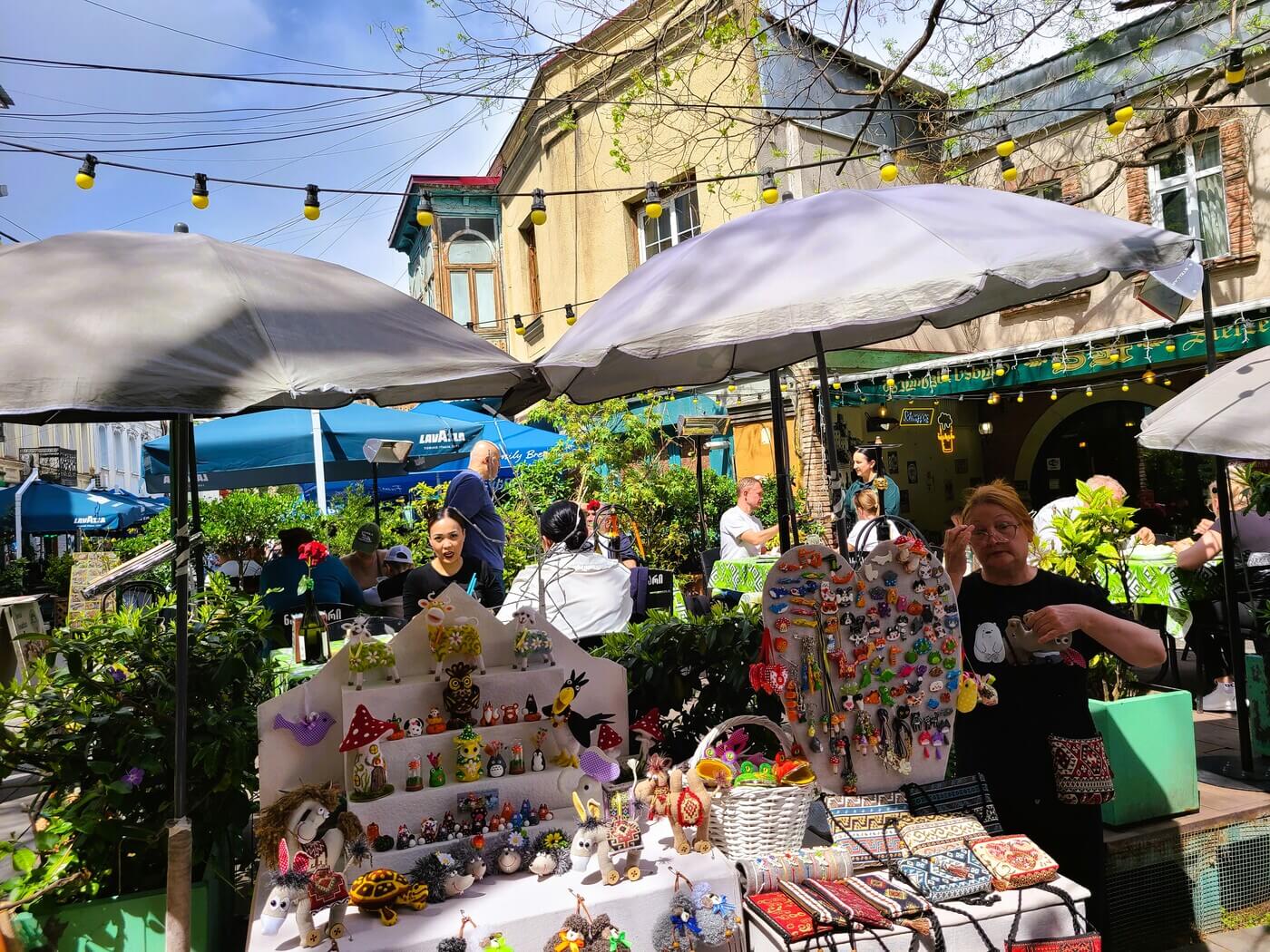
The Old Town: Plan on spending time in the vibrant, picturesque Old Town. Wander the cobbled, pedestrian-only streets, admire the architecture. Stop for a meal or a snack at the endless choice of restaurants, coffee shops, and bakeries. Browse the little stalls where artisans sell their honey, fruit drinks, jewelry, handbags, and homemade soaps.
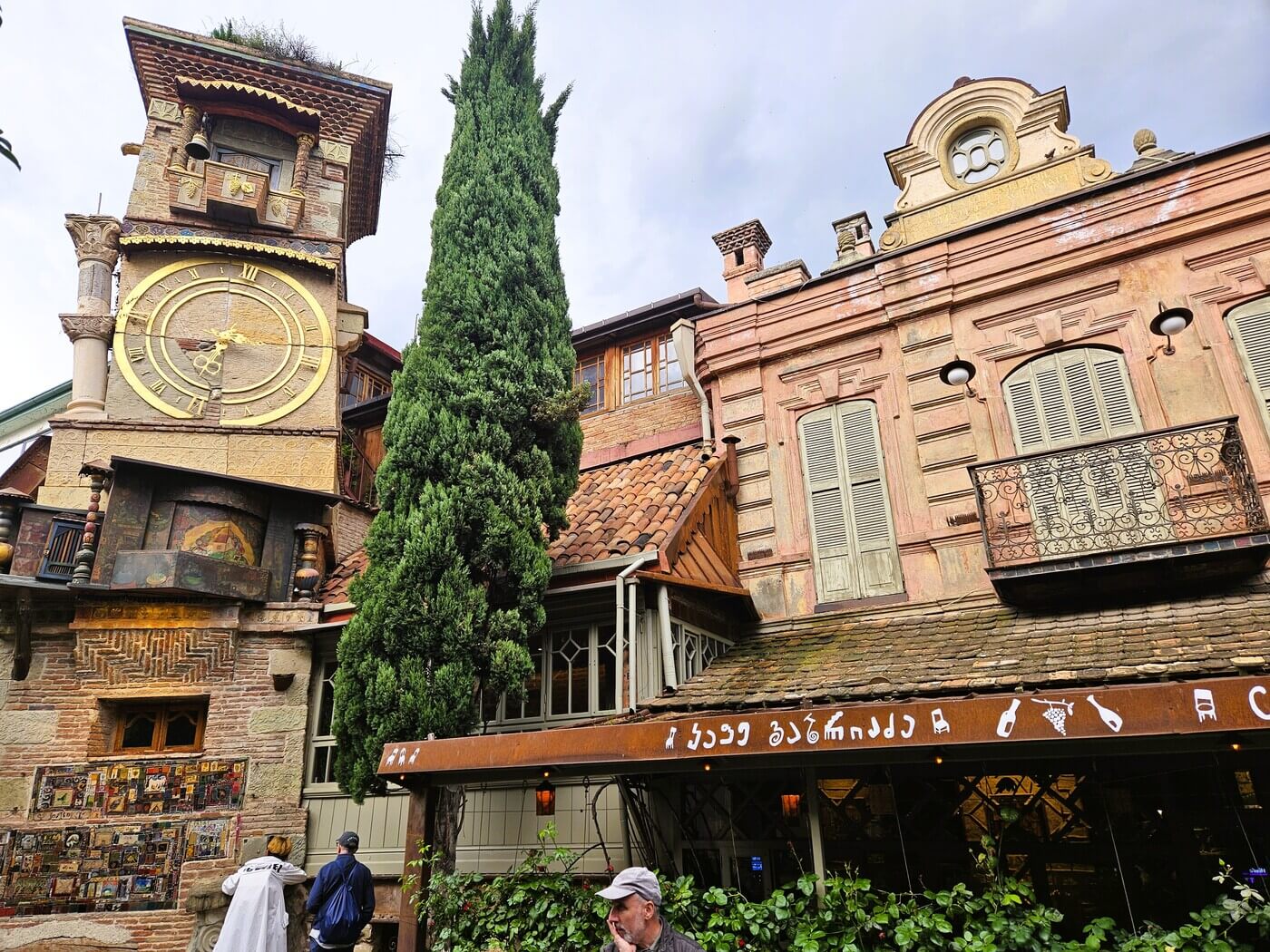
Don’t miss the Rezo Gabriadze Clock Tower attached to the Rezo Gabriadze Marionette Theater. Every hour on the hour, an angel comes out to ring the bell. The leaning clock tower, made from bricks and abandoned, repurposed pieces, has an adorable, childlike appeal. The top seems to balance like a skewed hat; the clock is only supported on one side by miniature, eclectic, Byzantine-style columns, with Romanesque, Medieval Georgian, and some Corinthian elements. A lopsided, multi-colored, painted box-like piece depicts a whimsical cottage on a hilltop, and a hotchpotch of painted ’tiles’ adorn the lower section. Look up at the very top where wisps of grass resemble tousled hair.
The churches of Tbilisi
Georgia has an abundance of beautiful churches, both ancient and relatively new. Here are some in or not far from Tbilisi’s Old Town:
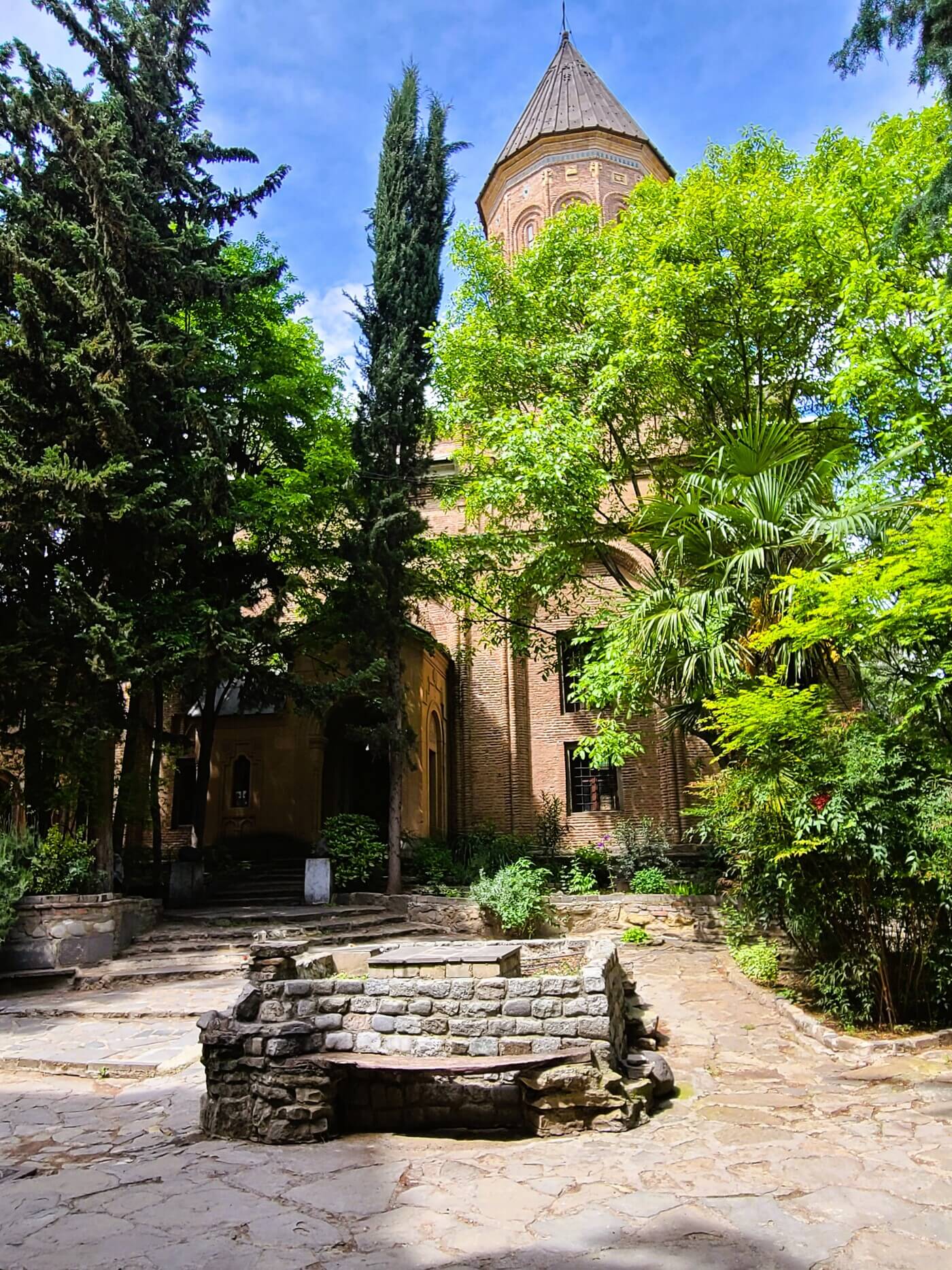
Norashen Holy Mother of God Church.
Look closely at the façade, and you’ll see that it’s covered in unusual, intricate bricks.
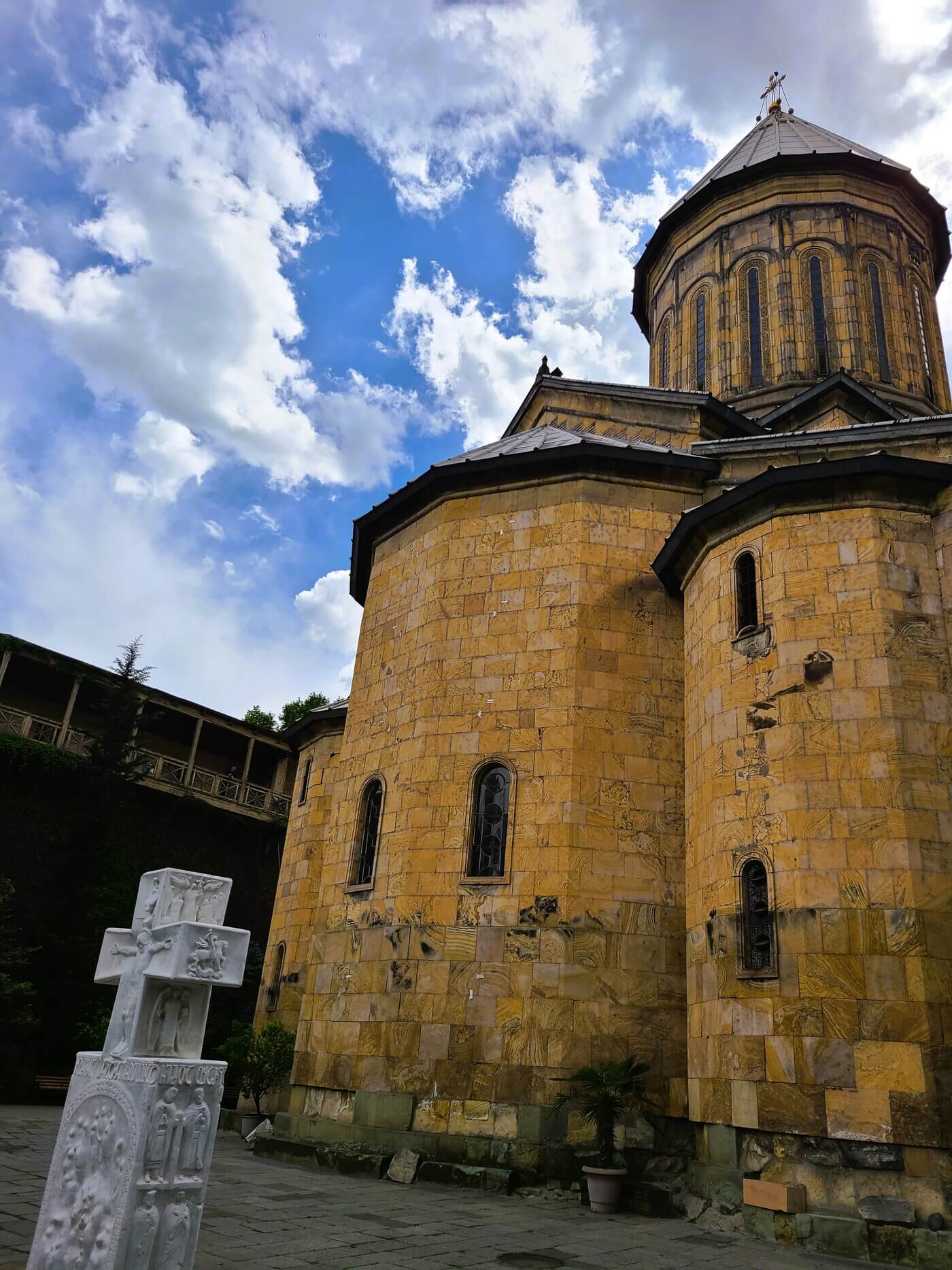
Sioni Cathedral – A Georgian Orthodox Cathedral – has a medieval Georgian design dating back to the 6th or 7th century.
Metekhi Church of the Nativity of the Mother of God.
Saint George’s Church – a 13th-century Armenian church always has a host of visitors, who come to pray and admire the interior.
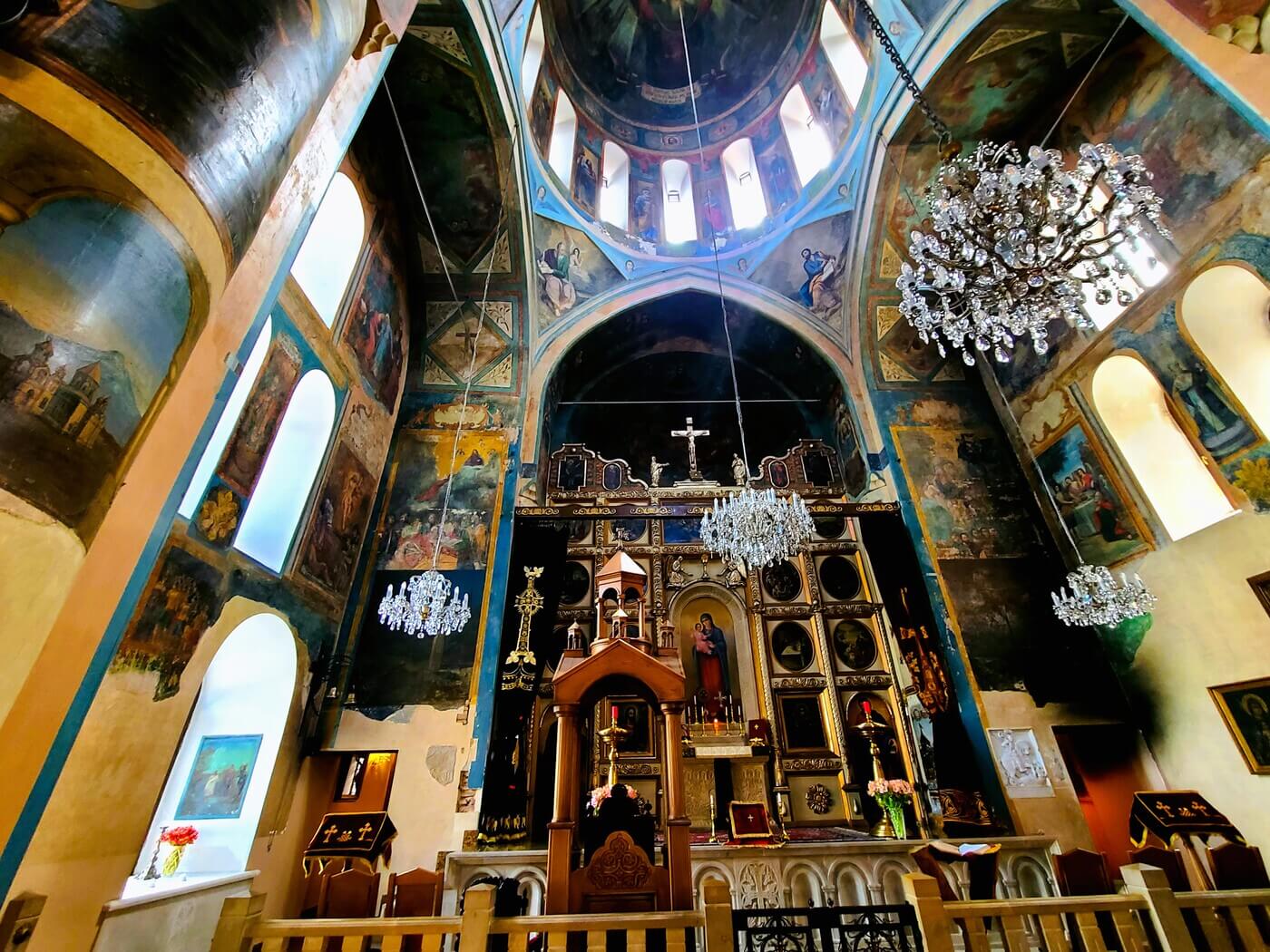
Tabor Monastery of Transfiguration.
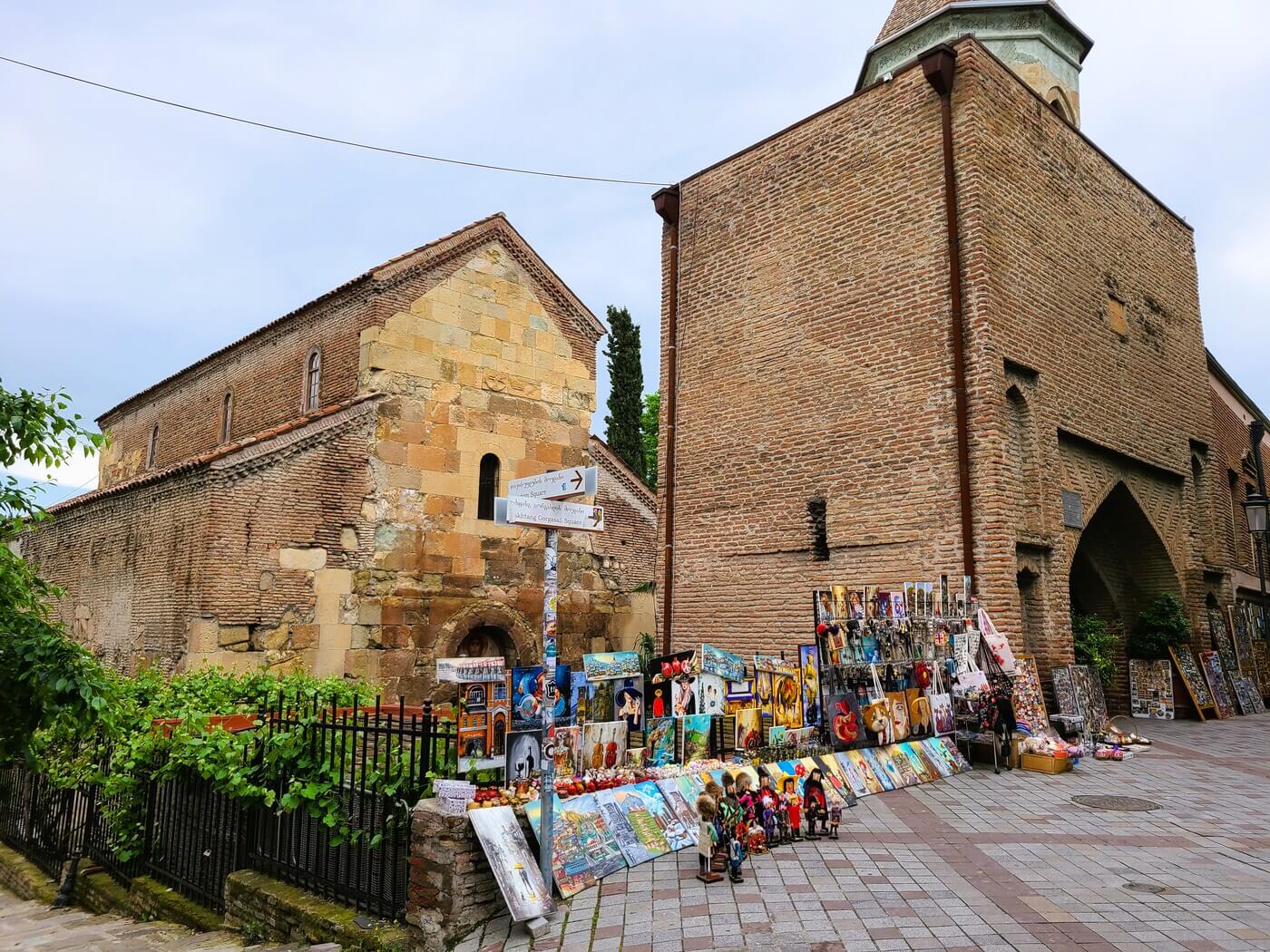
Anchiskhati Basilica – The oldest surviving church in Tbilisi.
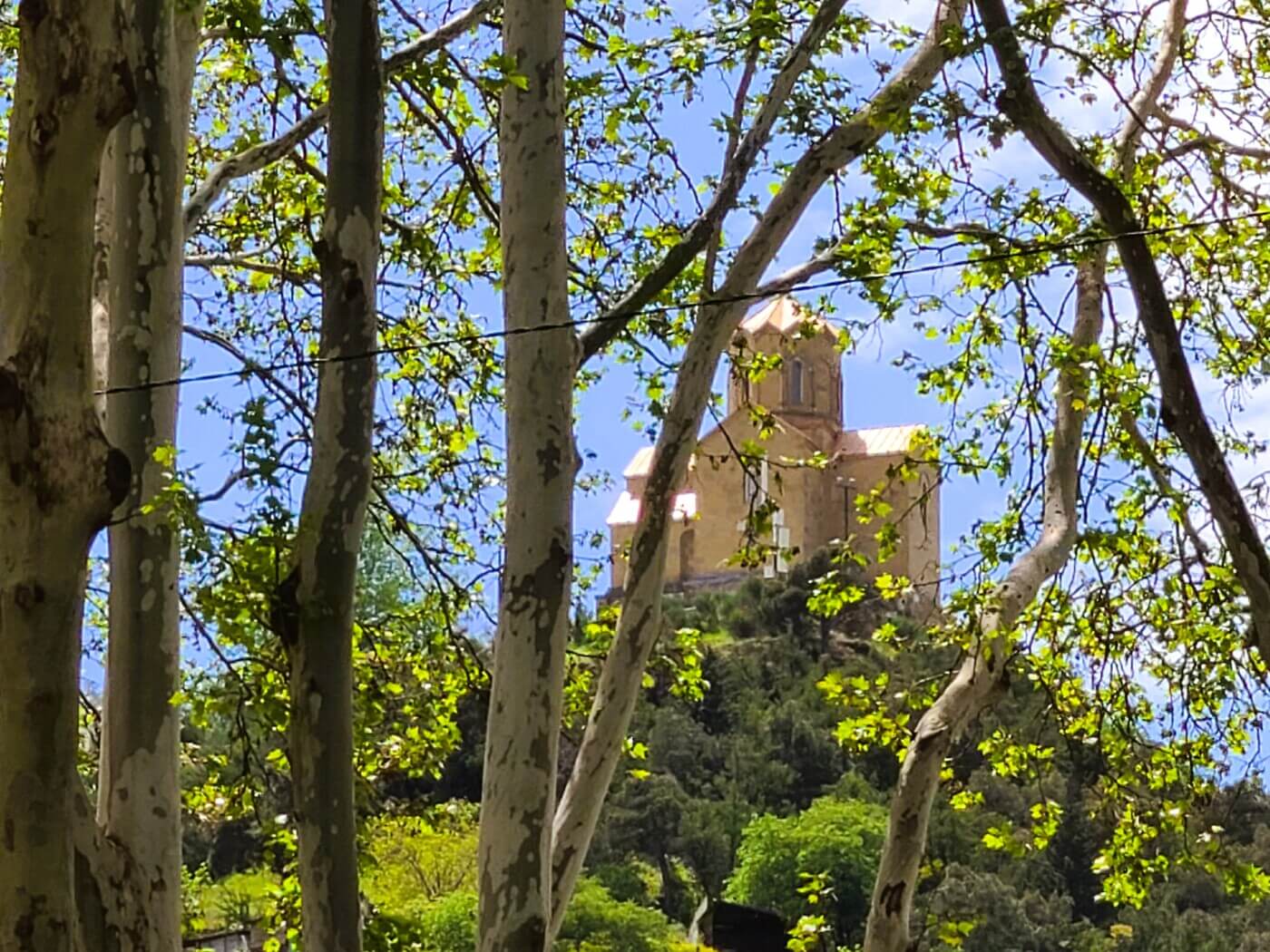
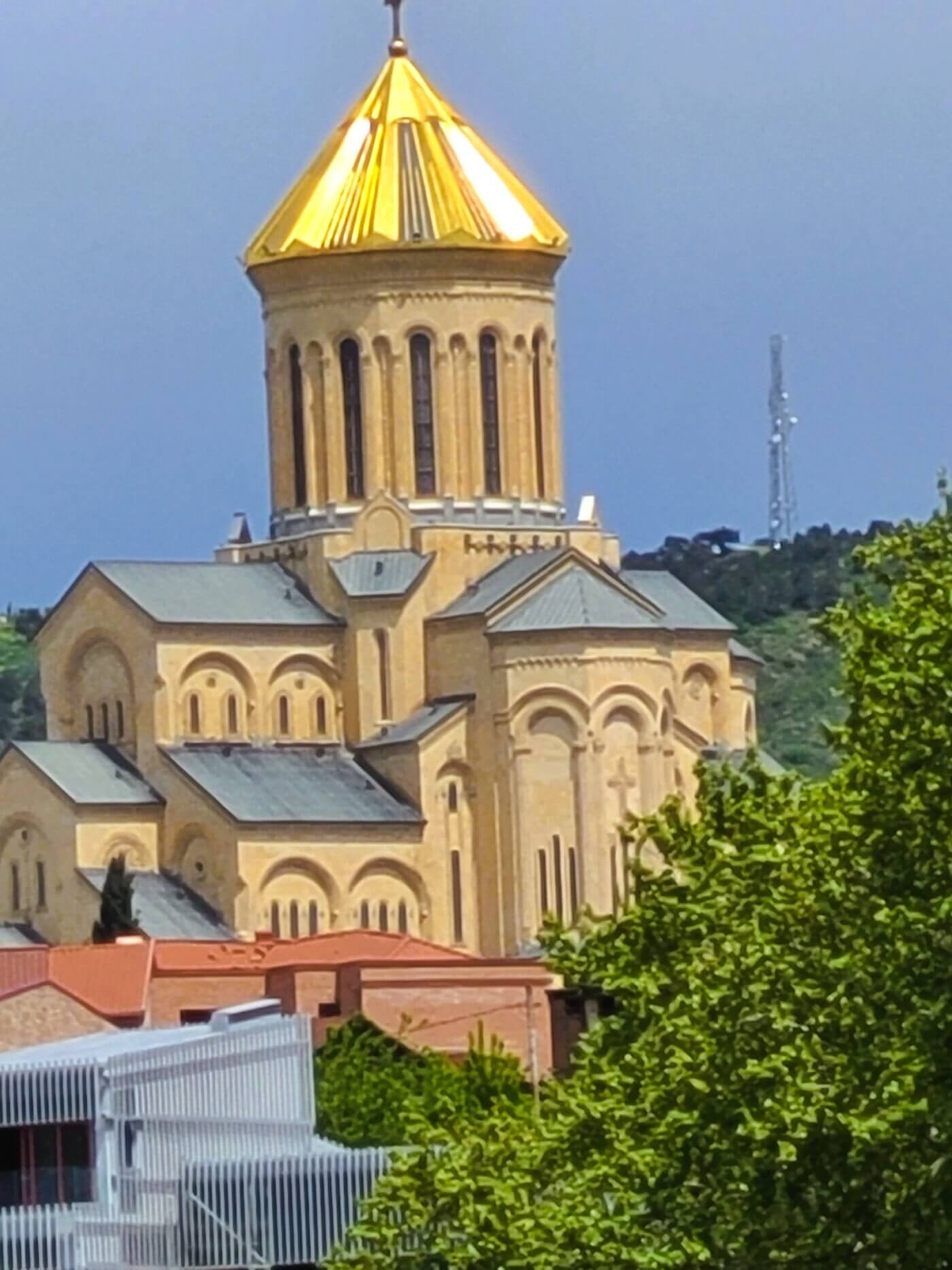
The gold–domed Holy Trinity Cathedral of Tbilisi sits on a hilltop outside the Old City but shimmers in the sunshine and is clearly visible from the Old Town. The cathedral, also known as Sameba, was completed in 2004.
The Synagogues of the Old City of Tbilisi
Jewish history in Tbilisi harks back to the 6th century BC, making it one of the oldest communities. By the Middle Ages, they were well established in Georgia and involved in trades, crafts, and commerce.
The Great Synagogue in the Old Town was built by Akhaltsikhe Jews in 1900. Akhaltsikhe is a city in southwestern Georgia, where Jews lived for thousands of years. They spoke Georgian and blended ancient Jewish beliefs and traditions with Georgian culture. In the early 19th century, many of them moved to Tbilisi. Most Jews emigrated to Israel in the 1970s.
*Book a guided group or private tour of the synagogues.
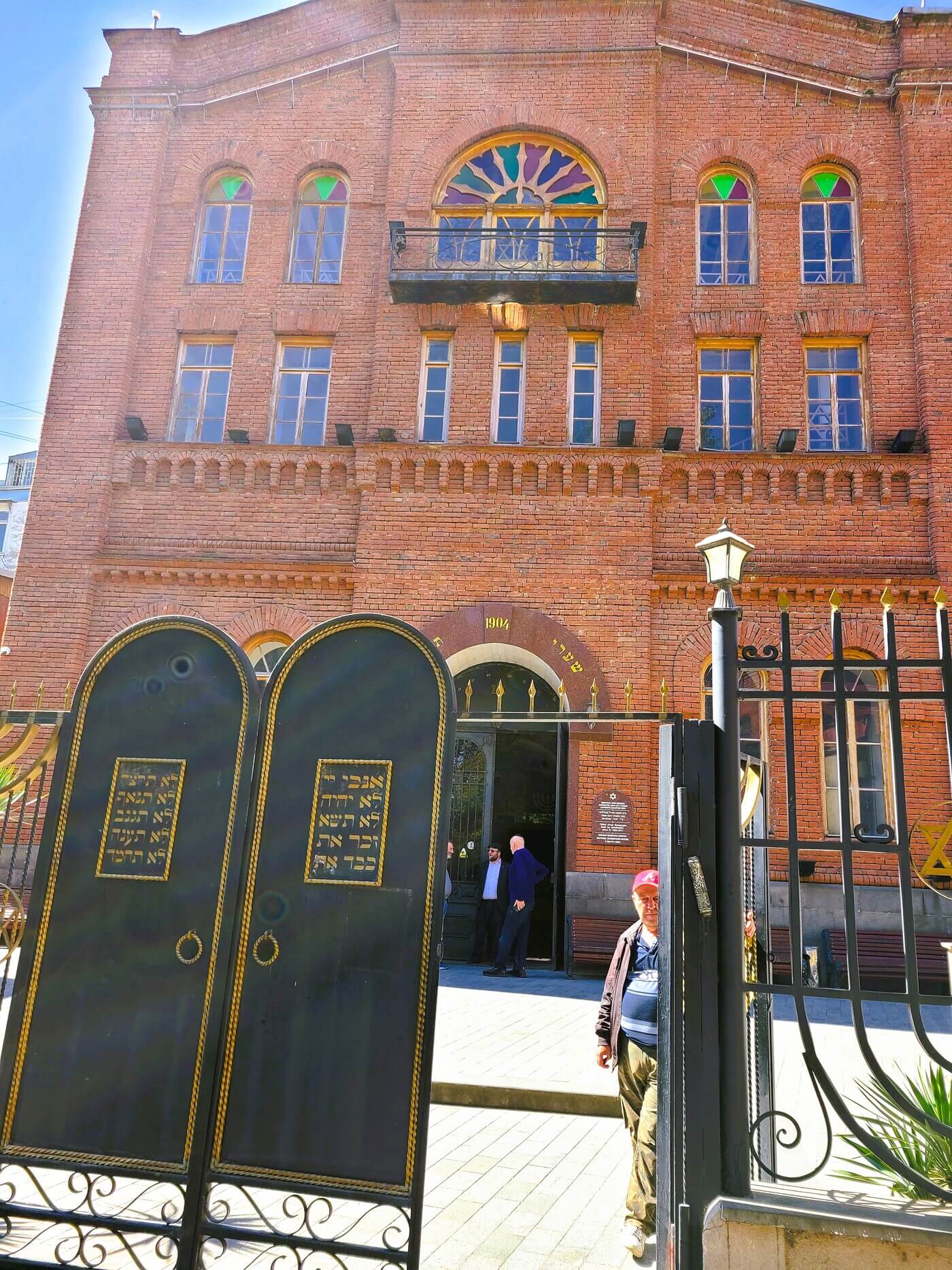
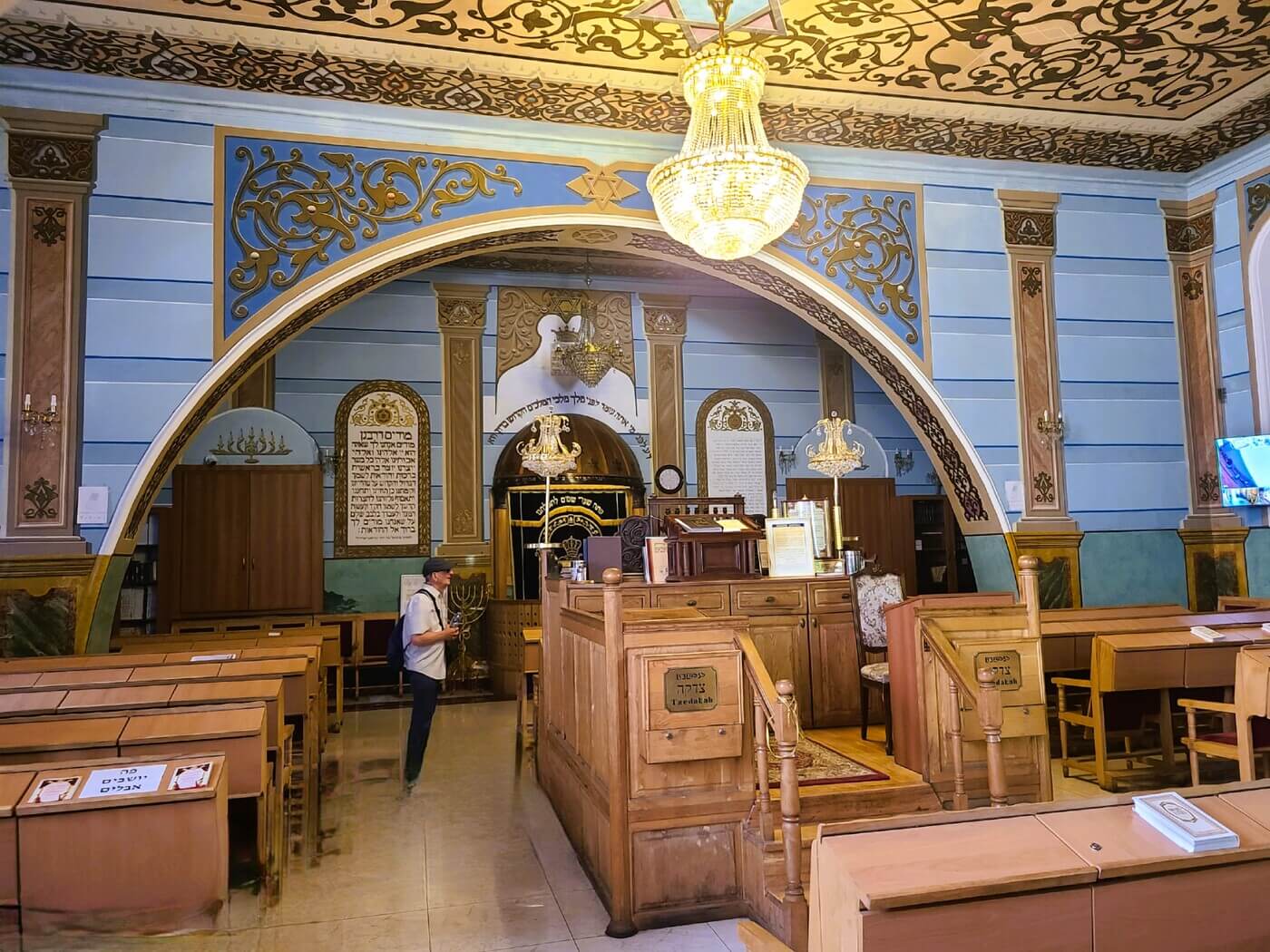
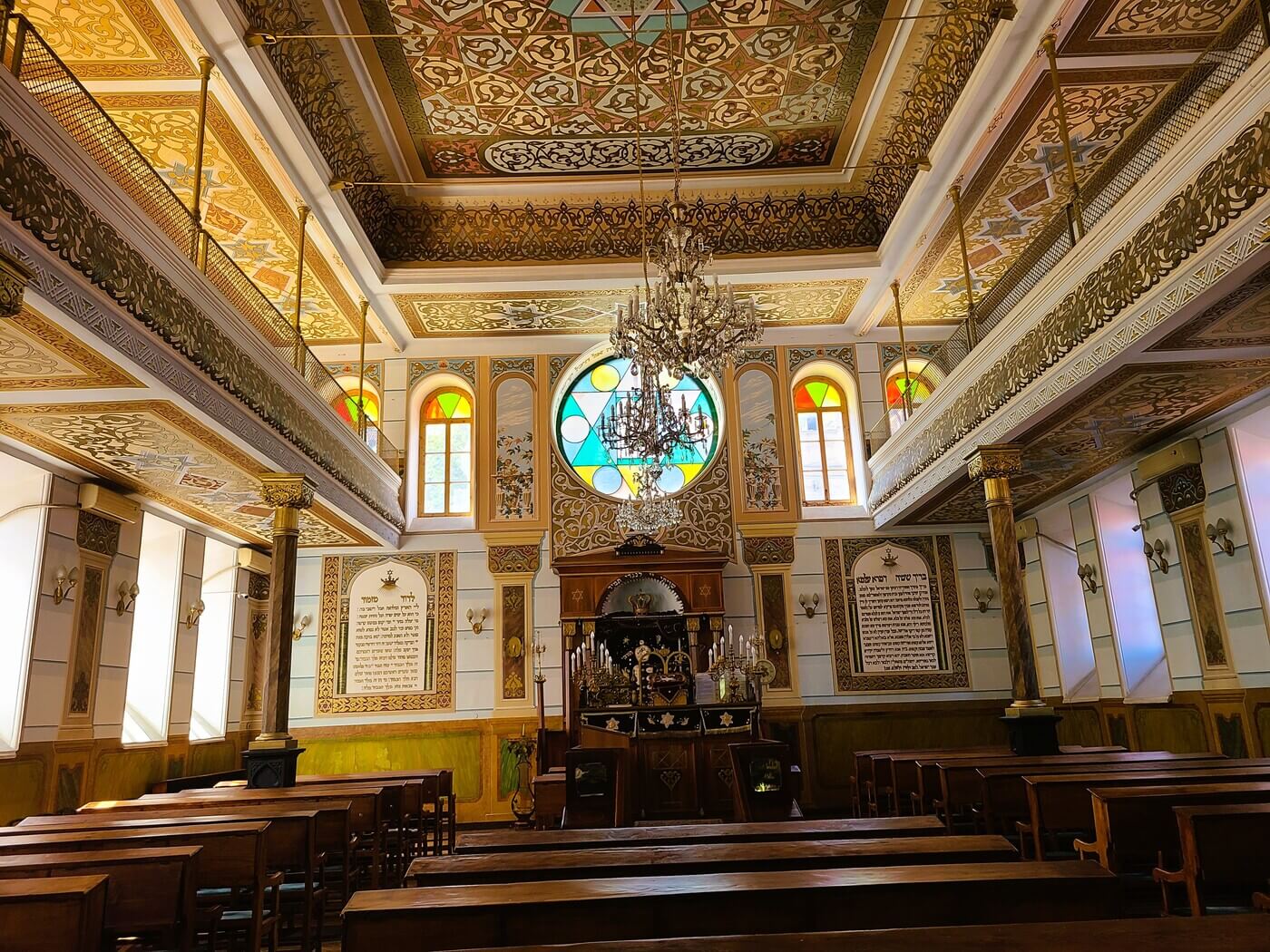
The Great Synagogue – built between 1904 and 1911, consists of two synagogues. The small shul on the ground floor is cozy and charming. Its interior is adorned with soft shades of blue and caramel-colored wood. The large synagogue is on the upper floor and has a traditional upper balcony for women and a lower floor for men.
Beit Rachel is a small synagogue located in a tiny plaza. The entrance has a menorah carved into the wooden door. It was built in 1864.
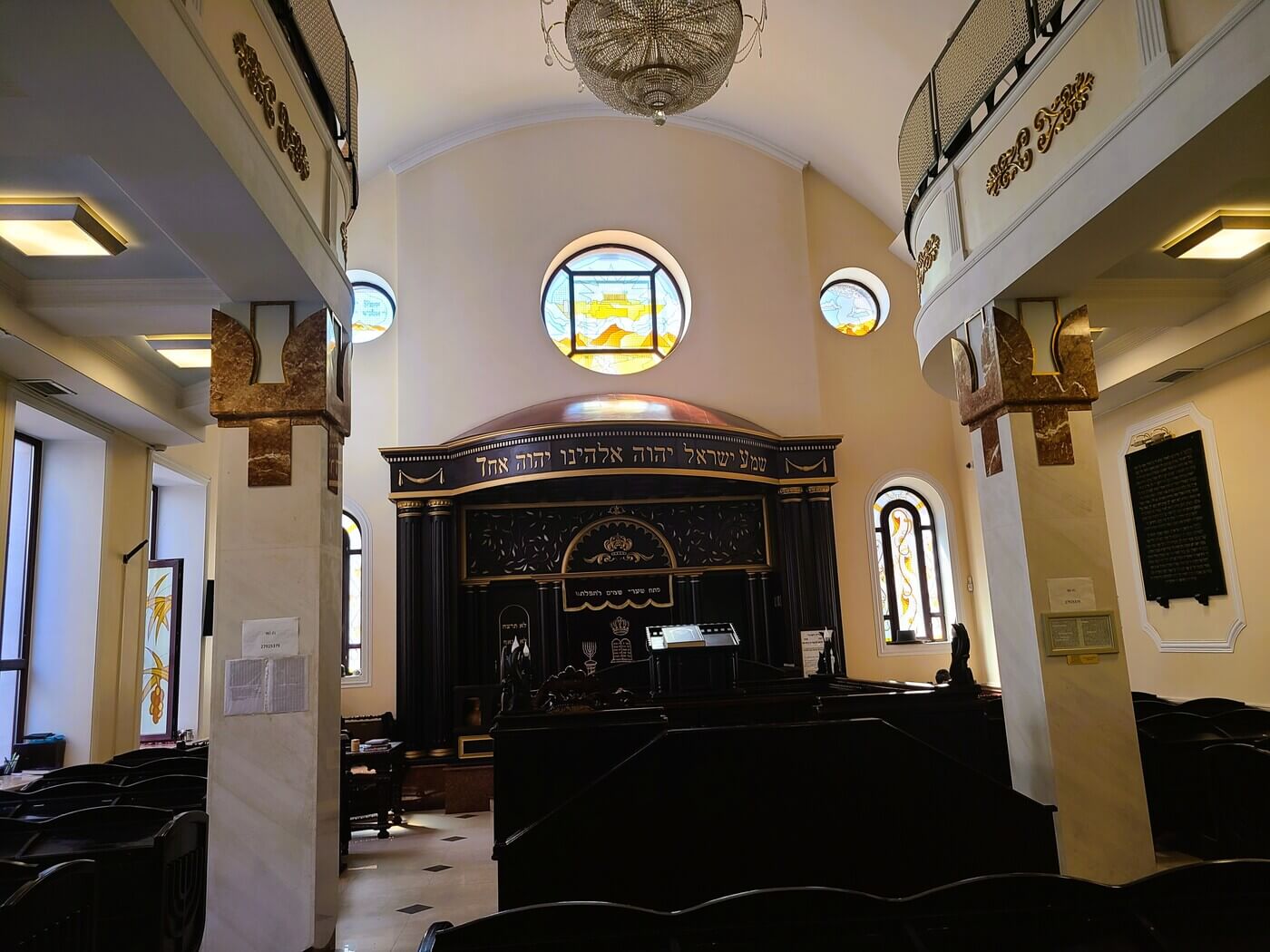
The First Soldiers’ Synagogue – at 10 Anton Katalikosi Street (also known as 10 Gia Abesadze Street)- was built in the Neo-Romanesque style by the Jewish community between 1916 and 1918. During the Soviet era, it was closed as a synagogue and subsequently converted into a theater. It retains a protected cultural heritage status.
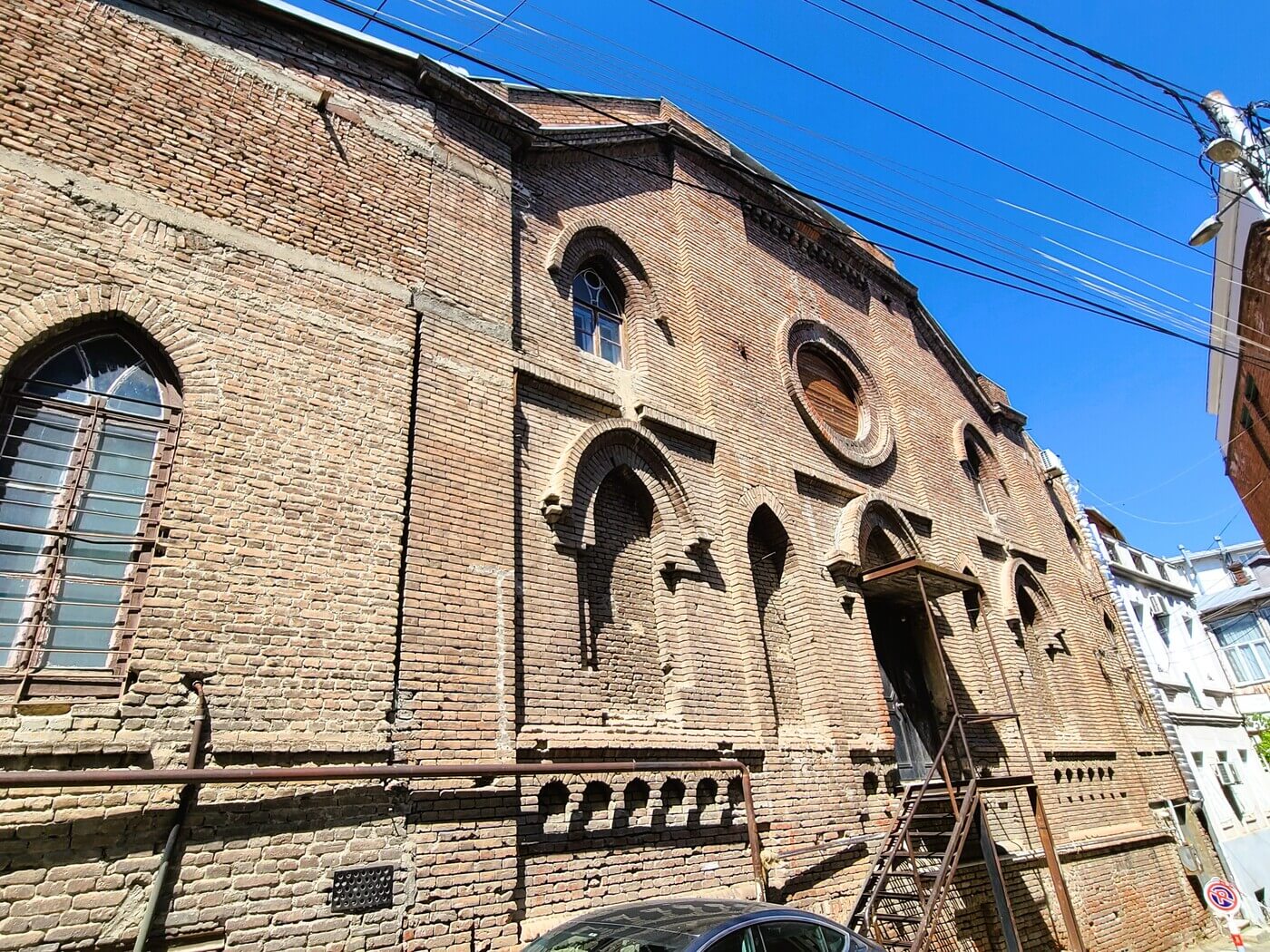
The David Baazov Jewish Museum covers the history of the Jews in Tbilisi and in Georgia. It was originally a synagogue, often called the Dome Synagogue, which referred to its domed architecture.
It is well worth a visit, preferably with a local guide who is familiar with its history.
From the Old Town, walk across the Bridge of Peace to Rike Park Gardens. The park is much more than just creative garden landscaping. It has a labyrinth of paths, sculptures and musical fountains.
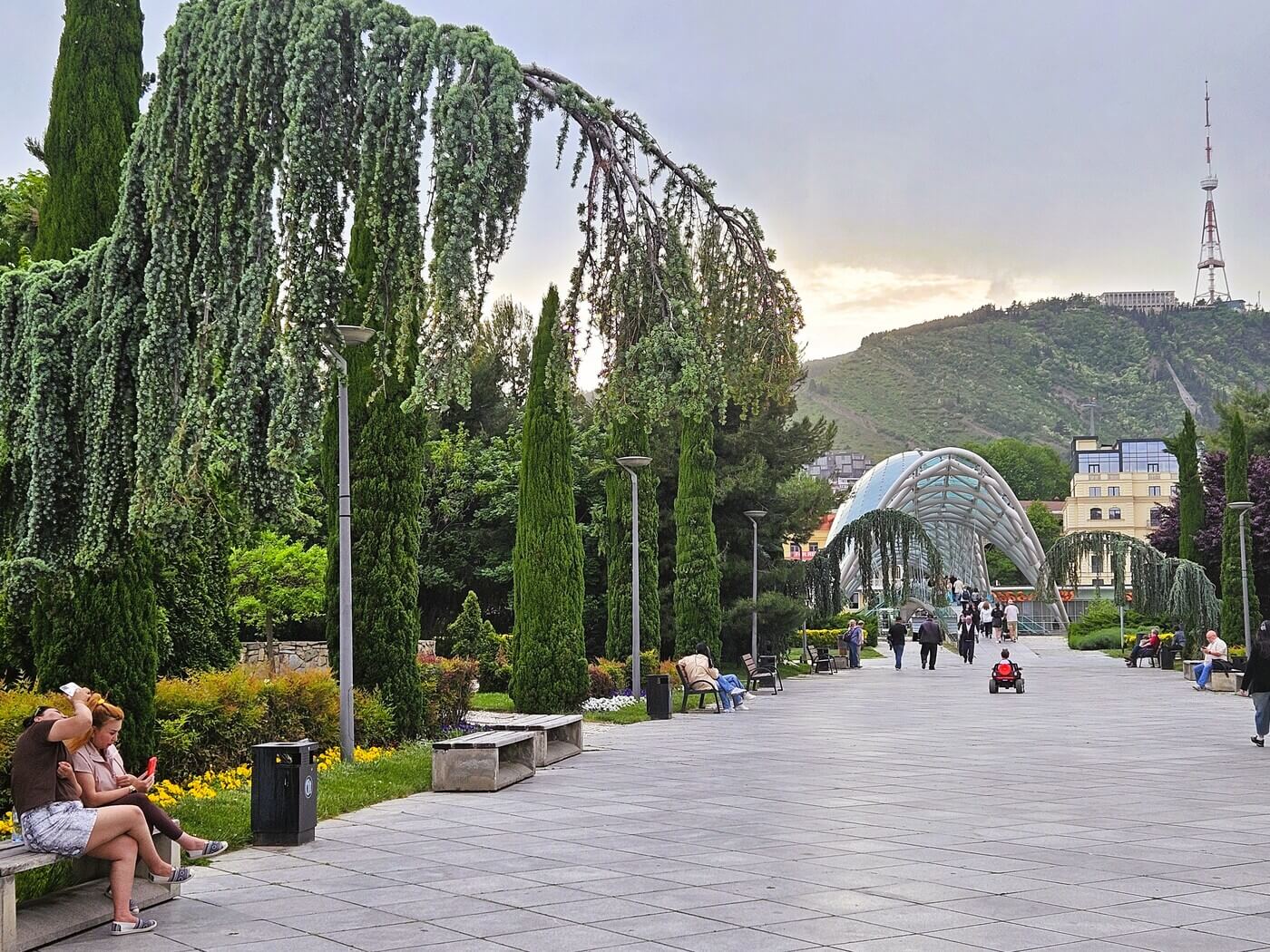
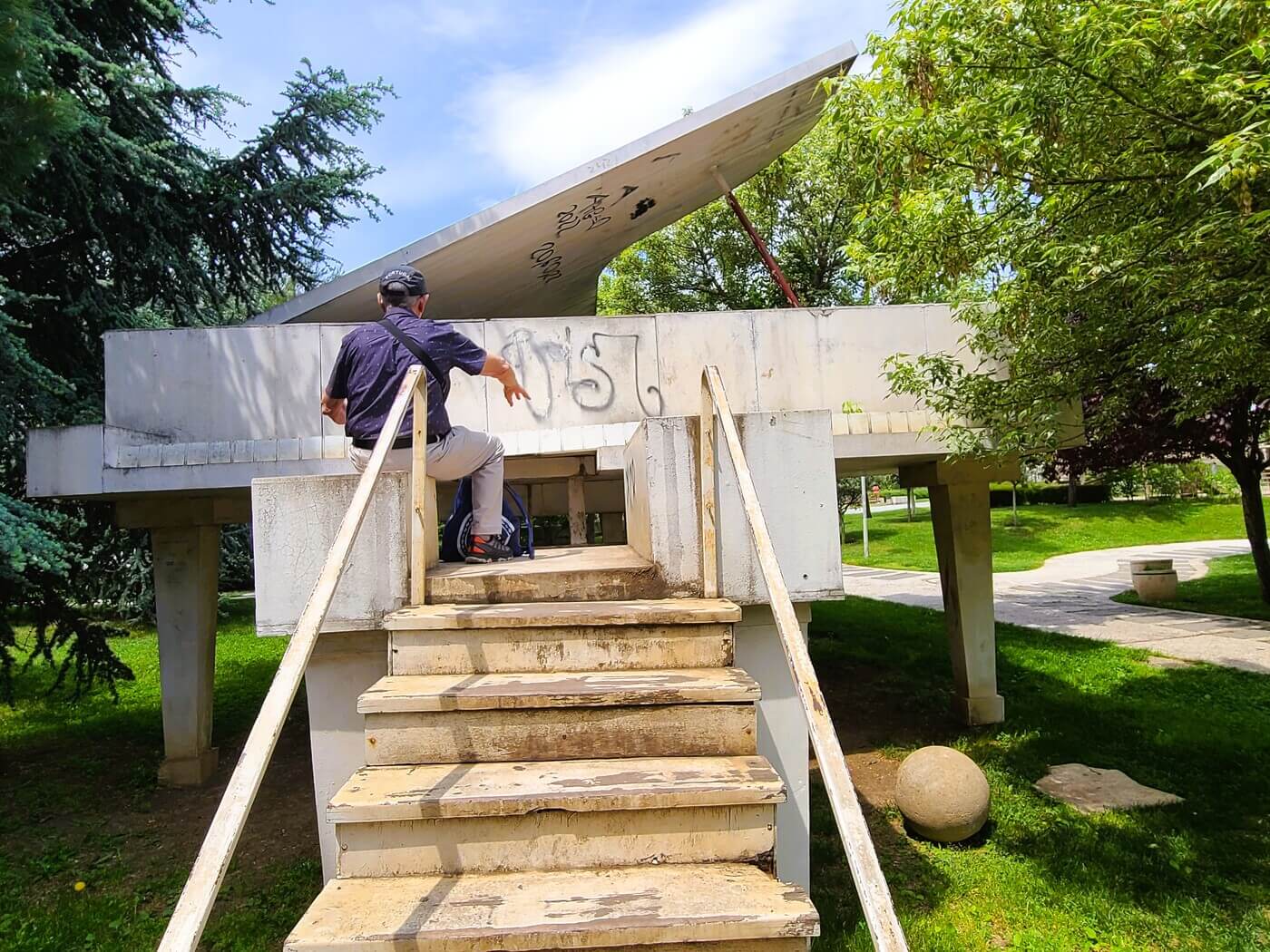
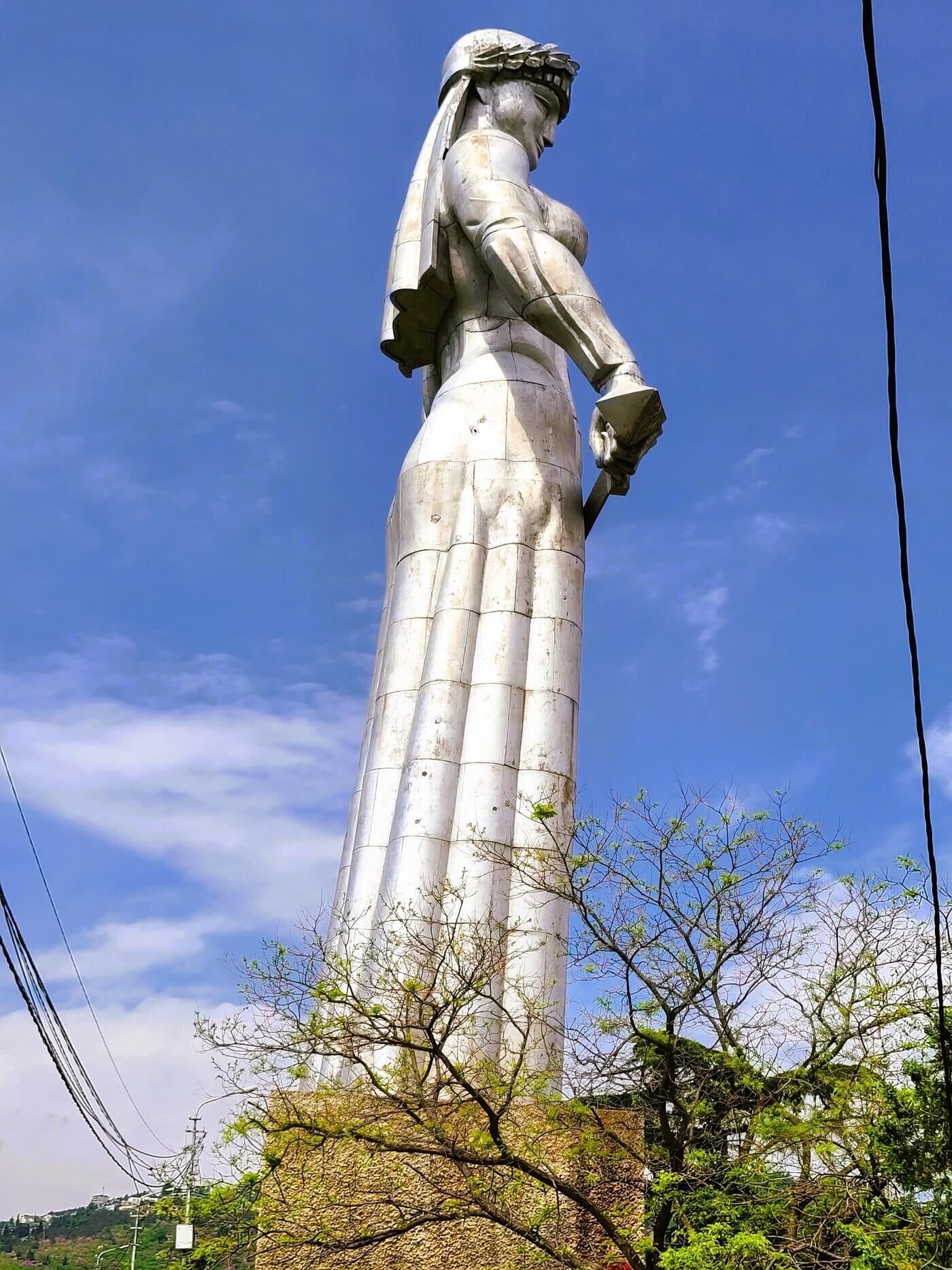
in the Rike Gardens, you can purchase tickets for the cable-car ride up to the Mother of Georgia Statue, and take in the unforgettable, panoramic views of Tbilisi that spread out below you.
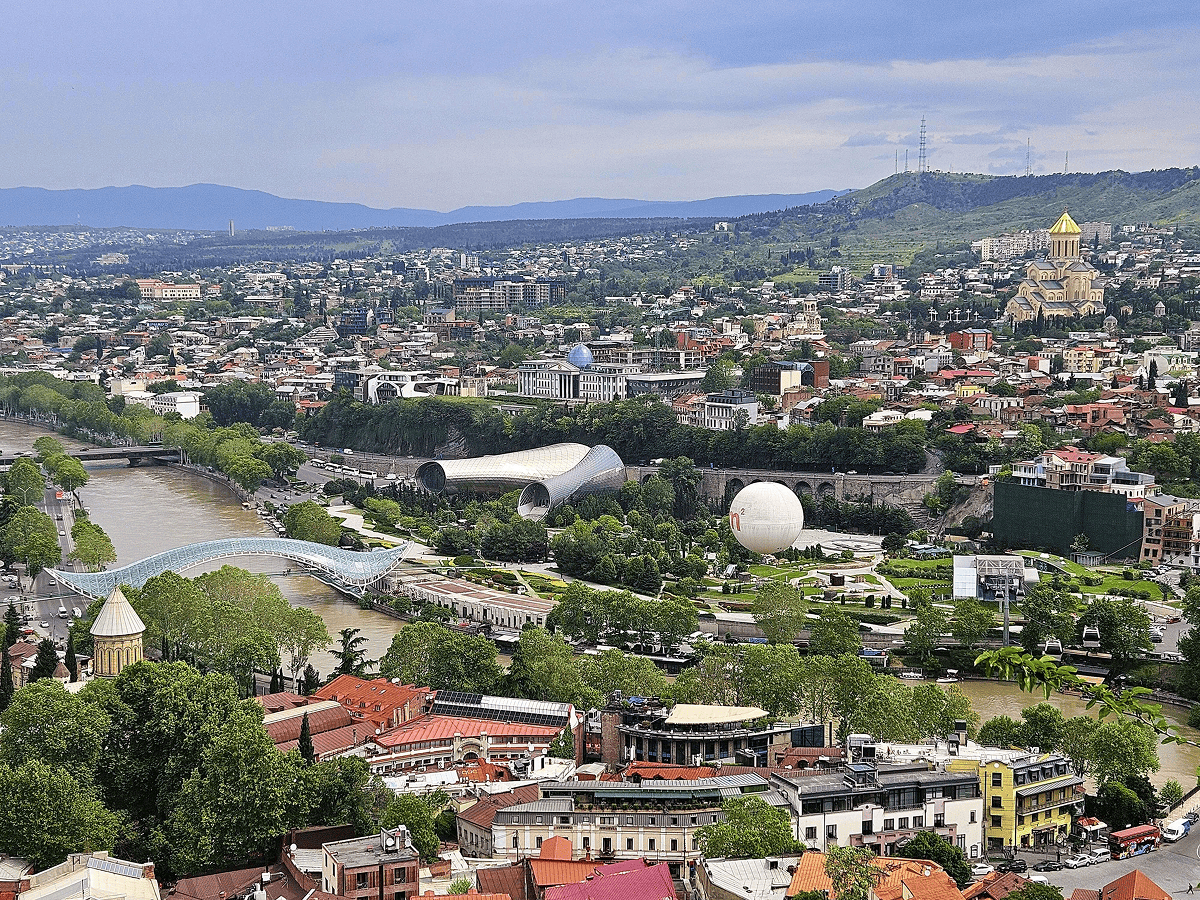
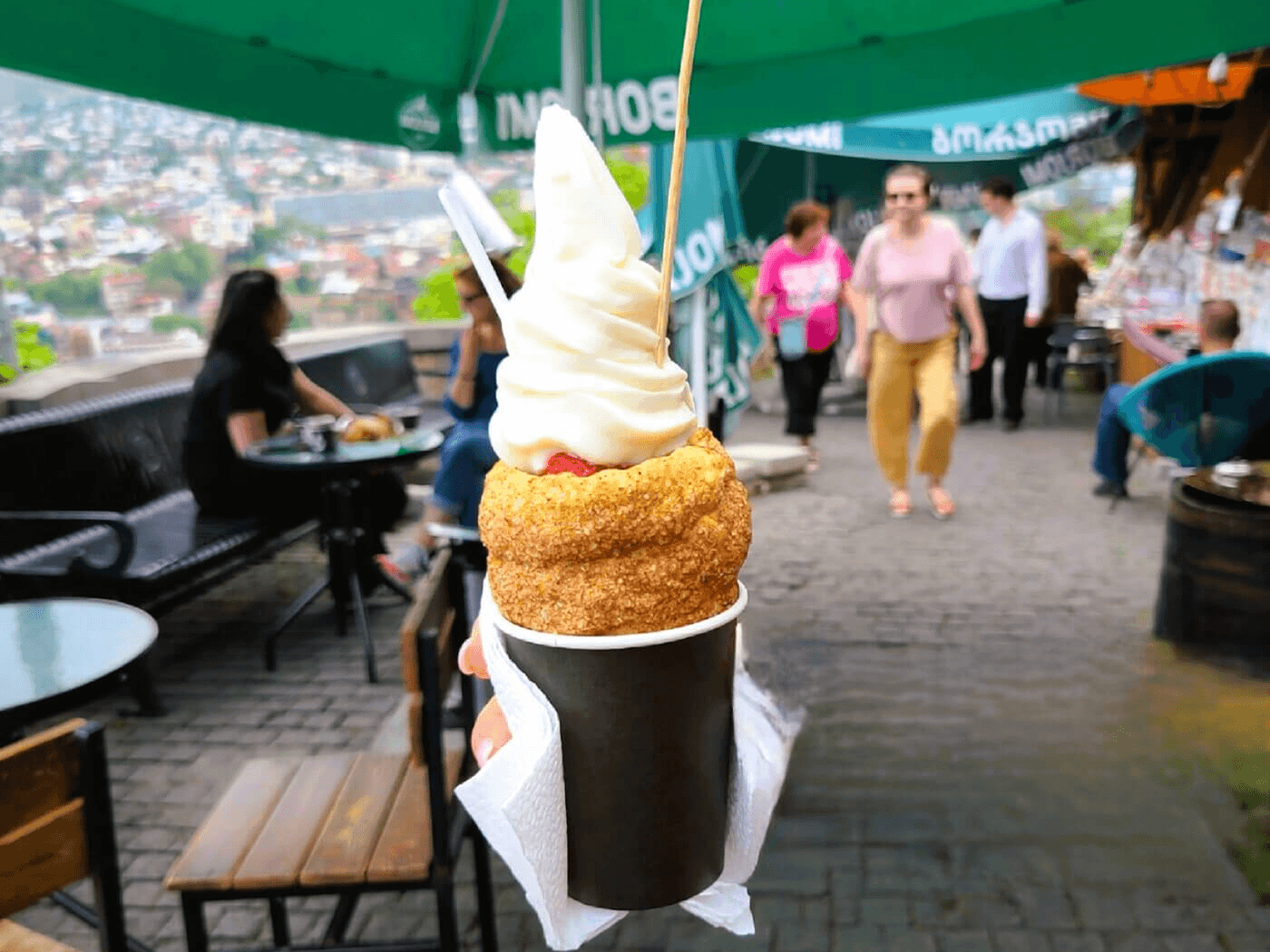
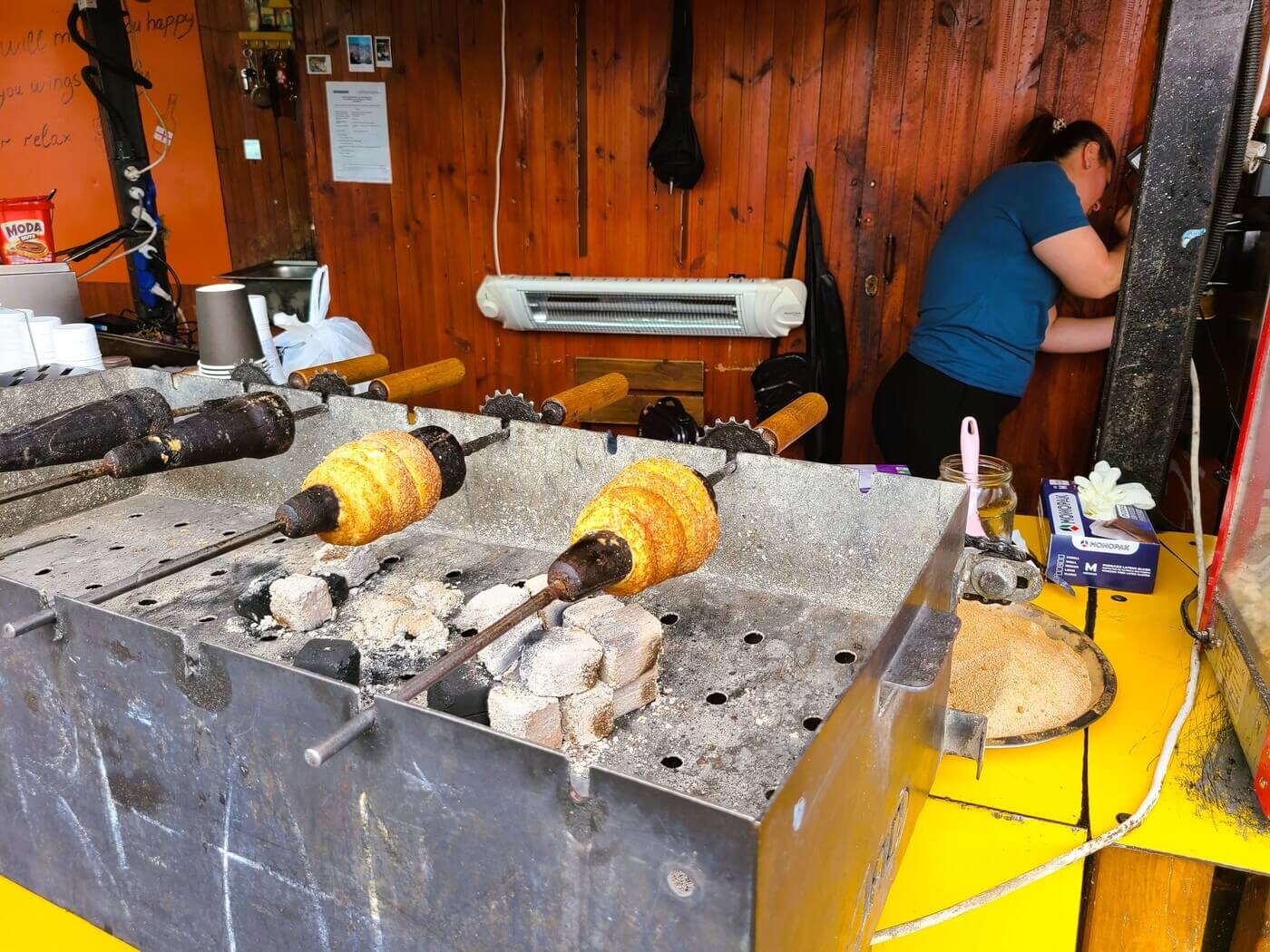
At the top, you’ll find trinket stores, cafés, bars, an ice cream stall, and chimney cakes – traditional European spit cakes, baked over a metal spit, like a BBQ over an open flame. They are crispy on the outside and soft on the inside, often filled with ice cream.
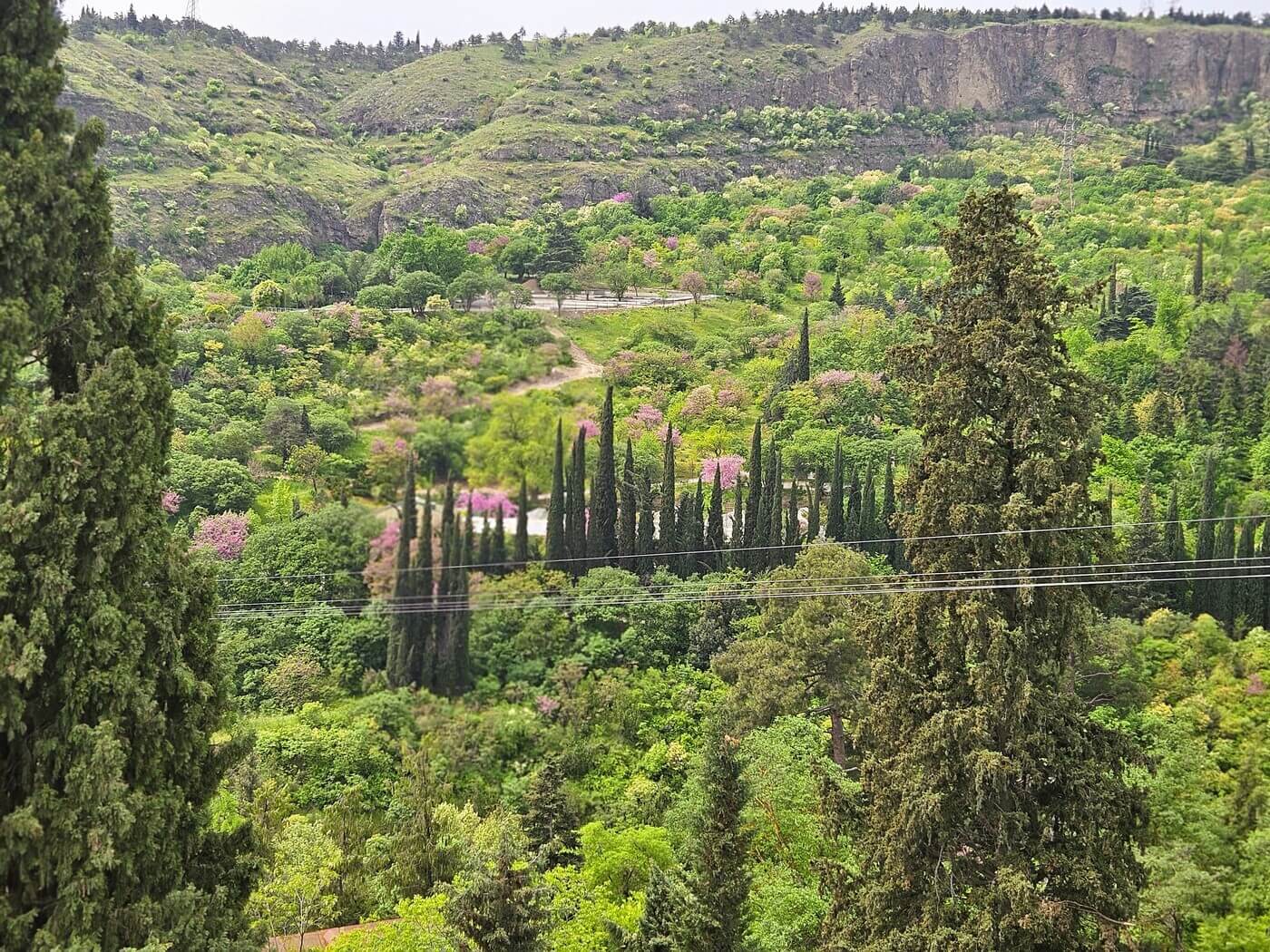
For a beautiful hike in the forest, walk along the path behind The Mother of Georgia Statue, and on your left you’ll see the stairs and the kiosk, where you pay to enter the forest below.
Note: Don’t miss walking across the Bridge of Peace at night when all the lights come on.