
Rovinj and Groznjan
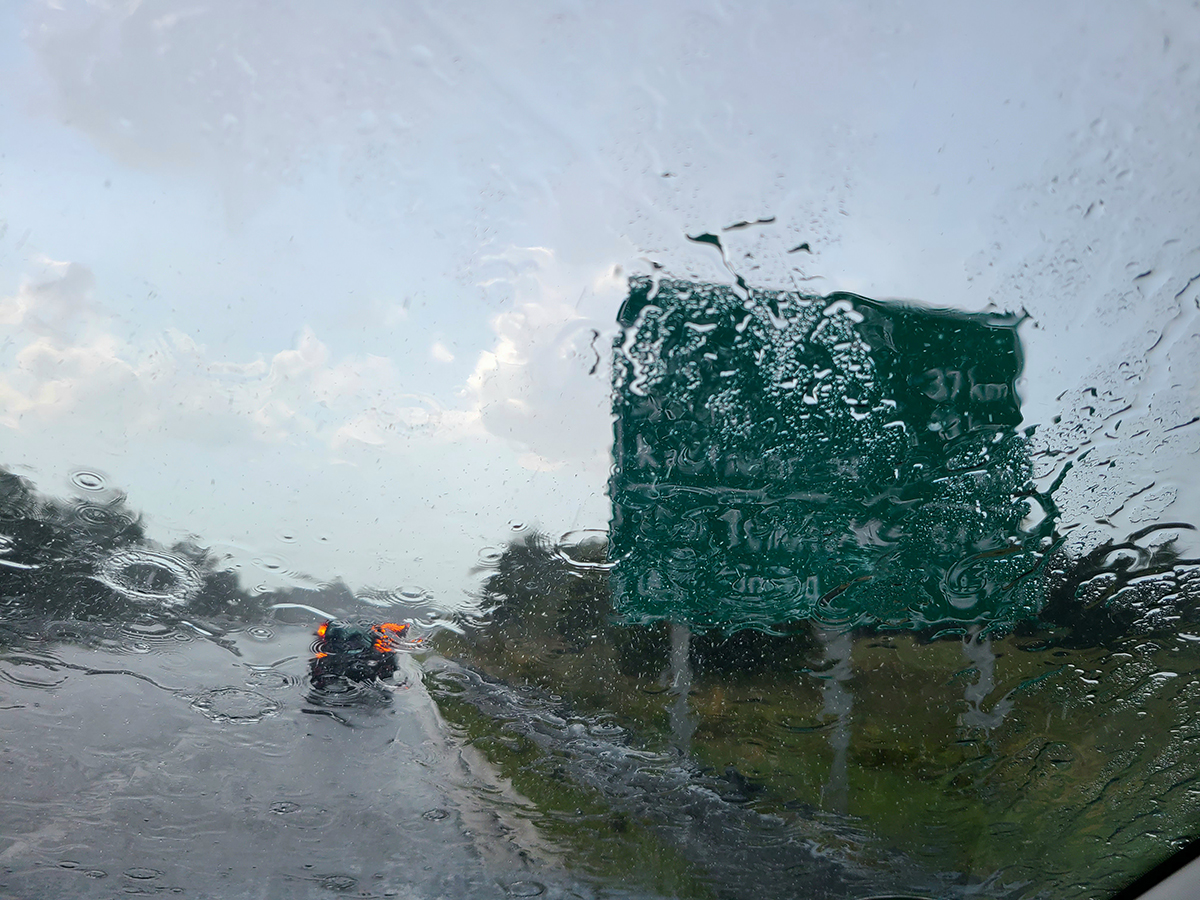
It’s a pleasant three-and-a- half drive from Zagreb to Rovinj. Little did we know that the region has summer storms like those that we experienced growing up in Africa. When we reached the peak of a mountain before descending into Rovinj, nature’s symphony concert of rain, hailstones, fierce winds, lightening, and thunder welcomed us to Croatia. Cars pulled out onto the side of the freeway and waited patiently for the magnificent, booming storm to end. Then, one mile later, glorious sunshine and blue skies appeared.
We parked the car in an open lot outside the Old Town, and our hotel sent a driver in an electric golf cart to pick us up. (Golf carts are the only means of travel inside the historical town, with its web of narrow, cobbled streets.)
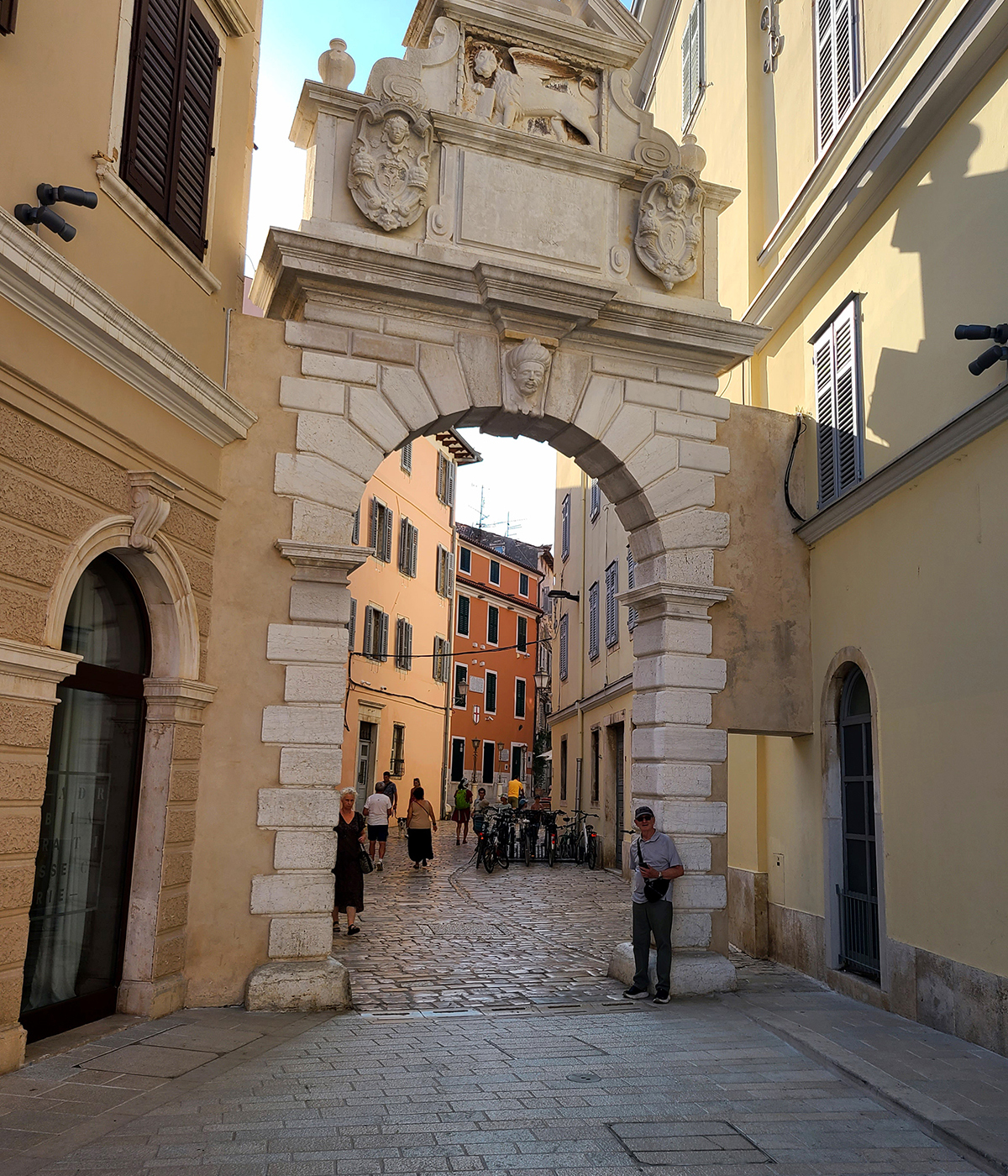
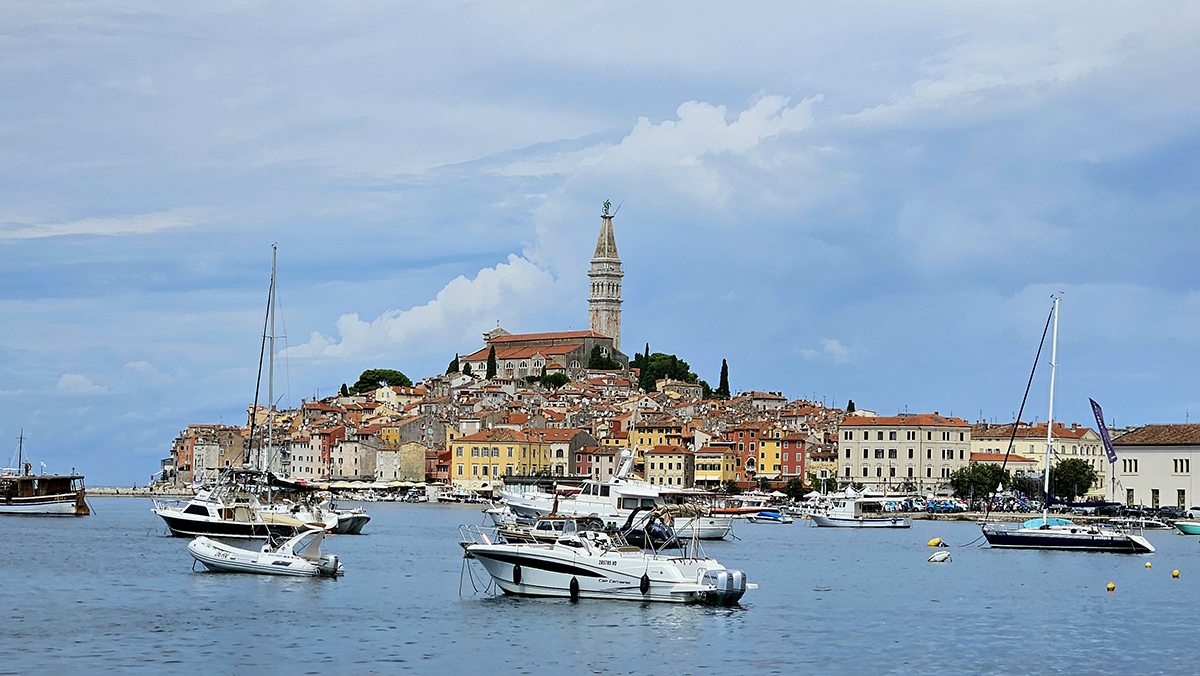
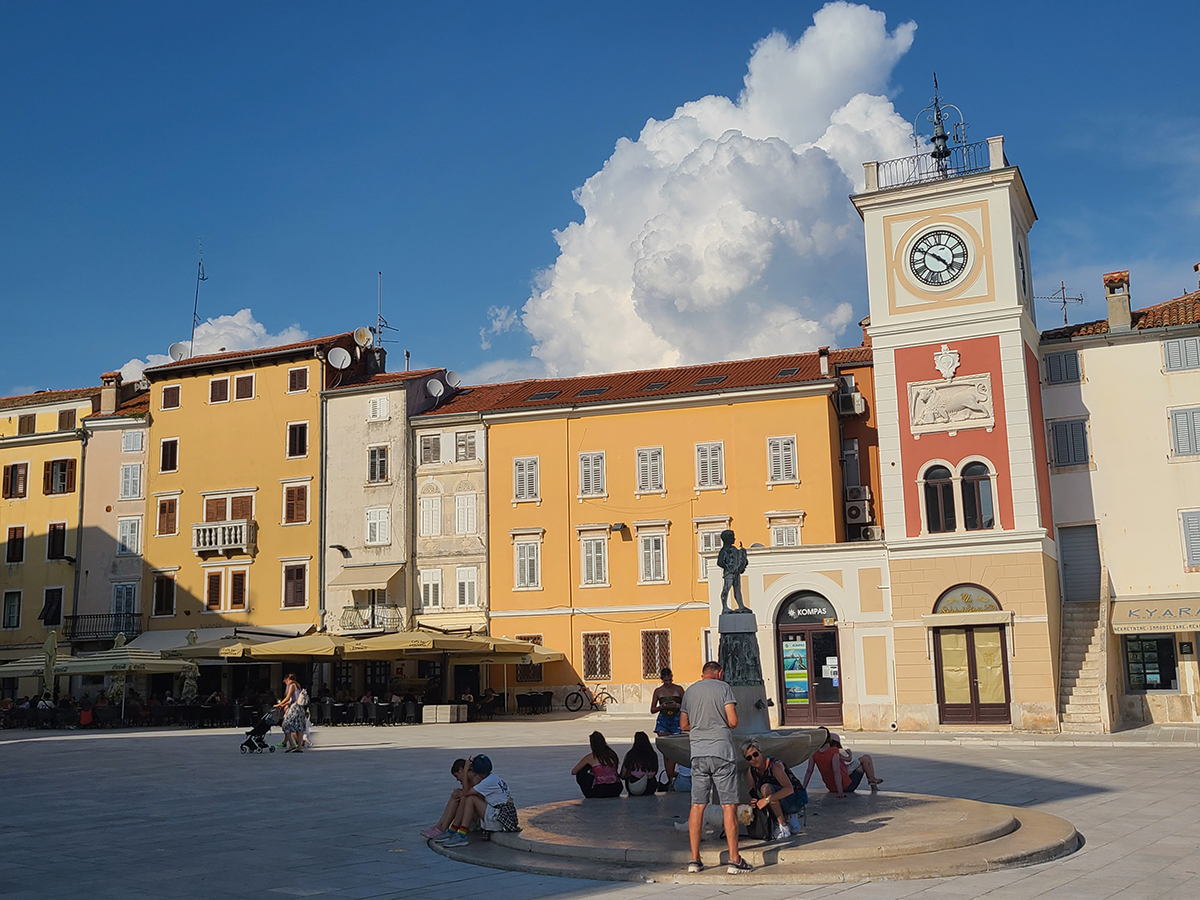
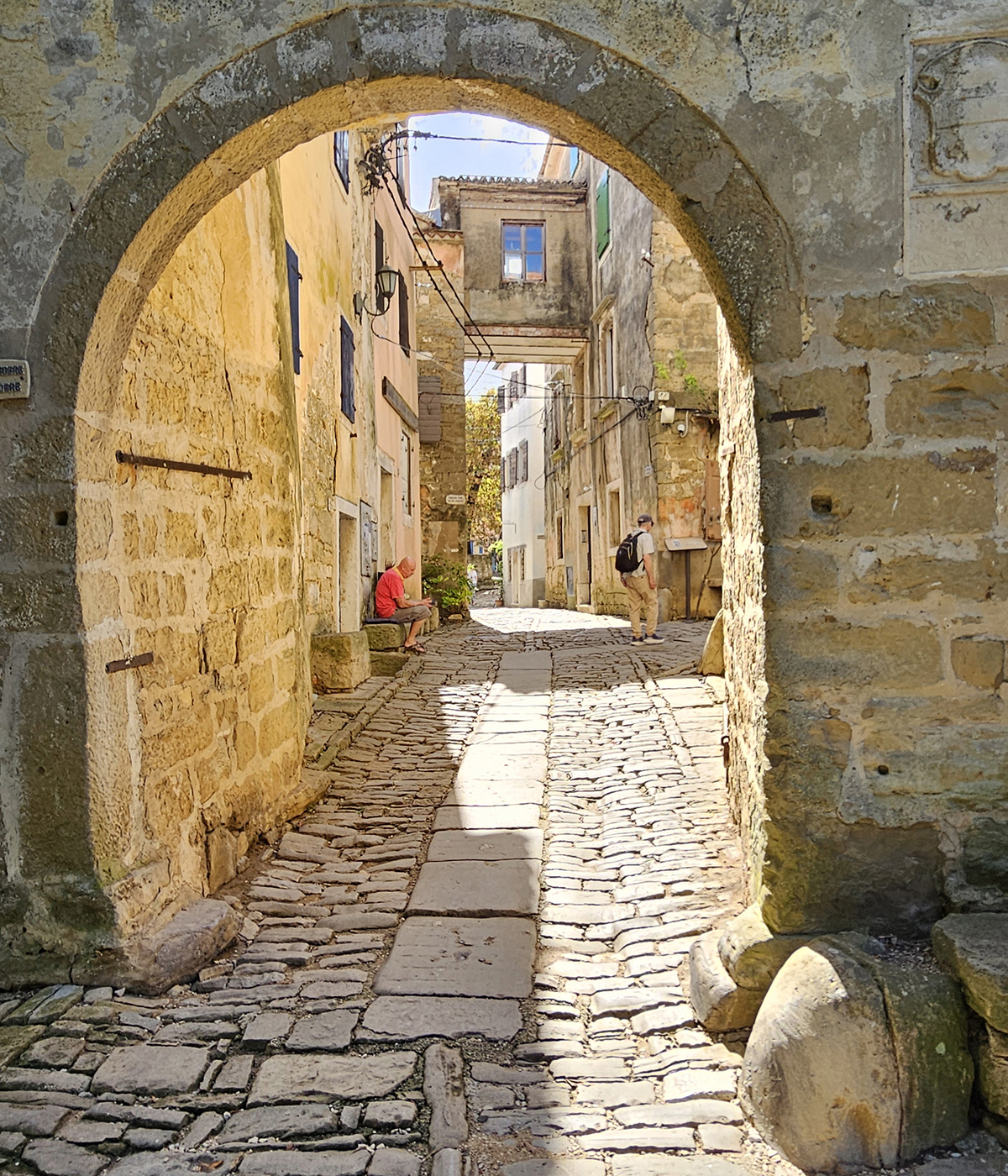
We bounced along the cobblestones through Balbi’s Arch, a Rovinj landmark, and the gateway to the Old Town. The Baroque-style arch, built in the 17th century during Venetian rule, commemorates Rovinj’s ties to the Venetian Republic.

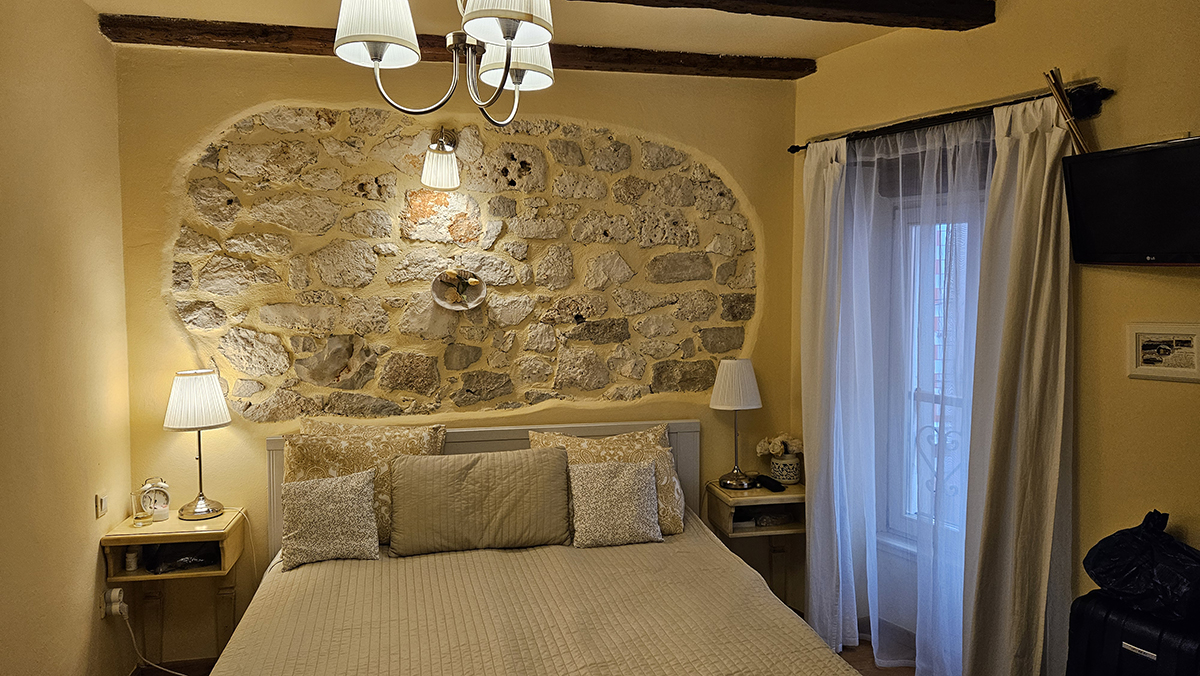
Minutes later, we drew up to Villa Duketis, owned by a young couple who turned the wife’s family mansion, built hundreds of years ago, into a most charming little hotel.
The immaculately clean rooms are on the small side but have every conceivable comfort, including a small kitchenette and a tiny dining table where a bowl of fresh fruit and Croatia’s mouth-watering chocolate greeted us.
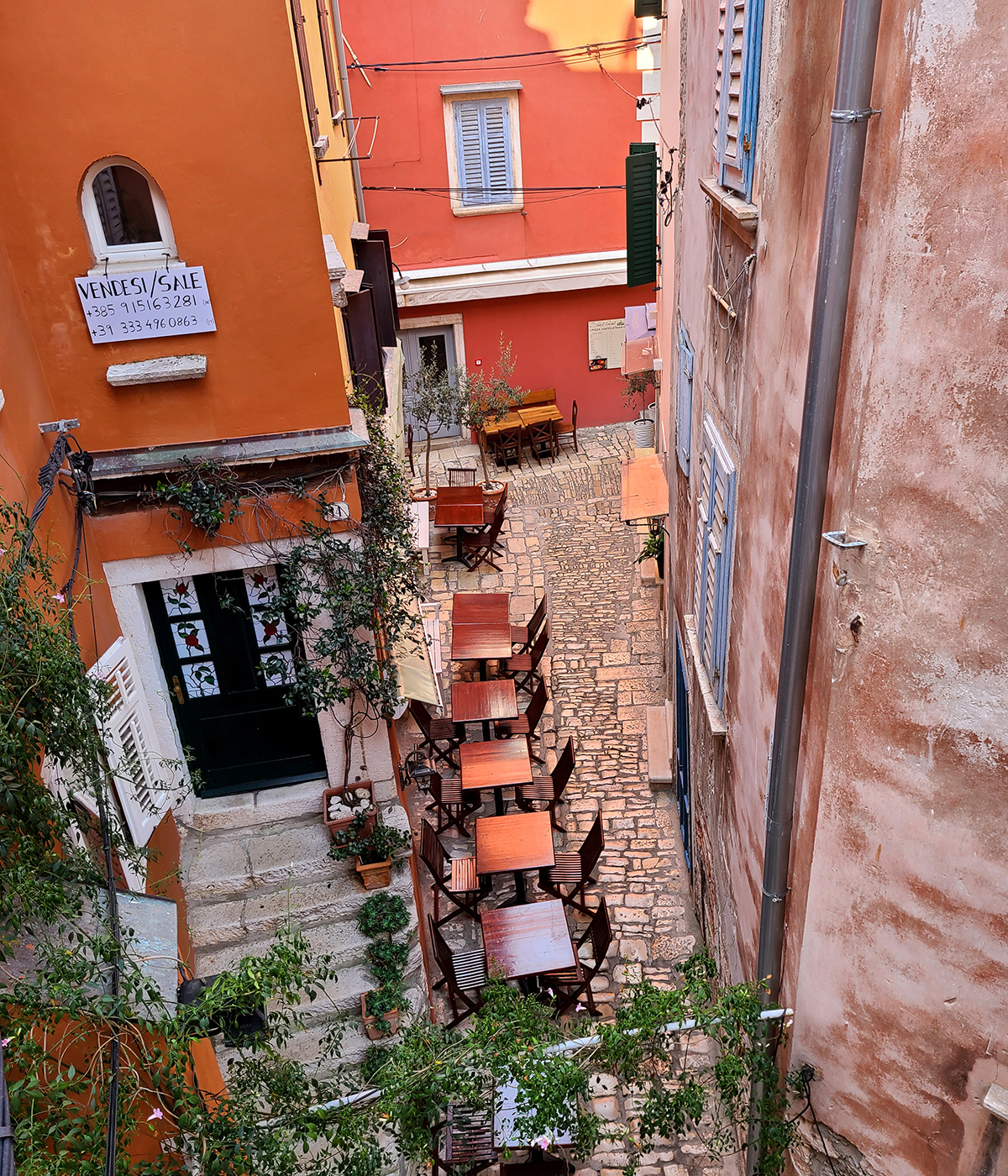
The scenes from our window were out of a storybook, especially at night when the chef from the restaurant below us came out to prepare gourmet dishes, tableside.
One small block from the hotel, we made a left onto another atmospheric lane that led to the seafront, where small boats anchor and ferries go back and forth to the nearby islands. Restaurants, bars, and ice cream parlors line the entire crescent-shaped harbor.
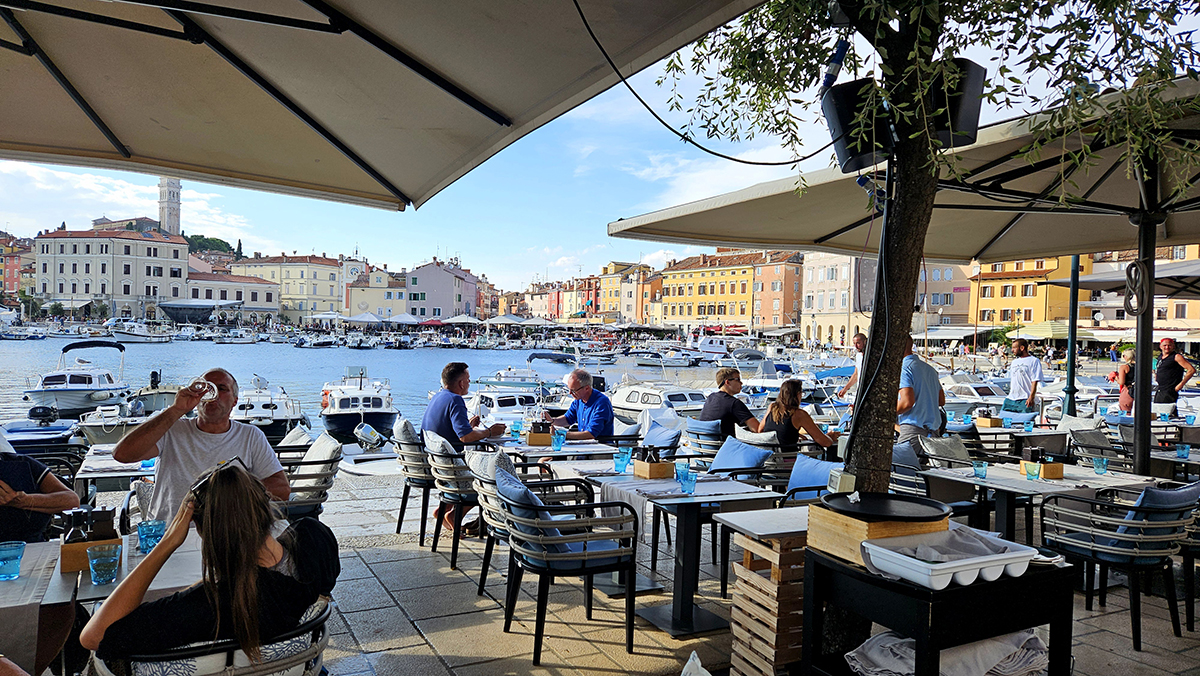
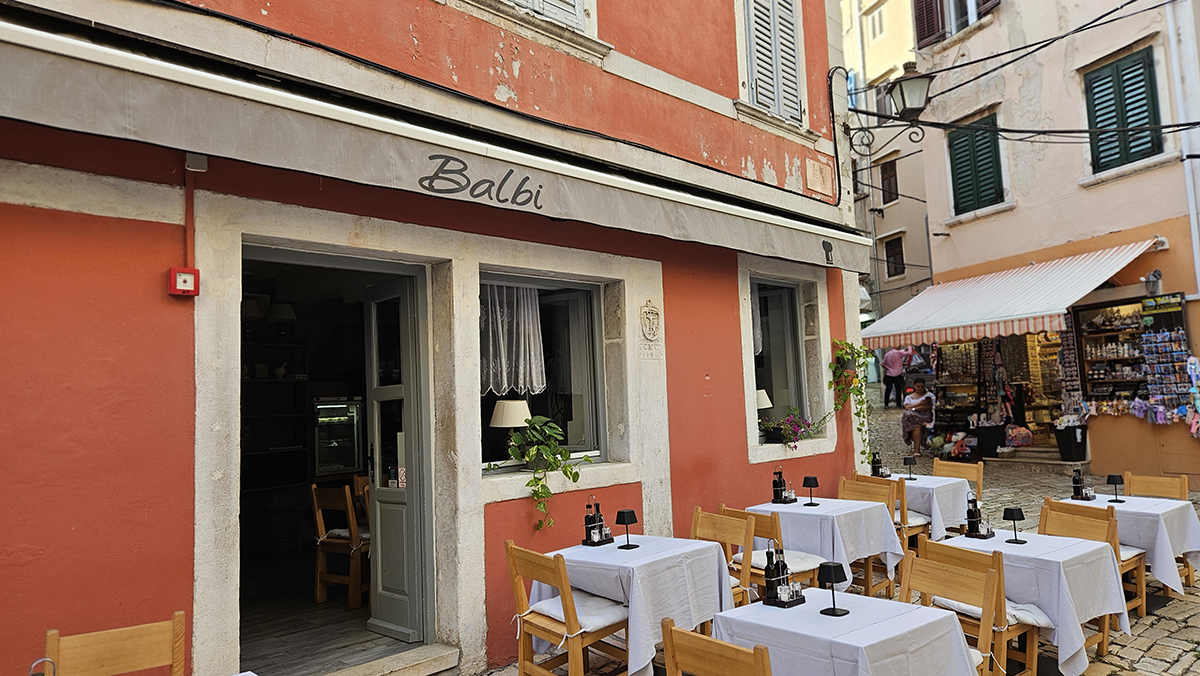
Our hotel provided vouchers for breakfast in a little plaza, a three-minute walk from the hotel. We were in the heart of a historical town in another world. The breakfasts at Balbi restaurant offered a smorgasbord of cheeses, salami, lox, fruit, cereals, grapes, yogurt, irresistible crepes, croissants, baklava, and breakfast dishes to order.
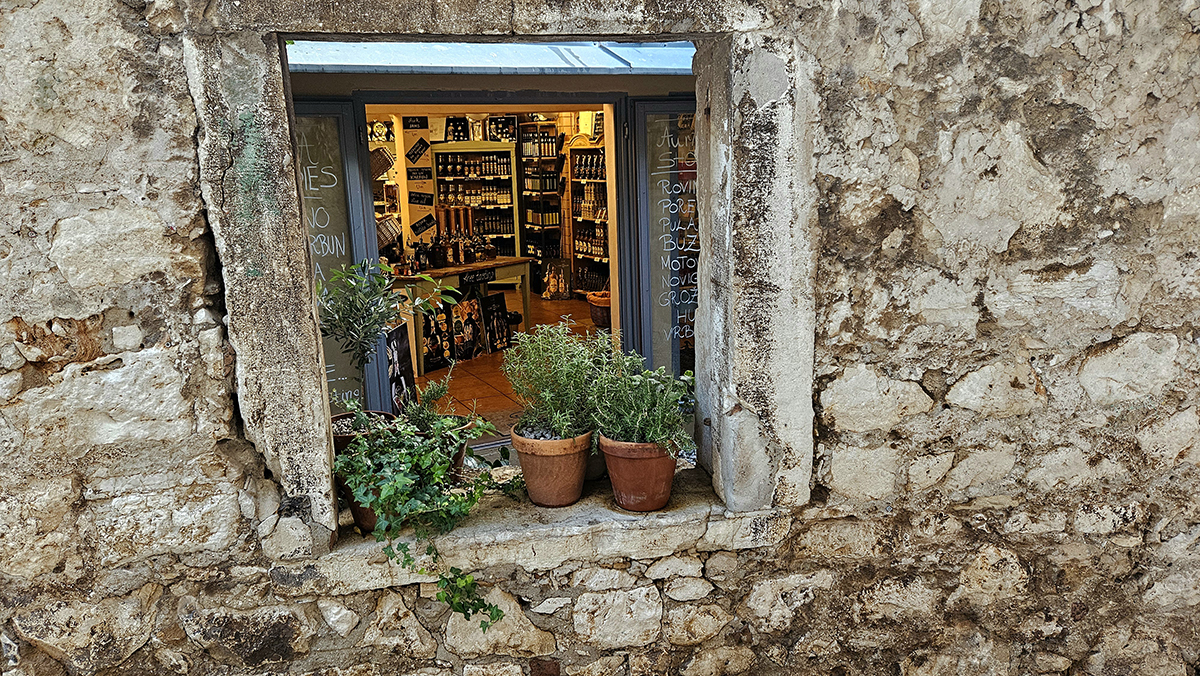
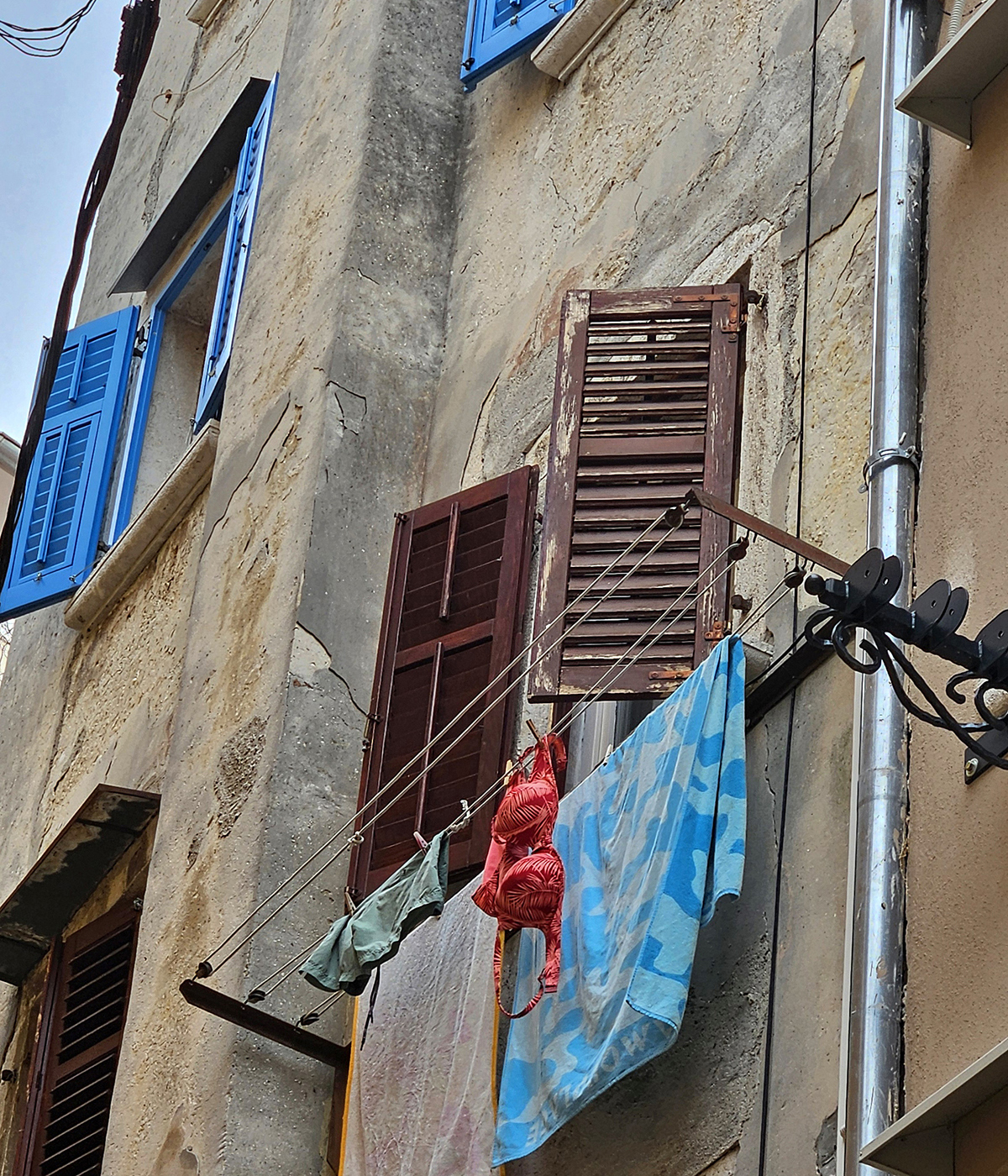
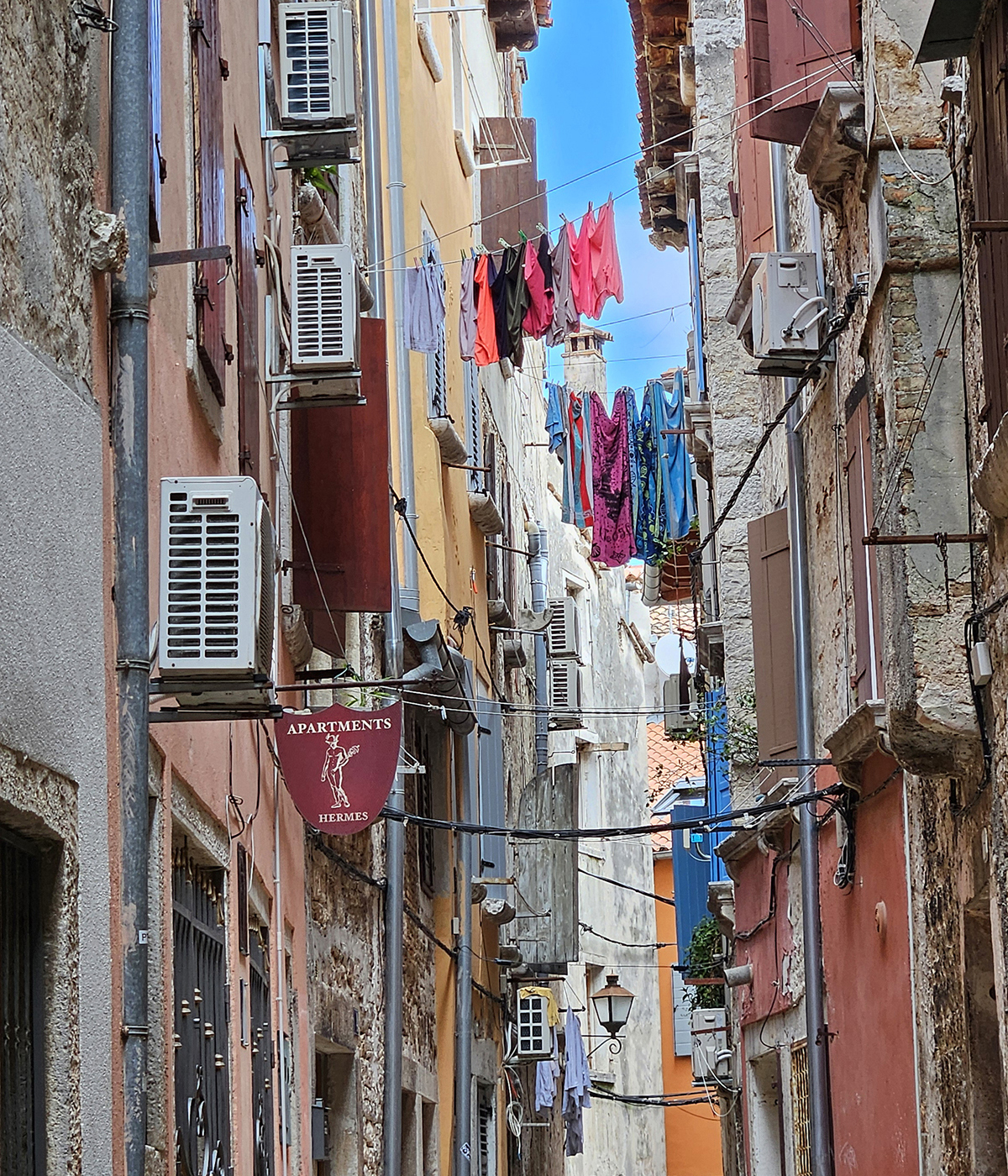
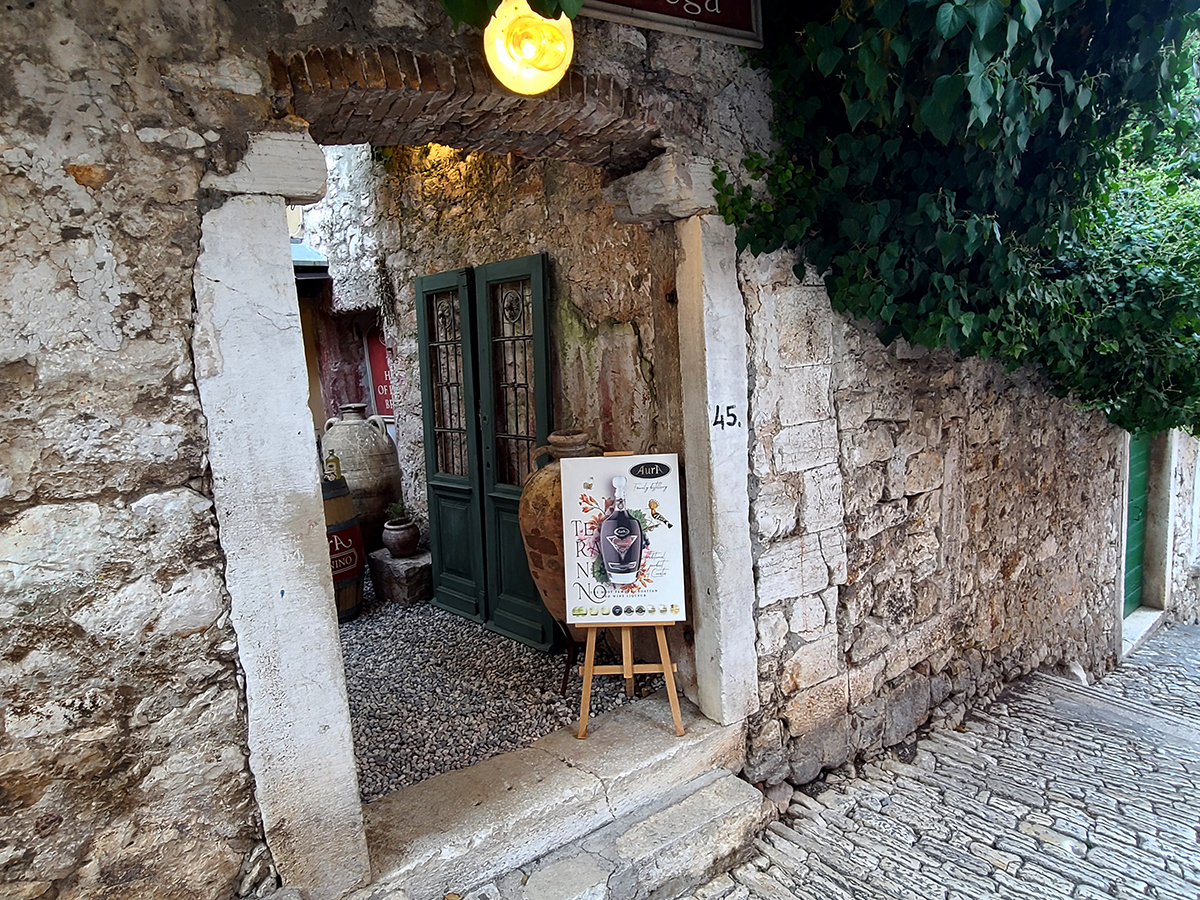
From the plaza, we had views of the lanes that lead off in all directions, flanked with a wide variety of tiny stores and art galleries, and washing hanging out to dry between the colorful buildings, which creates an unintentional, unforgettable painting.
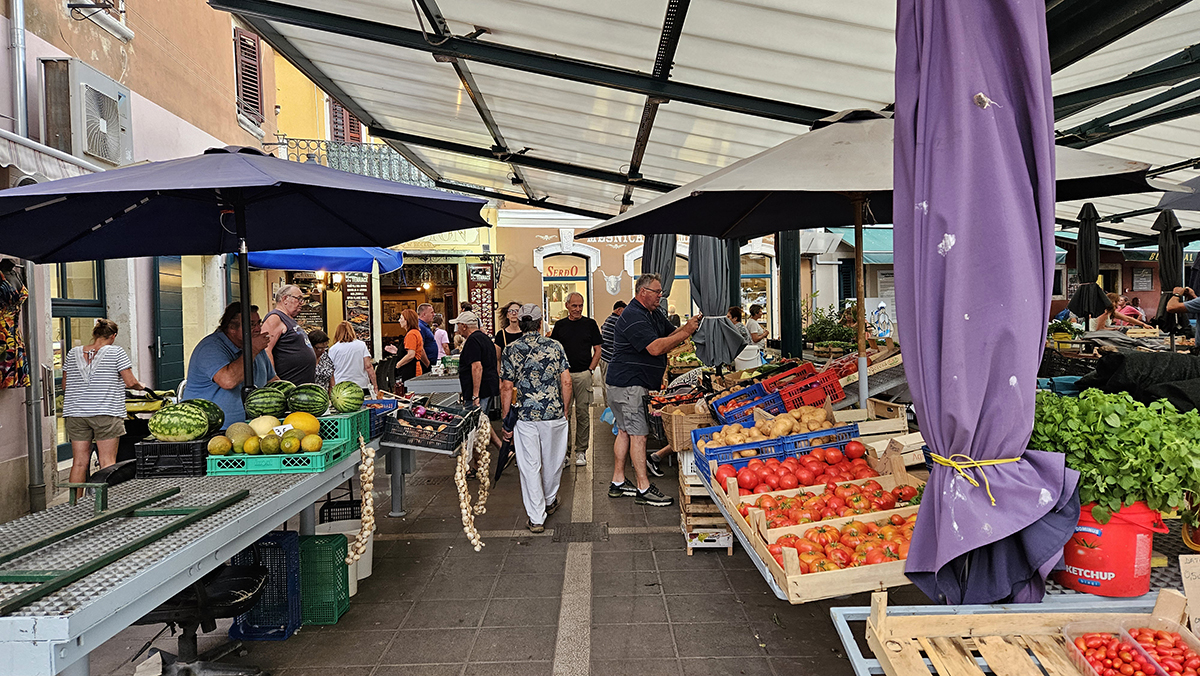
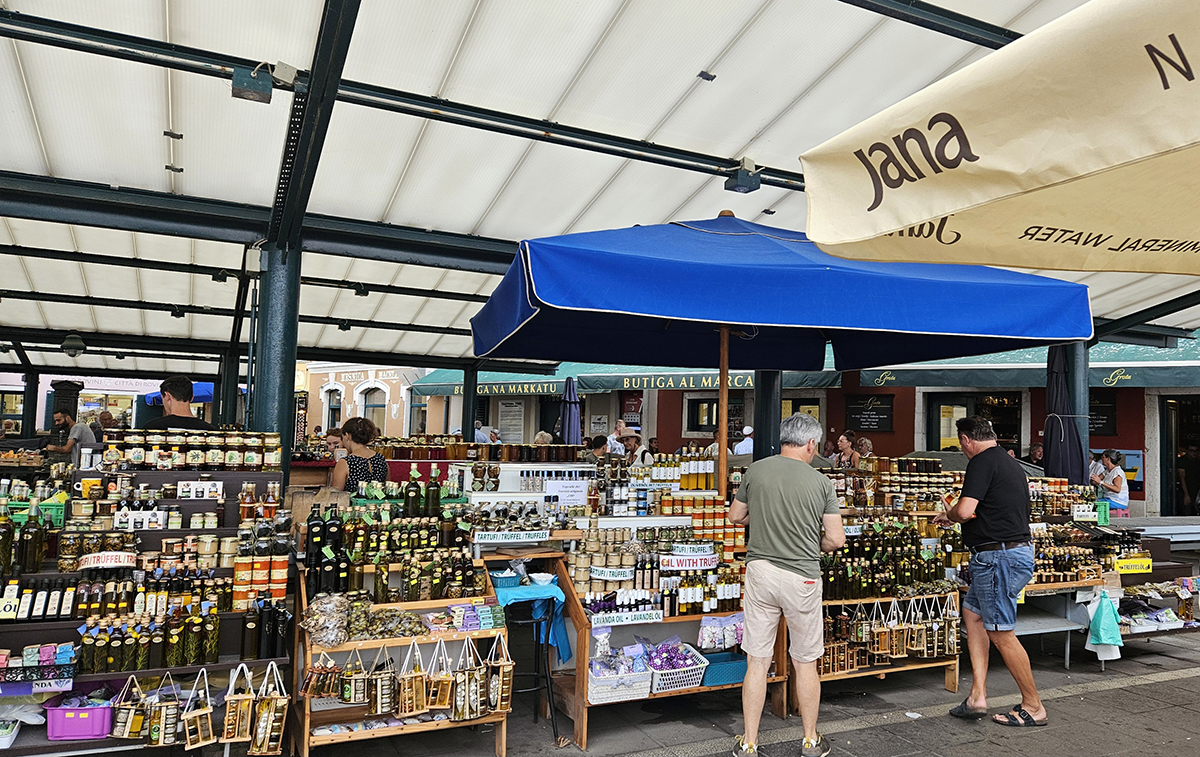
Rovinj has a picturesque, bustling, daily farmers market, located only steps away from the ocean on the edge of Old Town. Fish is fresh out of the sea. Fruit, vegetables, honey, truffles, and lavender arrive daily from the countryside farms and orchards.

The beaches are unusual. There are virtually no sand beaches except for one that is a twenty-minute walk past the Hotel Adriatic and past all the modern hotels. There, one can rent a chair and an umbrella and have access to restrooms. It also has a small café that serves sandwiches and ice cream.
Most of the towns lining the coast do not have sandy beaches. They have pebbles, concrete, or grassy areas. Sturdy steel stepladders lower one into the crystal clear, calm, warm waters.
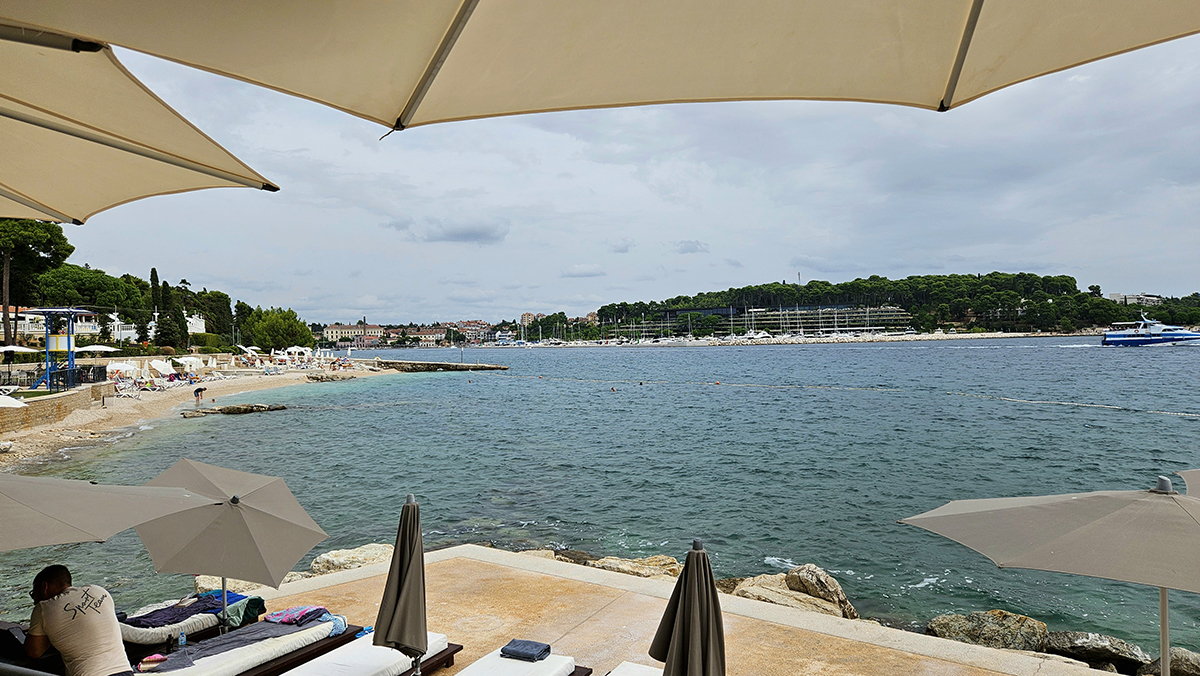
Katarina Island is a ten-minute ride via ferry from the jetty in front of the Adriatic Hotel. The Island has a wide variety of areas where beach chairs are placed among the trees and rocks, offering a unique setting on the water’s edge.
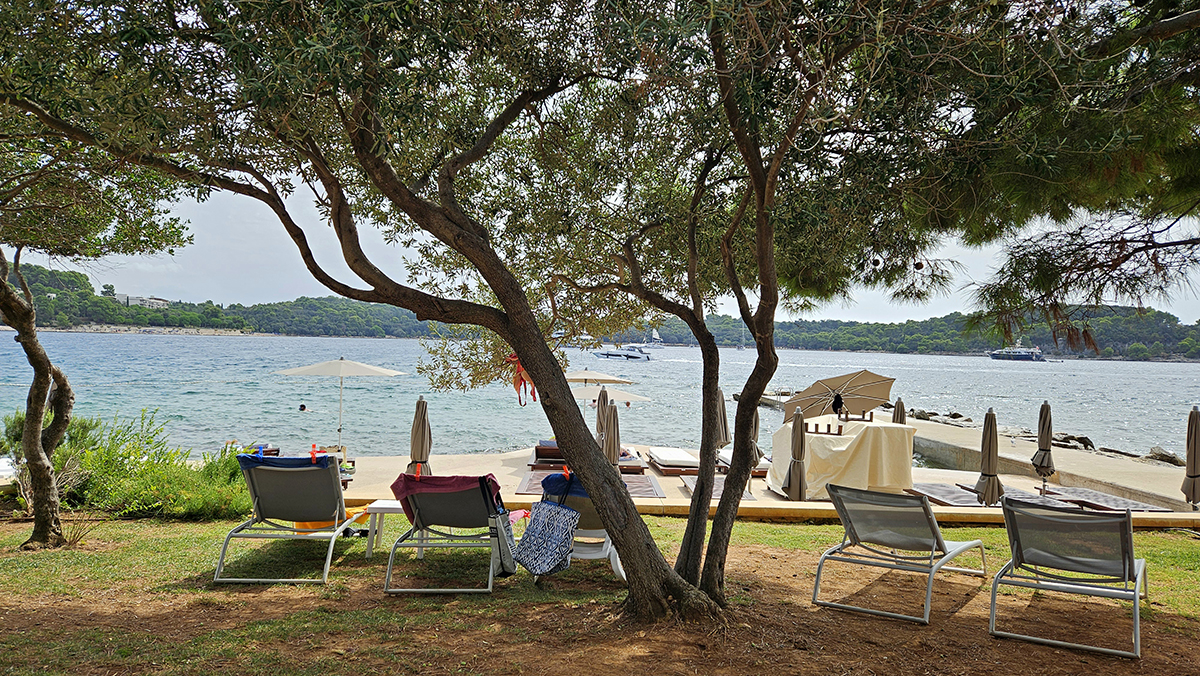
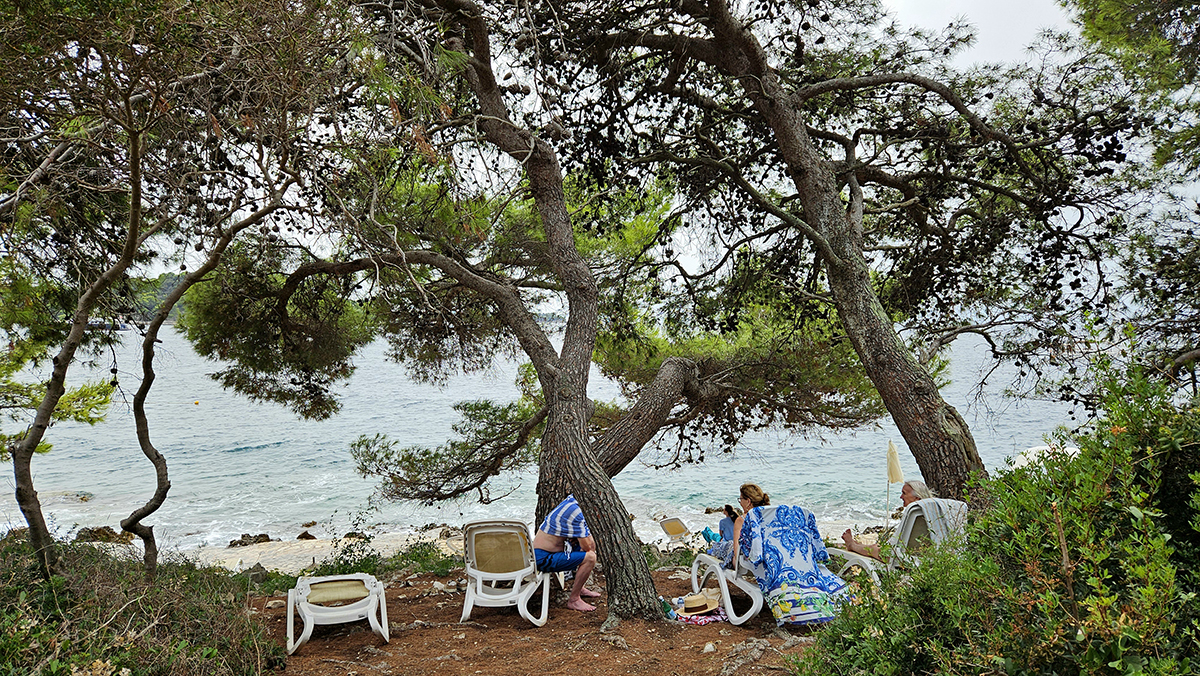
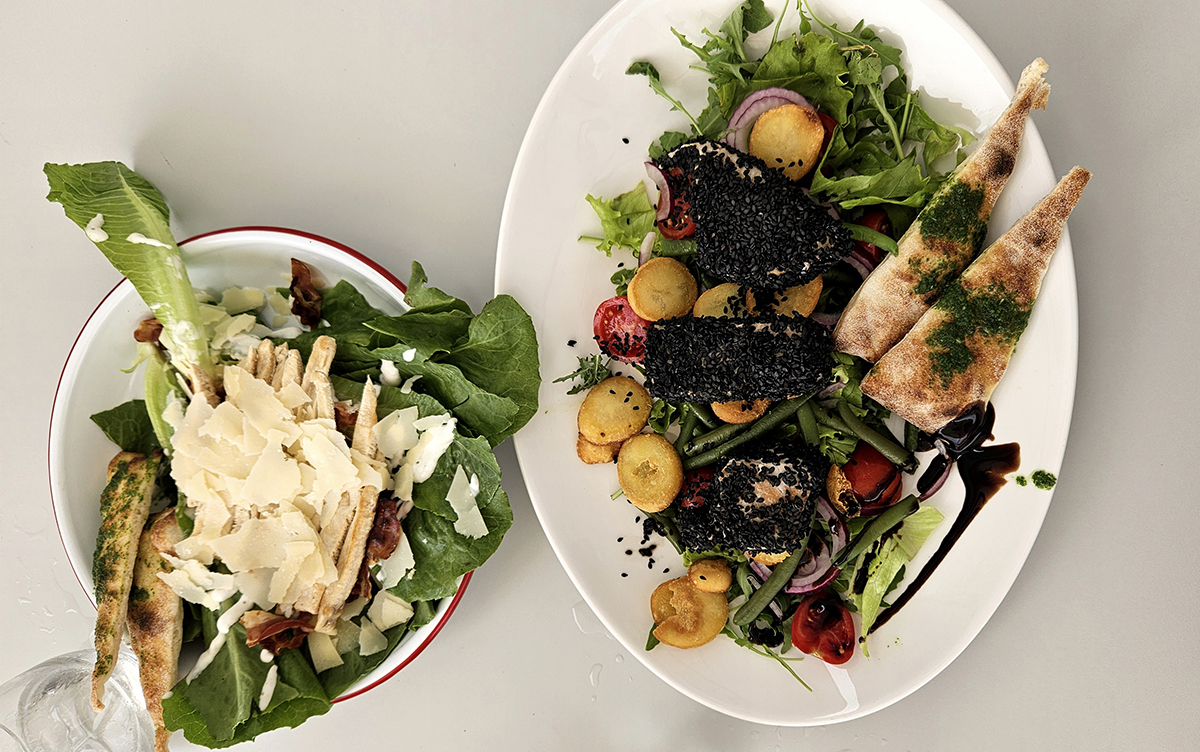
The Island has kiosks for coffee, drinks, and ice creams – and a waterside restaurant that serves delicious, beautifully presented dishes.
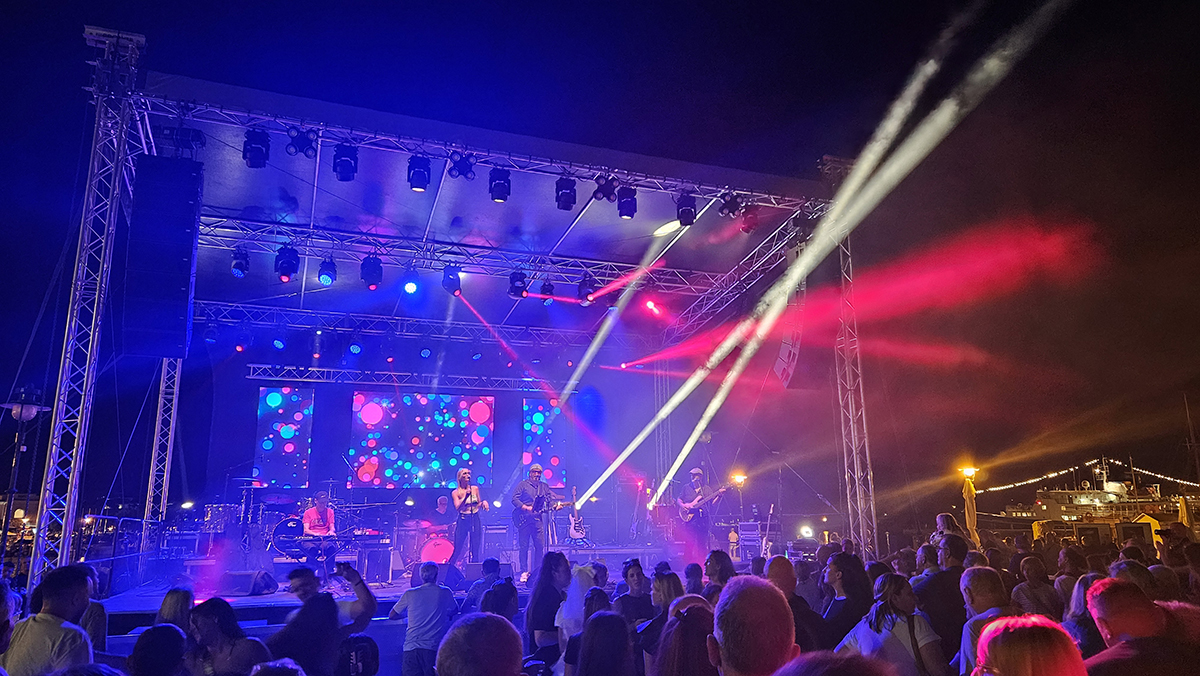
On Friday and Saturday nights, bands perform in Rovinj’s central plaza facing the marina. The entire town sparkles and shimmers with lights. Locals and visitors fill the plaza to dance, sing, and enjoy the music under the starry skies. It’s one big, inclusive party.
Sundays in Rovinj are quieter. There are fewer tour groups and local visitors. Rovinj does not have deep waters, so unlike Split, which welcomes thousands of people a day from cruise ships, Rovinj is protected from being overrun and chaotic.
Grožnjan
Grožnjan, also known as Grisignana in Italian, sits high up on a hill above the Mirna River valley.
In 1941, it was occupied by the Italians and abandoned at the end of the Second World War.
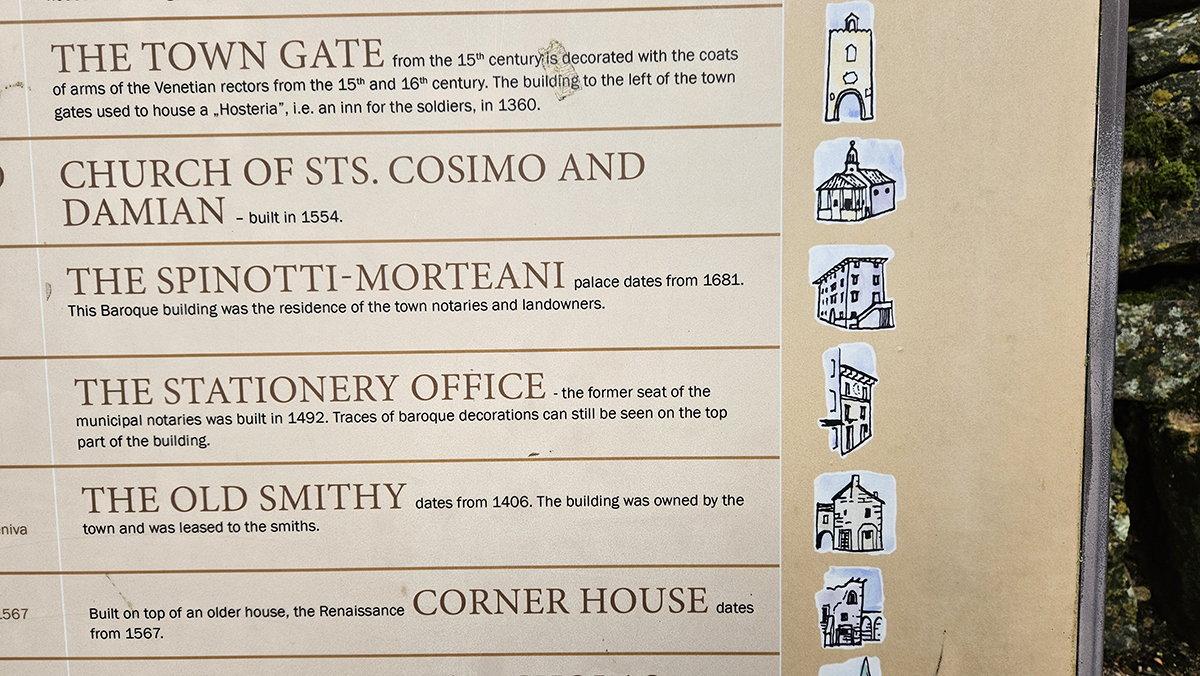
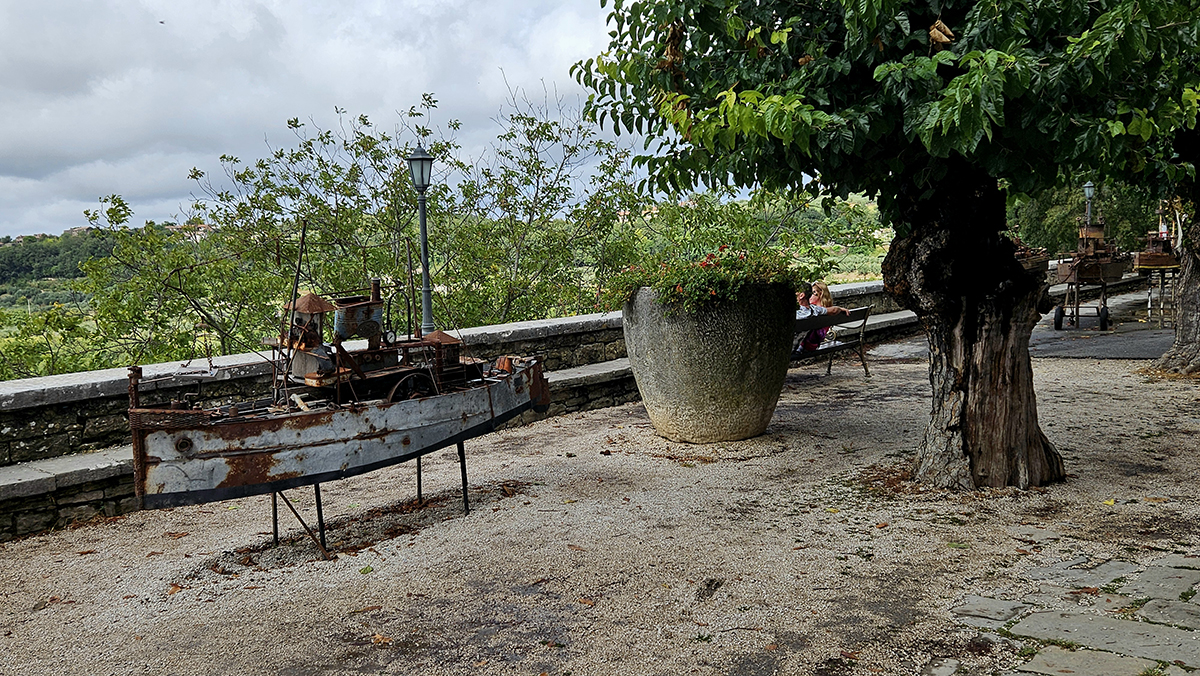
In the 1960’s, artists began to inhabit and restore this Medieval treasure, with its 360-degree views. Today, it is a unique jewel, where cobbled lanes lined with lovingly restored stone houses and galleries showcase every imaginable form of art, from glass and steel sculptures to paintings, woodwork, ceramics, one-of-a-kind handmade jewelry, painted fabrics, and more.
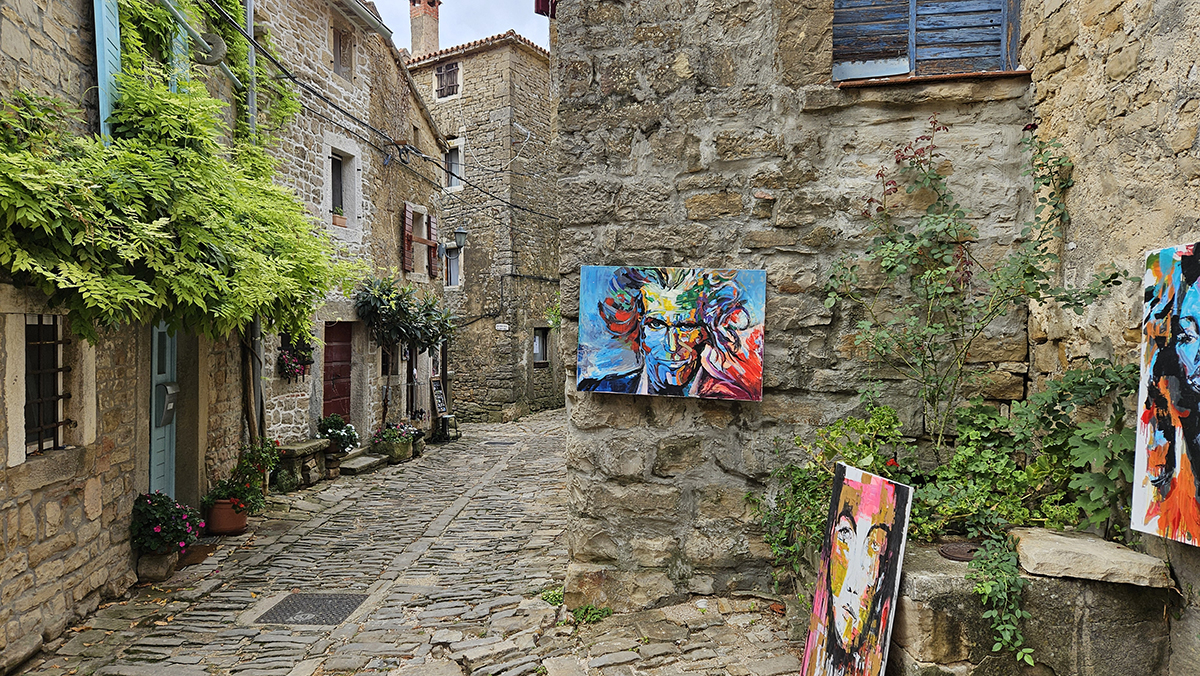
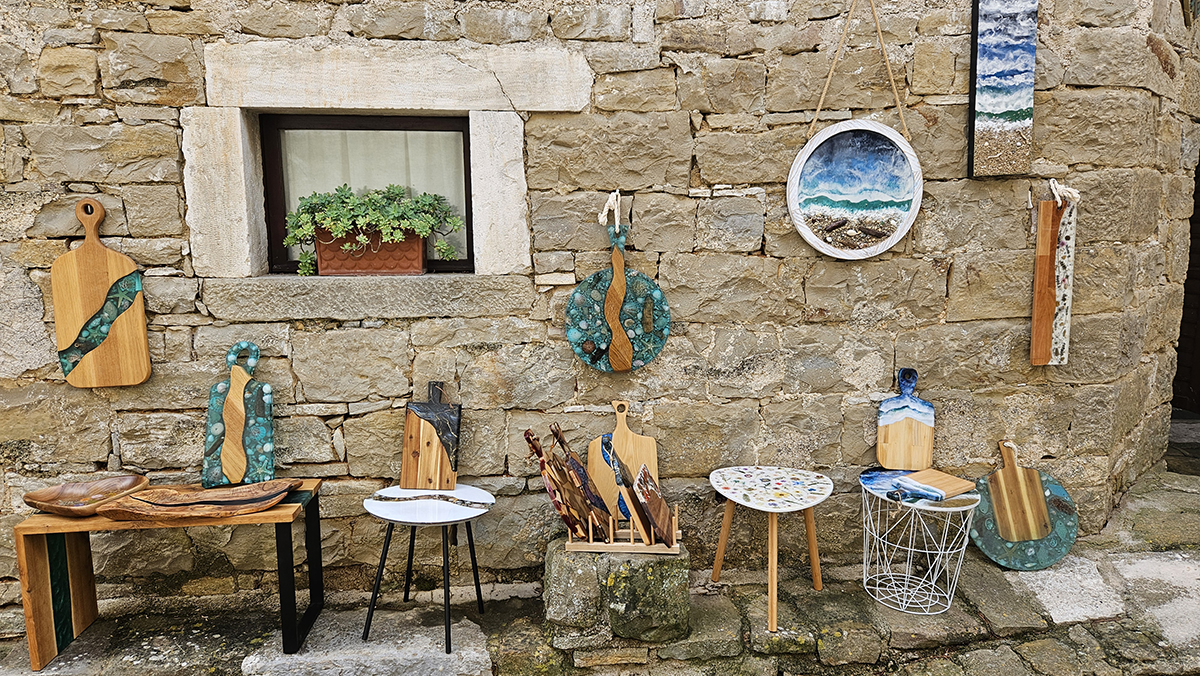
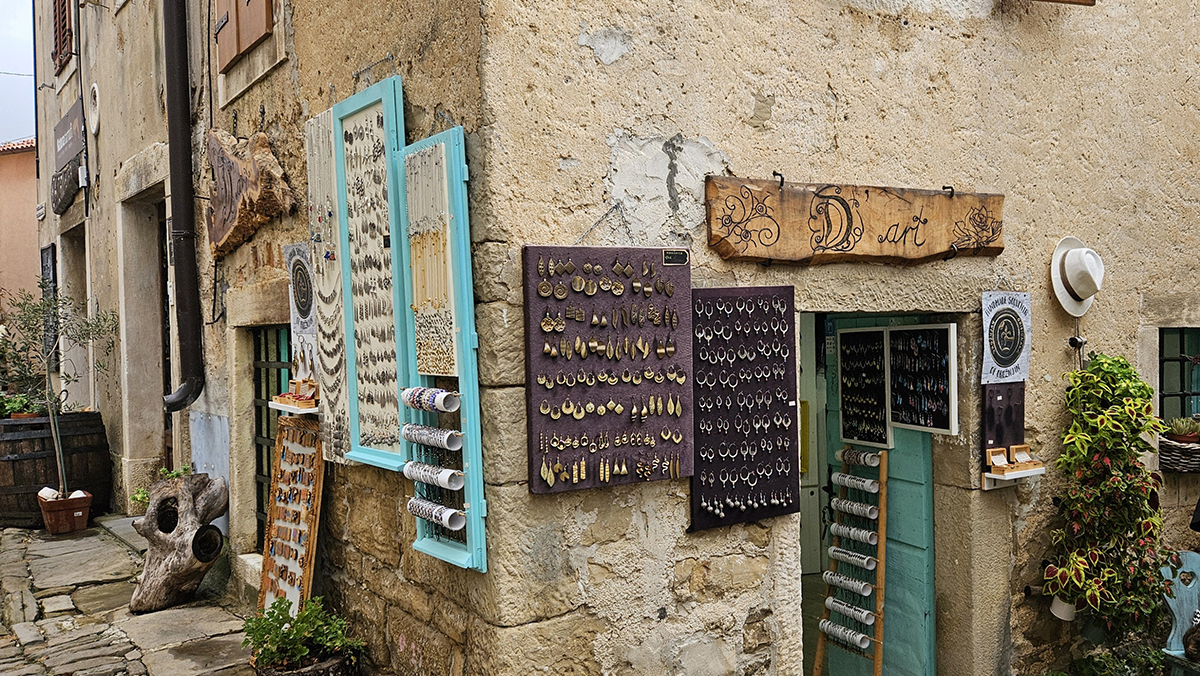
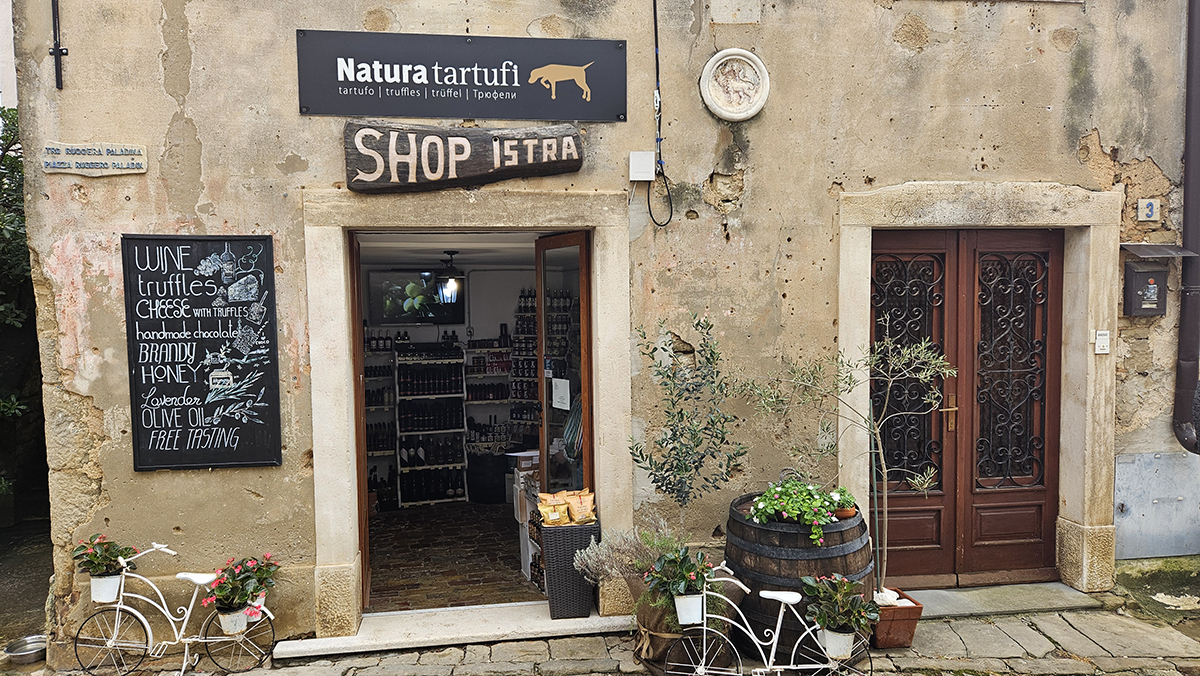
The sound of music drifts across the village from saxophones, guitars, violins, drums, and pianos.
Flower pots are draped in flowers and greenery on steroids.
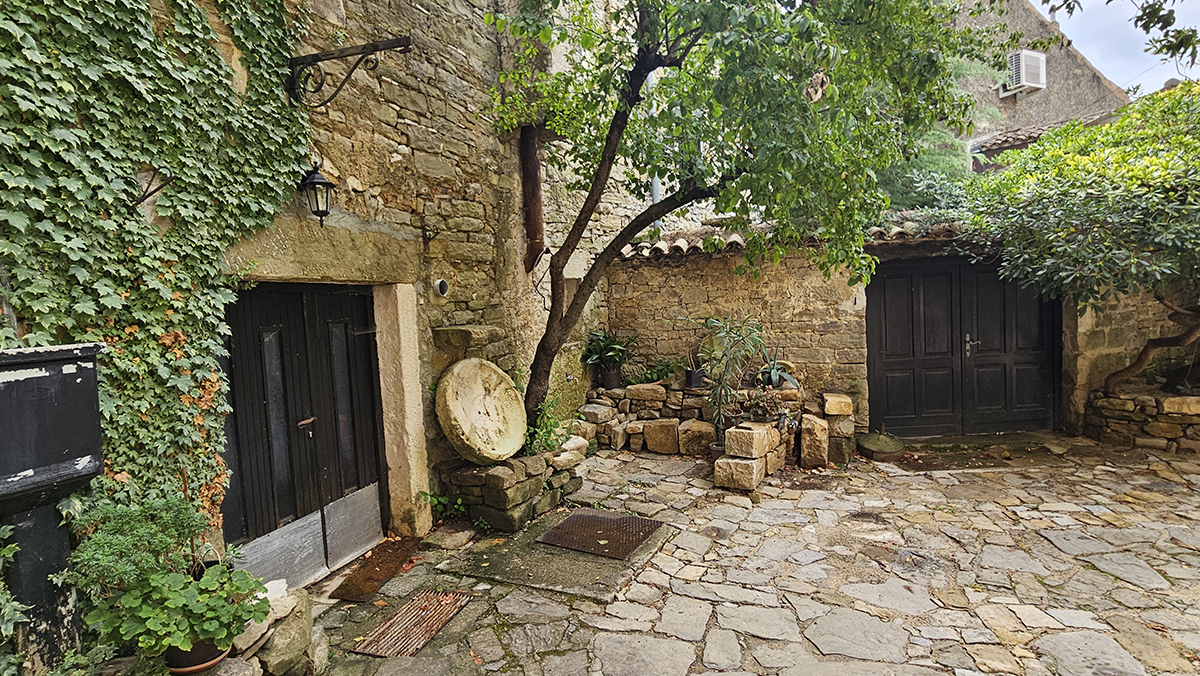
It’s the happiest, most peaceful, and enchanting village we have ever come across during our years of travel.
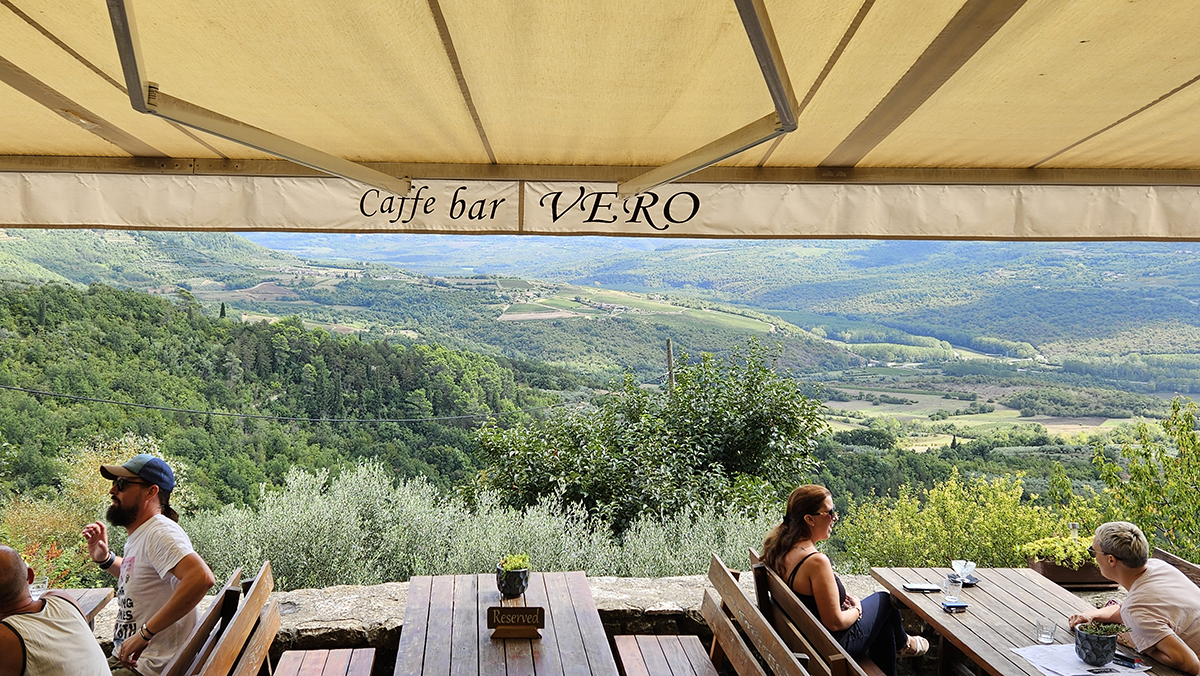
At lunchtime, we ate at Café Bar Vero on the outdoor terrace, with views of vineyards, olive trees, and fruit orchards that stretch all the way to the horizon.
** Groznjan is a highlight of a roadtrip in Croatia. It’s an hour’s drive from Rovinj.